Home / Life Insurance / Articles / What Happens If You Outlive a Term Life Insurance Policy?
What Happens If You Outlive a Term Life Insurance Policy?
Shreya SahuMay 12, 2026
Share Post
Term life insurance protects for a specific period chosen at the time of purchase. If you outlive term life insurance plan, the coverage simply ends. In standard plans, premiums are used to provide coverage during the policy term.
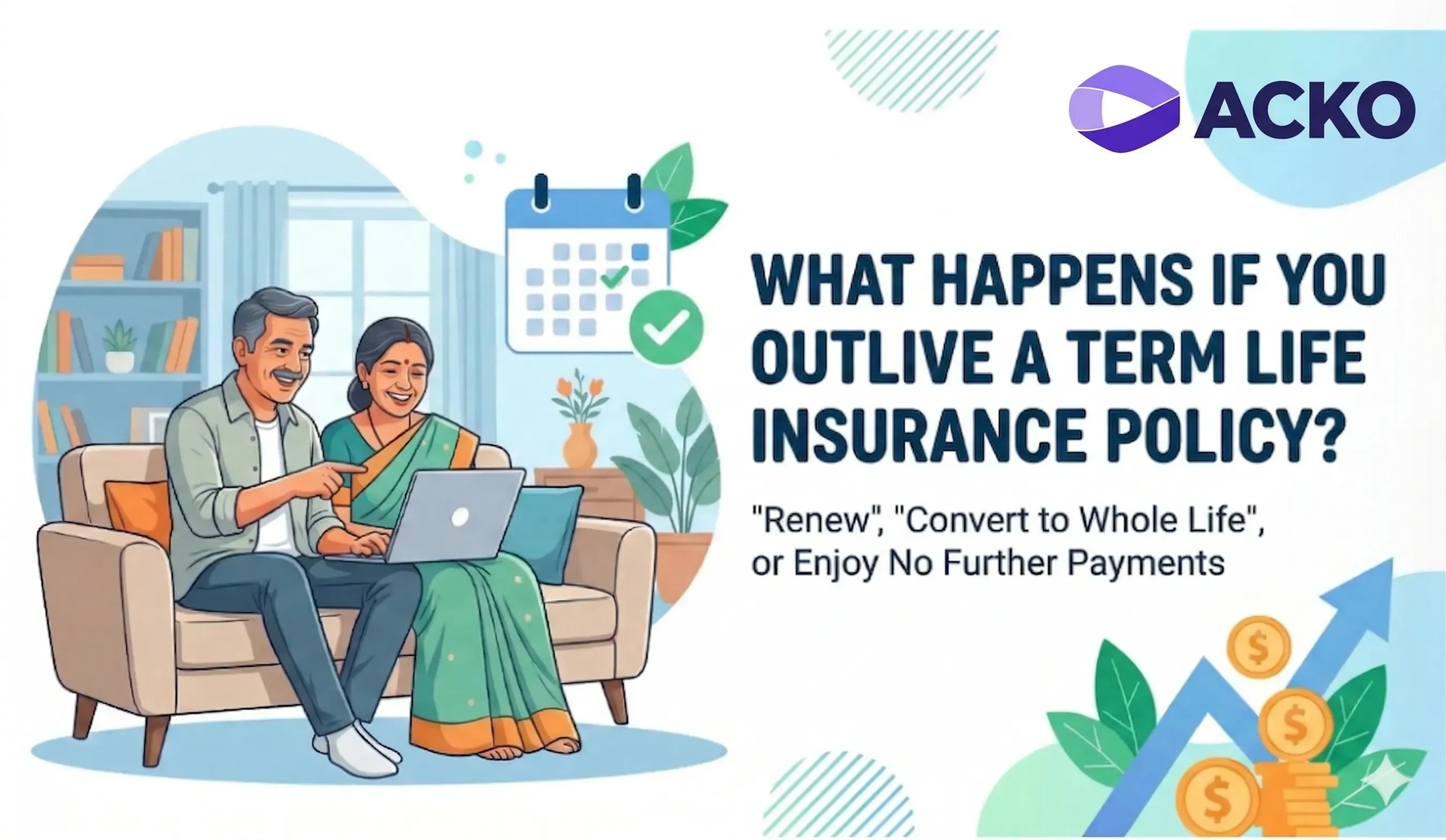
This blog explains what happens if you outlive a term life insurance policy, and available options can help you plan your next step with confidence.
Contents

What Does “Outliving Your Policy” Mean?
The term ‘outliving your policy’ refers to a situation where the policyholder is alive after a specified period of time for which the term life insurance policy was taken. This is when the term life insurance policy expires at the end of the chosen policy term without any payout. For instance, you took a term insurance policy for 20 years at age 30. By the time you are 50, you are still alive; the policy term ends, and the coverage ceases as per the policy terms and conditions.
What Happens If You Survive the Period of Term Life Insurance?
If you survive the period of term life insurance, the plan simply ends, and the insured (policyholder) is no longer covered under the plan. This means the policy reaches its expiry after it has completed the term. As the term is completed, a death benefit is no longer provided. Any additional coverage riders, such as critical illness or accidental death coverage, will also expire.
In simple terms
The term insurance coverage ends
No death benefit will be given to your nominee
Premiums paid will not be returned as term insurance is designed to provide pure protection.
There is no maturity or survival benefits.
What Are Your Options When Your Term Insurance Is Expiring?
When your pure term plans come to an end, you have other options that you might consider:
1. Renew the Policy
Many insurance companies offer the option to renew a term life insurance policy at the end of the initial term. This helps to continue the insurance policy. However, it may be possible that the premium amount will increase as it is based on various factors such as the age and health profile of the insured.
2. Convert to a Permanent Life Insurance Plan
When your term insurance plan is expiring, you can convert to a permanent life insurance plan. Unlike a term insurance, which has a specific policy duration, a permanent life insurance plan, such as whole life insurance, gives whole life coverage. Additionally, you may also consider endowment policies or ULIPs. These are some of the types of life insurance plans that combine life coverage with savings to support your long-term financial goals.
3. Purchase a New Policy
If you require coverage, you can also consider buying a new term policy. The whole application process will be the same as how you have purchased a term life insurance plan for the first time. However, the eligibility will depend on several factors. This includes your health situation and your lifestyle habits. If you are in good health, getting a new plan is easier.
4. Consider Return of Premium (ROP) Variants
Return of Premium term plans are a type of term insurance policy under which the premium amount is returned to the insured if the insured survives the term. ROP term insurance policies have higher premium costs than term insurance policies. Considering the cost-benefit aspect, ROP term insurance provides life coverage along with the return of premium feature.
Why Do People Choose Term Insurance Despite No Payout at the End?
People choose term insurance despite no payout at the end because it is designed for pure protection rather than investment. To know more, why do people choose term insurance? Read the pointers below.
1. Protection Focused Financial Planning
Term insurance is primarily intended to offer pure financial protection during significant life events. The insurance policy offers financial protection to your loved ones during the selected policy term.
2. High Coverage at a Lower Premium
Term insurance is designed for maximum coverage at minimum cost. If you outlive term life insurance, it means you had financial protection at that time. It works like home insurance; you keep the coverage for safety and peace of mind.
3. Risk Management
It ensures that you have not left behind any liabilities. It indicates that the coverage remained available during the years it was needed the most.
Final Thoughts
Learning about how it works can help you make informed decisions about your finances. Hence, if you outlive term life insurance, it simply means that you had life insurance that worked throughout the period it was meant to work. With this knowledge, you can plan and create a secure future.
Frequently Asked Questions
Below are some of the frequently asked questions on What Happens If You Outlive a Term Life Insurance Policy?

Do I get money back if I outlive a term life insurance policy?
Term life insurance does not refund premiums if the insured outlives the policy term. Except for the Return of Premium, term life insurance may provide the premium back at the end of the policy term.
What happens if I never claim my term insurance?
If you never claim your standard term insurance because you outlive the policy term, the coverage expires, and the insurer keeps the premiums, with no payout made.
Can a term life insurance claim be denied?
Yes, a term life insurance claim can be denied. Some common reasons include non-disclosure of medical history, policy lapse due to not paying premiums, and giving false information while purchasing the term policy.
Can I extend my term plan after expiry?
Yes, renewing term life insurance is possible. However, this depends on the policy terms and conditions and the insurance provider.
Explore Life Insurance Product

Was this article helpful?

Recent
Articles
No Insurance, No Fuel: What the Supreme Court's Pilot Means
Nikhila PS Aug 6, 2026
Supreme Court Extends Third-Party Insurance for New Cars to Four Years
Nikhila PS Aug 6, 2026
Do ADAS Features Reduce Car Insurance Premiums in India?
Nikhila PS Jun 25, 2026
How Do BS6 Bikes Affect Bike Insurance Premiums and Coverage?
Nikhila PS Jun 25, 2026
Top 15 Car Companies in India in 2026
Nikhila PS Jun 25, 2026
All Articles


Want to post any comments?

ACKO Term Life insurance reimagined
ARN:L0072|*T&Cs Apply

Check life insurance


#36/5, Hustlehub One East, Somasandrapalya 27th Main Rd, Sector 2, HSR Layout, Bengaluru, Karnataka 560102