Home / Group Health Insurance / Articles / Who is Eligible for Group Health Insurance?
Who is Eligible for Group Health Insurance?
Neviya LaishramJul 2, 2026
Share Post
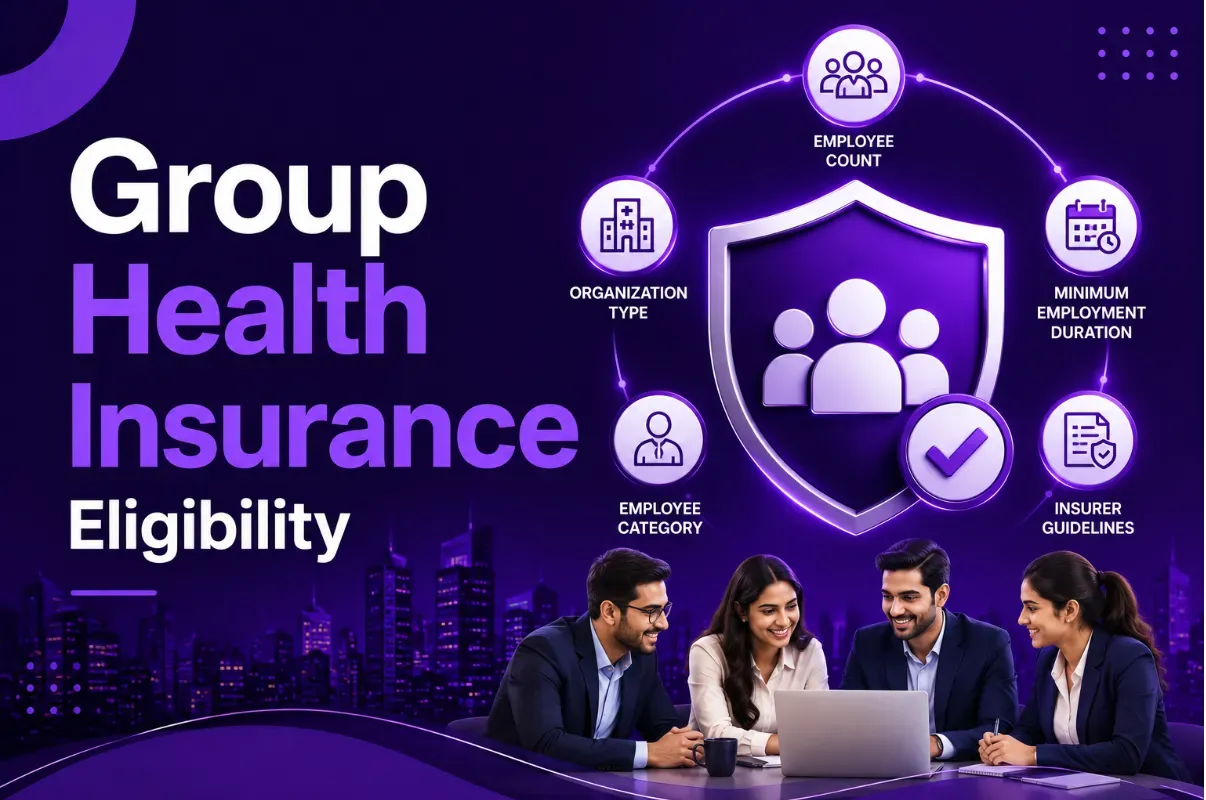
Group health insurance covers a group of employees or members under one policy. However, not everyone is eligible for this coverage and can access its advantages. Eligibility depends on factors such as the type of organisation you have, its size, and more.
It is crucial that you be aware of these factors so you can choose the best plan for your employees. Read on to check out the eligibility criteria for group health insurance.
Contents

Definition of a Group in Group Health Insurance
The Insurance Regulatory and Development Authority of India (IRDAI) defines “group” as an employer-employee group or non-employer-employee group. A non-employer-employee group can be a group with a common interest. For example, a group of credit card holders, members of the same cultural or social association, savings bank account holders of a bank, among other such groups, are eligible to apply for a group health insurance plan.
Eligibility Criteria for Group Health Insurance
Group health insurance is available to eligible companies that fulfil certain insurer and regulatory norms. Although these criteria can vary from one company to another, here are the eligibility requirements generally considered when buying a group health insurance policy:
Eligible Organisation or Group
Group health insurance can be purchased by employer-employee groups and by some non-employer groups with a shared interest. Think about companies, start-ups, partnerships, LLPs, registered proprietorships, professional associations, welfare groups, and other recognised organisations.
Minimum Group Size
Most insurance companies need a minimum number of members in order to issue a group health insurance policy. However, keep in mind that the minimum group size may vary by insurer and policy type.
Read more about small group vs large group health insurance.
Legally Recognised Entity
To purchase group health insurance, your organisation must be a legally recognised entity, such as a private limited company, partnership firm, LLP (Limited Liability Partnership), registered proprietorship, society, trust, or association, and must comply with the relevant rules.
Employee Eligibility
These group health insurance plans are usually meant for active employees in an organisation. Usually, full-time employees get coverage, but eligibility for part-time, contractual, or temporary workers depends on the employer’s rules and the insurer’s guidelines.
Age Requirements
Employees should be at least 18 years old in order to be eligible for group health insurance. However, the maximum age for signing up and the rules for renewing coverage vary by insurer. So, it is better to check their terms and conditions in the first place.
Dependent Coverage
Many group health insurance plans allow employers to include an employee's family under the plan. This may include spouses, children, and sometimes parents or in-laws. However, the scope of dependent coverage differs based on the policy terms.
Enrollment and Policy Conditions
When you are eligible, you usually have to sign up during the specified time by your employer or the insurer. Some companies make you finish a probation period or work for a minimum amount of time before you can join.
Who is Not Eligible for Group Health Insurance?
Group health insurance is intended for eligible groups rather than individuals. As a result, below are some of the individuals or entities that may not be eligible for corporate health insurance coverage:
Sole Proprietors Without Employees: A sole proprietor or entrepreneur with no employees is generally not eligible for a group health insurance policy.
Independent Contractors: Freelance workers and independent contractors may not be eligible for group health insurance coverage unless they are included under the employer's policy and meet the insurer's eligibility requirements.
Very Small or Unregistered Businesses: Businesses that do not meet the insurer's minimum member requirements or lack the necessary legal registration may not qualify for group health insurance.
Close Family Businesses: In some family-run businesses consisting only of immediate family members, coverage eligibility may be limited unless the business meets the insurer's group health insurance requirements.
Conclusion
Group health insurance is generally available to employer-employee groups and certain non-employer groups that meet the insurer's eligibility requirements. Factors such as the type of organisation, group size, employee status, dependent coverage, and policy conditions play an important role in determining eligibility. Before purchasing a group health insurance policy, it is advisable to review the insurer's requirements and ensure that your organisation meets the necessary criteria.
FAQs
Below are some of the most commonly asked questions about who is eligible for group health insurance?

1. What key factors should businesses consider before purchasing group health insurance?
Before buying group health insurance, businesses need to ensure their group is legitimate and meets the insurer's minimum requirements. An active employee base is also crucial.
2. Who is not eligible for group health insurance?
Individuals who run sole-proprietorship firms are generally not eligible for group health insurance. In family-run businesses, a spouse might not be considered an employee by insurers unless the company fits their group eligibility rules. Also, coverage of dependents depends on the policy's terms and may require an extra premium payment.
3. How does a company or an organisation qualify for a group health insurance plan?
To qualify for a Group Health Insurance Plan, an organisation must be a legally recognised entity, meet the insurer's minimum group size requirements (usually 7 to 20, depending on the insurer), and satisfy the applicable eligibility criteria. The group should also exist for a genuine purpose beyond obtaining insurance coverage.
4. What is the minimum group size required for group health insurance?
The minimum group size required for group health insurance varies depending on the insurer and the policy. Some insurers may offer coverage to smaller groups, while others may require a larger number of members. It is advisable to check the insurer's eligibility criteria before applying.
5. Can start-ups and small businesses buy group health insurance?
Yes, start-ups and small businesses can purchase group health insurance if they meet the insurer's eligibility requirements. The minimum group size and documentation requirements may vary depending on the insurer and policy.

Was this article helpful?

Recent
Articles
No Insurance, No Fuel: What the Supreme Court's Pilot Means
Nikhila PS Aug 6, 2026
Supreme Court Extends Third-Party Insurance for New Cars to Four Years
Nikhila PS Aug 6, 2026
Do ADAS Features Reduce Car Insurance Premiums in India?
Nikhila PS Jun 25, 2026
How Do BS6 Bikes Affect Bike Insurance Premiums and Coverage?
Nikhila PS Jun 25, 2026
Top 15 Car Companies in India in 2026
Nikhila PS Jun 25, 2026
All Articles


Want to post any comments?

A group health insurance policy that offers holistic healthcare benefits that your team needs.

Get Quote


#36/5, Hustlehub One East, Somasandrapalya 27th Main Rd, Sector 2, HSR Layout, Bengaluru, Karnataka 560102