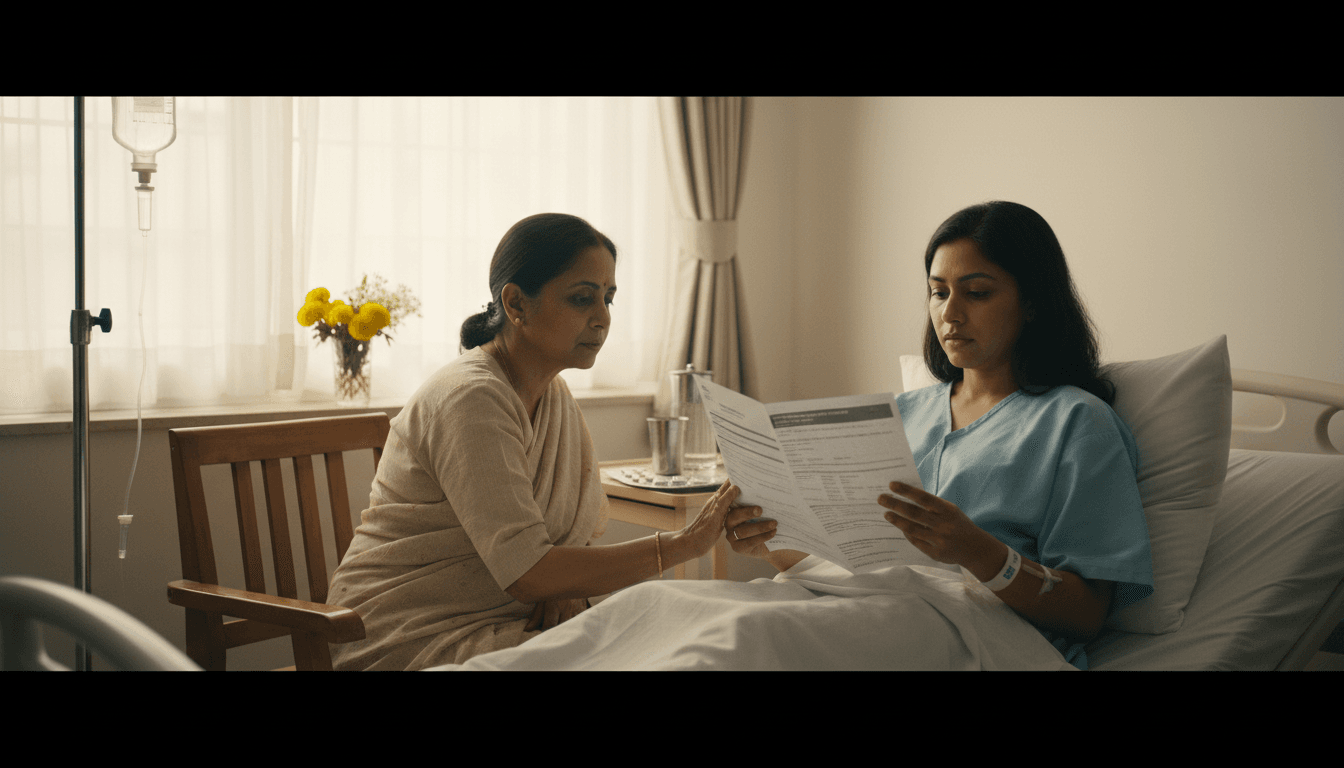
Yes. Health insurance coverage in India ensures that treatment of cervical cancer is covered as any normal illness under their coverage. The coverage treats it equally as any other type of cancer or illness under the cover. After issuance of the health insurance cover and the completion of the waiting period, the insurance company normally settles all the claims regarding hospitalisation, surgical procedures, chemotherapy and radiation therapy among others up to the sum insured.
What parts of cervical cancer treatment are covered by health insurance?
The treatment of cervix cancer normally involves a series of diagnosis and surgical operation, which may be followed up with further treatment. The usual indemnity health insurance coverage also covers these when it is needed and ordered by the physician.
| Treatment component | Typically covered |
|---|---|
| In-patient hospitalisation (room, ICU, nursing) | |
| Surgery (hysterectomy, conisation, lymph node removal) | |
| Chemotherapy (in-patient or day care) | |
| Radiation therapy, including brachytherapy | |
| Targeted therapy and immunotherapy (if prescribed) | |
| Pre-hospitalisation tests and consultations | |
| Post-hospitalisation follow-up and medicines | |
| Diagnostic screening (Pap smear, HPV test) with no illness |
Chemotherapy and radiation therapy are frequently administered as day-case treatments. Day care treatments means the patient need not be admitted to hospital for the whole day. Modern comprehensive plans include listed day care treatments, so a chemo session lasting several hours is still claimable.
How much does health insurance cover for cervical cancer treatment?
After deducting items from sub-limits, co-payment or non-medical items, the insurer will pay you up to the sum insured amount for a year. A cervical cancer treatment in India can range from surgery in the early stages of about Rs 2 lakh to around Rs 10 lakh and beyond if it includes chemotherapy and radiation over a few months. Therefore, the sum insured that you select would be very important.
Imagine a woman with a Rs 10 lakh topcover policy who has not been sick with any condition that would be considered a pre- existing condition. Her treatment is likely to go like this:
| Item | Amount |
|---|---|
| Surgery and hospitalisation | Rs 3,00,000 |
| Chemotherapy (6 cycles, day care) | Rs 3,50,000 |
| Radiation therapy | Rs 2,00,000 |
| Pre and post-hospitalisation costs | Rs 50,000 |
| Non-medical items (gloves, admin, not payable) | Rs 40,000 |
| Total bill | Rs 9,40,000 |
| Non-payable deduction | Rs 40,000 |
| Insurer pays | Rs 9,00,000 |
In this particular case, the whole cost of treating her cancer is Rs 10 lakh that lies within the hospitalisation and outpatient treatment sum insured by this cover, so she gets it for free. The only thing that comes out of the policyholder's pocket is the Rs 40, 000 in non-medical consumables which is routine exclusion for health insurance policies.
Had the amount exceeded Rs 10 lakh, that is, the sum insured, she would be the one to bear out of her personal pockets the excess. That is also what makes higher sum insured or a super top-up more important when it is cancer the patient is being treated for.
Do waiting periods in health insurance apply to cervical cancer treatment?
Waiting periods dictate the timing of a cervical cancer payout in a claim and also depend on whether it is a new cancer diagnosis or is related to an existing condition.
| Situation | Typical waiting period |
|---|---|
| Initial waiting period for any illness | 30 days from policy start |
| Cervical cancer with no pre-existing link | Covered after the 30-day period |
| Cancer linked to a declared pre-existing disease | 2 to 3 years, as stated in the policy |
| Cancer diagnosed before buying the policy (undeclared) | Not covered, treated as pre-existing |
If you have cervical cancer diagnosed after the plan has been in force for more than the first 30 days, and if it is not associated with any pre-existing medical problem, then it would be covered by the insurance plan. Any medical problem that existed prior to the purchase of the insurance plan is covered under the pre-existing condition clause.
Read our complete guide to waiting periods in health insurance to know when different treatments become eligible for coverage.
Declare your health history honestly
If one has cervical cancer or any precancerous condition before applying for insurance cover, this should be disclosed at the time of application. Failure to disclose known cases at the time of buying insurance will cause non-disclosure and therefore the rejection of claims. In case one has cervical cancer, this condition will not be covered.
What is not covered by health insurance for cervical cancer?
A comprehensive health plan covers all the main phases of treating cervical cancer, including the stage when it's detected, its development as a disease, and finally its resolution with recovery.
Here's what usually falls inside the cover.
| Cost head | Usually covered | Notes |
|---|---|---|
| Hospitalisation | Yes | Room, ICU, doctor and surgeon fees during admission |
| Surgery | Yes | Hysterectomy and other cancer-related procedures |
| Chemotherapy and radiation | Yes | Often as day care, no 24-hour stay needed |
| Diagnostic tests | Yes | Biopsy, scans and pathology linked to treatment |
| Pre and post hospitalisation | Yes | Usually 30 to 60 days before and 60 to 90 days after |
| Day care procedures | Yes | Listed treatments not needing overnight admission |
| Targeted and hormonal therapy | Often | Covered when prescribed and medically necessary, check drug limits |
| Ambulance charges | Yes | Usually a fixed amount per hospitalisation |
| Palliative and follow-up care | Sometimes | Depends on plan, often linked to hospitalisation |
Generally, most of the latest indemnity plans refund the real expenses without considering the level of the illness, but only if treatment is medically necessary. Chemotherapy and radiation procedures are almost always classified as day treatments because they rarely require a patient to be kept over for the whole night. Pre- and post-hospitalisation cover simply refers to the idea that tests you have done before going into the hospital and visits to your doctor after getting discharged can be put together into one claim.
Learn how health insurance works for lung cancer treatment, from chemotherapy and surgery to waiting periods and the claims process.
How do you file a health insurance claim for cervical cancer treatment?
Inform the insurer
Inform your insurer as soon as hospitalisation or treatment becomes imminent. For cashless, this must be done prior to admission at a network hospital.
Cashless or Reimbursement
If it's a network hospital, authorise cashless payment from the insurance counter. If not, make your own payments and claim later.
Documentation
Upload diagnosis report, doctor’s prescription, bill of the hospital, discharge summary and claim form.
Insurer assessment
The insurance company checks the diagnosis, treatment and policy details including waiting period and sum insured.
Settlement
For cashless, the insurance company will pay directly to the hospital. For reimbursement, the insurance company will make the payment to your bank account.
Key takeaways
Health insurance policies in India are normally considered to include coverage for cancer of the cervix which will cover surgery, chemotherapy, radiation and hospitalisation in the treatment.
There shall be a limit on the payout of your premium, so taking an insurance of more value or super top-up insurance can protect from multi-lakh cancer expenses.
Cervical cancer which was diagnosed before the policy was taken is considered pre-existing condition and is generally not covered by a new policy.
Chemotherapy and radiation given as a part of day care without 24-hour hospital stay can also be claimed.
Once you get a critical illness or cancer stage covered under your plan, you get a fixed sum amount paid to you at diagnosis time separately from the actual bill reimbursement.
Standard checkups and the HPV vaccine are common exceptions also as well as non-medical expendables and treatment beyond the sum insured.
Frequently asked questions
Yes. The chemotherapy is done on an outpatient basis for several hours unlike being hospitalised for 24 hours. All inclusive plans cover day care treatments thus are eligible for claims without necessarily being admitted to the hospital.
If the illness is the result of a recent diagnosis and there is no pre-existing disease that it is connected with, then it is eligible to be claimed just about a day after 30 days from the date of diagnosis, In case cancer has developed in association with some previously known disease or ailment, then it normally takes between 2 to 4 years.
Not usually. Since the HPV vaccination and regular Pap/HPV testing are considered preventive care and are normally not covered by indemnity health insurance, they must be part of a wellness plan/benefit.
Treatment using surgery, chemo, and radiotherapy may cost up to Rs 8-10 lakhs within several months' time. Having a coverage of Rs 10 lakhs and above, or a basic health insurance plan with a super top-up, will reduce the possibility of making payments from personal funds.
Yes, a health insurance policy compensates for the cost incurred due to treatments whereas an illness or cancer insurance policy provides a pre-determined amount when a certain stage is reached.
About the authors

Neviya Laishram
Written by · Senior Editor – Health, Life and Group Health Insurance Content at ACKOWith a journalism background, she brings 9 years of experience in strategising and editing health, life, and group health insurance content. Having written for magazines and digital publications, she combines research and editorial expertise to create credible, useful content for readers.

Dr Nitin Kumar Gupta
Reviewed by · SVP – Health Underwriting & Claims at ACKO General InsuranceWith 20+ years of experience in digital transformation and growth, he is a leader specialising in health, life, accident, and disability insurance. Backed by an MBBS degree and insurance designations (FLMI, FALU, FLHC, ACS, ARA), he combines expertise with leadership.