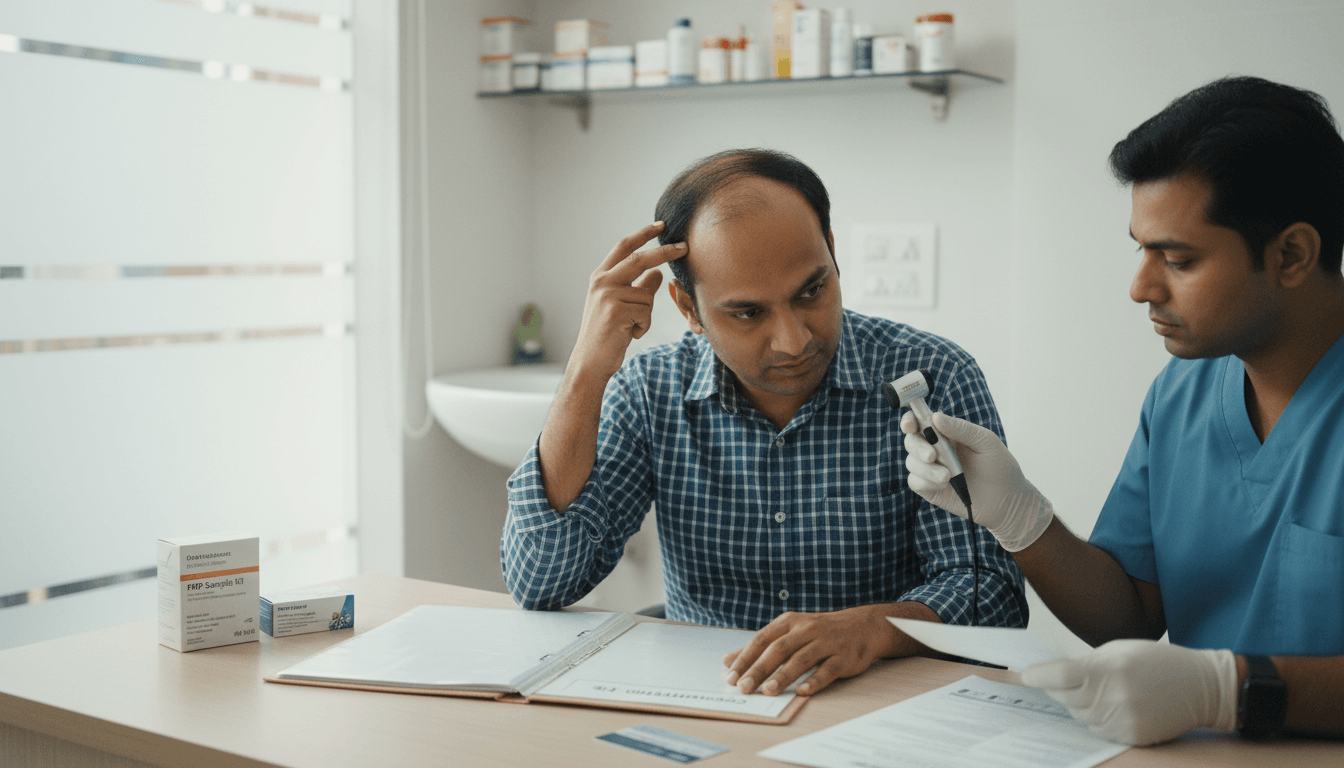
Hair fall treatment is generally not covered under a standard health insurance plan in India if it is cosmetic in nature, such as hair transplants, PRP hair treatments, or routine baldness treatment. However, in certain cases, when hair fall is associated with other illnesses, injuries, burns, cancer treatment, etc., the expense may be covered, depending upon whether the health plan covers such expenses.
In simpler terms, dermatologist consultation, tests, and medication will be covered if you have outpatient coverage (OPD Cover).
When is hair loss treatment covered by health insurance?
The table below explains when hair loss treatment may be covered by health insurance and what that could mean for your claim.
Situation | Likely health insurance treatment | What this means for you |
|---|---|---|
Hair loss due to a diagnosed illness | May be covered if the policy covers the illness and the expense type | Consultations, diagnostic tests, or medicines may be considered if they are part of treatment for the underlying illness. |
Hair loss after chemotherapy or cancer treatment | May be covered for the covered cancer treatment, not automatically for cosmetic restoration | The cancer treatment can be claimable if covered. Wigs, hair restoration, or cosmetic correction are covered only if the policy specifically permits them. |
Reconstructive treatment after burns, accidents, or cancer surgery | May be covered if medically necessary | Cosmetic or plastic surgery exclusions commonly make exceptions for medically necessary reconstruction after accidents, burns, or cancer. |
Which hair loss treatments are not covered by health insurance?
The table below lists some common hair loss treatments and expenses that are usually not covered by health insurance.
Treatment or expense | Usual cover position | Reason claims are often denied |
|---|---|---|
Hair transplant for baldness | Usually excluded | It is generally treated as a cosmetic or aesthetic treatment. |
PRP therapy for hair growth | Usually excluded | It is usually an elective hair restoration procedure. |
Scalp micropigmentation | Usually excluded | It changes appearance and does not treat a covered illness. |
Wigs for cosmetic use | Usually excluded unless specifically covered | Many policies do not treat wigs as a medical expense. |
Anti-hair fall shampoo, supplements, cosmetic products | Usually excluded | These are often treated as personal care or non-medical items. |
Over-the-counter hair growth products | Usually excluded | They are not usually reimbursed unless specifically prescribed and covered under an applicable benefit. |
A prescription alone is not enough
One cannot presume that a prescription from a doctor means automatic coverage for hair loss treatment. The insurer will review medical necessity as well as the terms and conditions of the insurance policy.
Is hair loss treatment covered under OPD health insurance plan?
Yes, OPD health insurance coverage can definitely change the answer to this question for certain hair-loss-related expenses. OPD stands for Outpatient Department. Since OPD coverage is meant for medical care that does not require hospitalisation, it may cover expenses such as doctor consultations, diagnostic tests, or prescribed medicines, depending on the terms and conditions of your policy.
Expense type | Without OPD cover | With OPD cover |
|---|---|---|
Dermatologist consultation for hair loss | Usually not payable if there is no hospitalisation | May be payable up to the OPD limit if dermatology consultations are included |
Blood tests to find the cause of hair loss | Usually not payable as a standalone outpatient expense | May be payable if diagnostic tests are covered under OPD |
Prescription medicines for an underlying illness | Usually not payable as a routine outpatient pharmacy expense | May be payable if pharmacy expenses are included under OPD |
Hair transplant or PRP | Usually not payable | Still usually not payable if the policy excludes cosmetic hair restoration |
How to claim hair loss treatment under health insurance?
Read the exclusions first
Search the policy terms such as cosmetic treatment, plastic surgery, hair transplant, alopecia, OPD, non-medical items, exclusions, and sublimits.
Identify the medical cause
If your hair loss is linked to an illness, injury, burns, cancer treatment, infection, or autoimmune condition, get a written diagnosis and prescription from the doctor.
Understand the kind of benefit available
Confirm whether your health insurance policy offers OPD coverage or not, since most cases of hair loss do not require hospitalisation.
Confirm coverage with the insurer
Before starting treatment, check with the insurer or TPA whether the proposed treatment is covered and whether pre-authorisation is required.
Get claim documentation ready
Provide prescriptions, investigation reports, invoices, receipts, discharge reports in case of hospitalisation, and a doctor's explanation of medical need for the treatment.
Read our detailed guide on reimbursement in health insurance and learn how the claim process works.
What are the documents required for hair loss treatment claims under health insurance?
Based on your treatment and the health insurance plan, some documents that can be required by your insurer include:
Prescription and diagnosis report by the doctor
Lab reports, such as blood test or biopsy, if recommended by the doctor
Medical bills of treatment received, stating name, date, and cost of treatment
Pharmacy bills for medicines as prescribed by the doctor
Hospital discharge report if admitted to the hospital
Key Takeaways
Coverage for hair loss treatments is often not included in health insurance because they are considered purely cosmetic.Hair transplant, PRP treatment, and scalp micropigmentation are often not included unless explicitly stated in your policy.
Consultations, diagnostics, and prescription medicines can be covered if your policy covers OPD expenses or if the treatments are covered as inpatient procedures.
Hair loss treatments due to accidents, burns, or cancer may be included in your insurance under certain conditions.
Whether a particular claim is payable or not depends on the terms of the health insurance policy
Frequently asked questions
It can be covered if the hair loss is due to some underlying health condition, and the treatment is included in your insurance plan. Hair restoration treatments that are purely cosmetic in nature are normally not covered.
Hair loss treatment through PRP is generally not covered by health insurance since it is considered a cosmetic treatment for hair loss. Even if your insurance plan covers OPD and wellness services, it is recommended that you consult your insurance company before proceeding with PRP hair treatment.
A dermatologist visit may be covered if your health policy has OPD cover. Otherwise, if you have a hospitalisation-only policy, it will not reimburse for an outpatient visit to the dermatologist.
The cancer treatment itself may be covered by health insurance, but hair growth after chemotherapy, wigs, or other treatments will only be reimbursed if there is a special provision for that in the health insurance policy, or if the cost is considered medically necessary.
Hair-fall shampoos, supplements, and medicines are usually not reimbursable. Prescribed medicine may be considered only if it falls under OPD, pharmacy, or a related claim benefit.
About the authors

Neviya Laishram
Written by · Senior Editor – Health, Life and Group Health Insurance Content at ACKOWith a journalism background, she brings 9 years of experience in strategising and editing health, life, and group health insurance content. Having written for magazines and digital publications, she combines research and editorial expertise to create credible, useful content for readers.

Dr Nitin Kumar Gupta
Reviewed by · SVP – Health Underwriting & Claims at ACKO General InsuranceWith 20+ years of experience in digital transformation and growth, he is a leader specialising in health, life, accident, and disability insurance. Backed by an MBBS degree and insurance designations (FLMI, FALU, FLHC, ACS, ARA), he combines expertise with leadership.