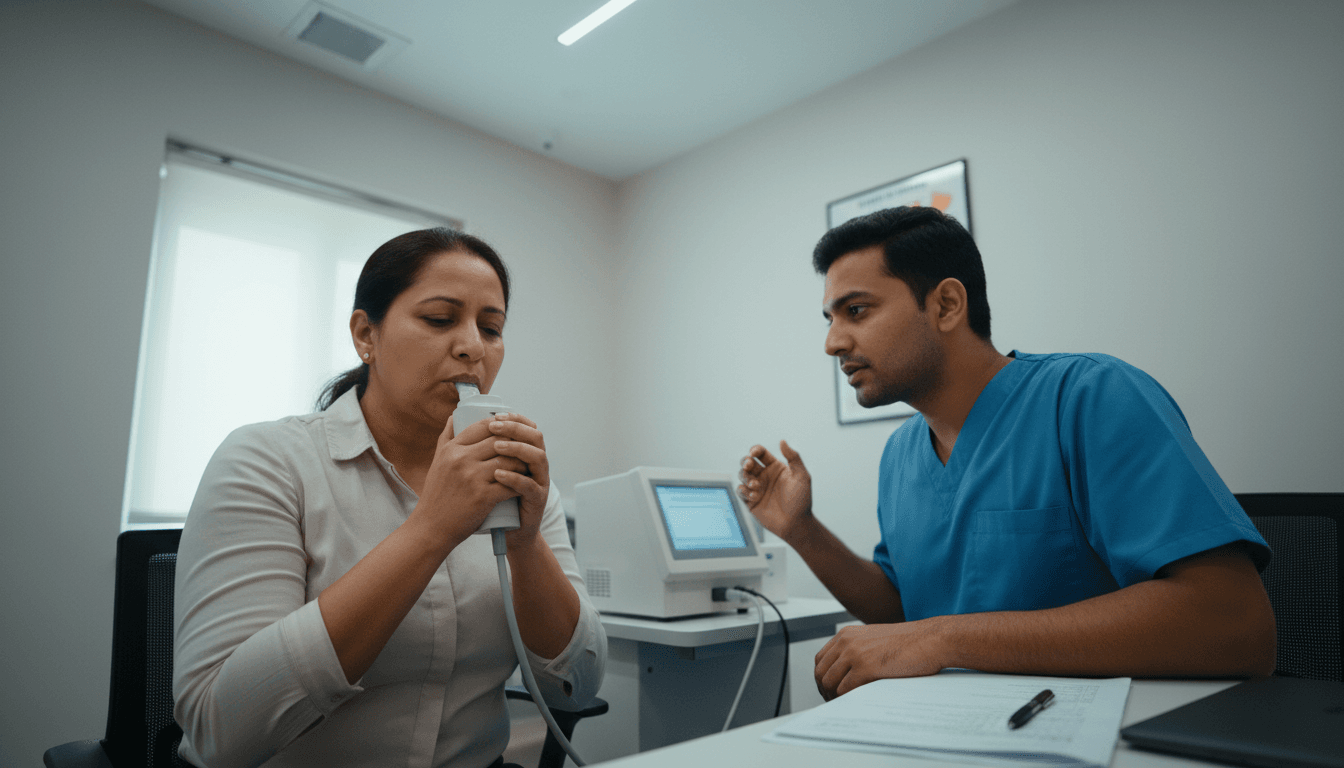
A health insurance plan covers medically necessary treatment for respiratory diseases, including hospital stays, ICU care, medicines, diagnostic tests, and, in some cases, home care. Respiratory diseases may include conditions such as asthma (a chronic illness that causes wheezing, shortness of breath, chest tightness, and cough), COPD (a group of diseases that narrow the airways and make breathing difficult), and pneumonia.
Which respiratory diseases are covered by health insurance?
Health insurance for respiratory diseases is not usually a separate compulsory insurance category. It is usually a standard individual health insurance policy, family floater policy, health insurance for senior citizens, or group health insurance policy that covers admissible treatment for lung and breathing-related illnesses.
A respiratory disease affects the lungs, airways, or breathing function. The World Health Organisation lists chronic respiratory diseases as conditions affecting the airways and other lung structures, including asthma and chronic obstructive pulmonary disease, commonly called COPD
Respiratory condition | How health insurance may treat it | What you should check |
|---|---|---|
Asthma | Hospitalisation for a severe asthma attack may be covered if the policy terms allow it. | Check pre-existing disease waiting period, OPD cover for inhalers, and emergency admission rules. |
COPD | Hospitalisation, ICU care, oxygen support, and medicines may be covered when medically necessary and admissible. | Check disclosure requirements, smoking history declarations, sub-limits, co-pay, and home oxygen terms. |
Pneumonia | Inpatient treatment for pneumonia is generally handled like other covered illness hospitalisation. | Check the initial illness waiting period and whether the admission is medically necessary. |
Tuberculosis | Hospitalisation for tuberculosis complications may be covered if not excluded and after applicable waiting periods. | Check whether past tuberculosis is a pre-existing disease and whether long-term medicines outside hospital are covered. |
Bronchitis | Acute bronchitis hospitalisation may be covered if it needs inpatient care. | Check whether routine doctor visits and outpatient medicines are covered. |
Sleep apnea | Hospitalisation or related procedures may be covered only if the policy terms allow it. | Check whether diagnostic sleep studies, devices, and planned treatment have sub-limits or exclusions. |
Which respiratory disease expenses are covered by health insurance?
Medically necessary treatment for a respiratory disease may qualify for reimbursement under certain conditions.
Expense type | Can it be covered? | Important condition |
|---|---|---|
Hospital room and nursing charges | Yes, if inpatient hospitalisation is admissible. | Room rent limits can reduce the claim if you choose a room above the allowed category. |
ICU charges | Yes, if ICU admission is medically necessary. | Check whether the policy has ICU sub-limits. |
Doctor fees during admission | Yes, if linked to admissible hospitalisation. | Fees must be billed as part of the hospital claim. |
Medicines and injections during admission | Yes, if prescribed for the covered hospitalisation. | Non-medical consumables may be deducted unless covered by the policy. |
Diagnostic tests during admission | Yes, if linked to the covered respiratory illness. | Standalone screening tests may not be covered. |
Pre-hospitalisation and post-hospitalisation expenses | Yes, if your policy provides this benefit. | The number of covered days is stated in the policy schedule. |
OPD visits, inhalers, nebulisation outside hospital | Only if the policy has OPD cover. | Many base hospitalisation policies do not pay routine outpatient costs. |
Home care, domiciliary care, oxygen at home | Only if the policy wording includes it. | Insurer approval, doctor prescription, and policy limits may apply. |
What if you already have asthma, COPD, or tuberculosis?
Suppose you were diagnosed with COPD two years ago, then you must put down COPD on the proposal form. Assuming the insurer agrees to a 36-month pre-existing disease waiting period after considering the proposal, a claim arising from COPD is likely to be denied during that period unless the policy's wording says otherwise.
Situation at purchase | How it may affect respiratory disease cover | What you should do |
|---|---|---|
No known respiratory disease | Future covered respiratory illnesses may be claimable after applicable initial waiting periods. | Answer all health and lifestyle questions accurately. |
Existing asthma, COPD, tuberculosis history, or sleep apnea | The condition may be treated as a pre-existing disease and may have a waiting period. | Disclose diagnosis, medicines, past admissions, oxygen use, and test reports. |
Frequent cough, breathlessness, or pending tests before purchase | The insurer may treat this as material medical information. | Declare symptoms and pending investigations instead of waiting for a formal diagnosis. |
Past smoking or current smoking | The insurer may assess the proposal differently based on health risk. | State tobacco use honestly if the proposal form asks for it. |
Disclose known breathing problems before purchase
If you don't disclose the fact that you've received a medical diagnosis or hospitalisation (other than for TB) that the insurer has requested details of in the proposal form, the insurer has the right to carry out an investigation and deny the respiratory illness claim on the basis of the policy terms.
What are the waiting periods for respiratory disease treatment in health insurance?
The respiratory disease claim becomes payable after the waiting period. The exact waiting period depends on whether the condition is newly diagnosed, pre-existing, or subject to a disease-specific waiting period under the policy.
Waiting period type | What it means for respiratory disease claims | Number to check |
|---|---|---|
Initial illness waiting period | New illness claims soon after policy start may not be payable, except where the policy allows it. | Check the exact number of days in the policy schedule. |
Pre-existing disease waiting period | Claims linked to an existing asthma, COPD, tuberculosis history, or other disclosed condition may be delayed until the waiting period is over. | IRDAI caps this at 36 months. |
Specific disease or procedure waiting period | Some listed illnesses or procedures may have a separate waiting period even if they are not pre-existing. | IRDAI's 2024 framework caps specified waiting periods at 36 months. |
Moratorium period | After continuous coverage for the moratorium period, a policy or claim is protected from being contested except on limited grounds such as fraud and permanent exclusions. | IRDAI specifies 60 months of continuous coverage. |
Want to know how waiting periods affect your health insurance claims? Explore our detailed guide on waiting periods in health insurance.
When can a health insurance claim for respiratory disease treatment be denied?
A respiratory disease claim can still be rejected or reduced if it falls outside the policy terms. The common reasons are non-disclosure, an active waiting period, non-covered OPD expenses, non-medical items, or policy limits such as room rent caps.
Reason | Example | Likely result |
|---|---|---|
Waiting period is not over | You bought a policy with disclosed COPD and claimed for COPD hospitalisation before the pre-existing disease waiting period ended. | The COPD-linked claim may be rejected. |
OPD is not covered | You bought inhalers every month without hospitalisation. | The cost may not be payable unless your policy has OPD cover. |
Non-disclosure | You had past tuberculosis treatment but did not mention it in the proposal form. | The insurer may investigate and may reject the claim if the non-disclosure is material. |
Non-medical items | The bill includes gloves, masks, admission kit, or administrative consumables. | These amounts may be deducted unless the policy covers consumables. |
Room rent limit | Your policy allows a shared room but you choose a higher room category. | The insurer may apply proportionate deduction if the policy permits it. |
How do health insurance claims work for respiratory disease treatments?
The actual payout from the insurance company is determined by the hospital charge invoice, sum insured by policy, exclusions, co-pay, and deductible, besides sub-limits which might be included.
In the following case, the manner of deductions affecting the final payoff is displayed.
Suppose that Rs 5 Lakh is your sum insured on the health insurance policy and that you were hospitalised for pneumonia. The total hospital bill amounted to Rs 2,40,000. The insurance policy has sufficient balance and no excess for room rent.
Bill item | Amount | Claim treatment |
|---|---|---|
Room, nursing, doctor fees, medicines, ICU, and diagnostic tests | Rs 2,30,000 | Admissible under the policy in this example |
Non-medical consumables | Rs 10,000 | Deducted in this example |
Total hospital bill | Rs 2,40,000 | Bill raised by hospital |
Admissible claim before co-pay | Rs 2,30,000 | Rs 2,40,000 minus Rs 10,000 |
Insurer payout if there is no co-pay | Rs 2,30,000 | You pay Rs 10,000 |
Insurer payout if there is 10% co-pay | Rs 2,07,000 | 10% of Rs 2,30,000 is Rs 23,000, so you pay Rs 33,000 in total |
In this example, a 10% co-pay increases your out-of-pocket cost from Rs 10,000 to Rs 33,000 because you pay both the Rs 10,000 non-medical deduction and the Rs 23,000 co-pay.
What to consider before buying health insurance for respiratory disease treatment?
When dealing with a respiratory illness, the most helpful policy reviews refer to ones that directly reduce hospital and long-term care costs. A policy that includes hospitalisation cover but excludes OPD cover will cover your ICU stay, but might not account for things like regular inhalers, routine visits, or lung function tests carried out at home.
Policy feature | Why it matters for respiratory diseases | What to look for in the document |
|---|---|---|
Pre-existing disease waiting period | It affects existing asthma, COPD, past tuberculosis, and other known respiratory conditions. | Look for the number of months and the list of disclosed conditions. |
OPD cover | Respiratory diseases often need repeat consultations, inhalers, tests, and follow-up care. | Look for OPD annual limit, covered consultations, pharmacy rules, and exclusions. |
Room rent limit | Respiratory admissions can involve long hospital stays, and room category can affect deductions. | Look for daily room rent cap, room category cap, and proportionate deduction clause. |
ICU and oxygen support | Severe pneumonia, COPD exacerbation, or asthma attack may need ICU or oxygen. | Look for ICU sub-limit, oxygen charges, ventilator charges, and consumable coverage. |
Home care or domiciliary treatment | Some respiratory care may continue at home after hospital advice. | Look for eligibility, prior approval, covered services, and limits. |
Co-pay and deductible | These make you pay part of every admissible claim. | Look for percentage co-pay and fixed deductible amount. |
Permanent exclusions | Some risks or conditions may never be covered. | Look for named exclusions, disease-specific exclusions, and endorsements. |
How do you file a health insurance claim for a respiratory disease treatment?
Start with cashless if possible
To get cashless treatment, you can only opt for hospitalisation at a network hospital. In case of emergency admission, contact the respective insurer or TPA as soon as the policy procedures call for it.
Submit pre-authorisation papers
Share your health card, identity proof, doctor's diagnosis, investigation reports, and admission notes. The hospital sends a pre-authorisation request to the insurer or TPA.
Respond to medical queries
If the insurer asks about previous illnesses such as asthma, COPD, or tuberculosis, smoking history, inhaler use, or past hospitalisations, you should respond by providing accurate records if you have any.
Settle deductions at discharge
Upon discharge, the insurer makes the payment for the amount authorised and accepted by the hospital through a cashless claim. You take care of the exclusions, co-pay, deductibles, and non-payable expenses.
Use reimbursement if cashless is not available
When you opt for a non-network hospital, pay the bill and send the form of claim, discharge certificate, prescription, reports, original bill copy, payment voucher, and your bank details.
Key takeaways
Health insurance cover for respiratory diseases usually comprises an ordinary health insurance policy with coverage for admissible treatments of respiratory ailments.
Respiratory illnesses such as asthma, COPD, pneumonia, tuberculosis, bronchitis, and sleep apnea may be covered if the policy's terms and waiting periods permit the claim.
Pre-existing respiratory diseases prior to the purchase of the policy are considered pre-existing ailments and must be declared on the proposal form.
Cover includes hospitalisation, ICU, medicines, diagnostic tests, and treatment charges, but excludes OPD visits, inhalers, home oxygen, and home care without a relevant policy benefit.
Payout of claims is reduced due to non-medical deductions, co-pays, deductibles, room rent ceilings, sub-limits, and exclusions.
Frequently asked questions
Yes, the insurance policy can cover asthma, provided the submitted claim is admissible under the policy's rules. But there is a condition if you had asthma before buying the policy. Then, the insurer may impose a pre-existing disease waiting period before asthma-related claims can be paid.
COPD may be insured by a risk-takers' policy if the claim meets conditions of the policy. Since COPD in general is a lasting condition one is to tell at the time of insurance purchase about the disease, taking of medicine, use of oxygen, and any smoking habits (if relevant), and also if one has been hospitalised for that cause.
If tuberculosis treatment requires hospitalisation, it will most likely be covered if this medical necessity is documented and there is nothing in your insurance policy to exclude this claim.
The standard type of inhaler is mostly outpatients' drug or a dispensary item; hence, they are generally paid for only when the plan offers an outpatient or a dispensary benefit. A normal health cover, excluding any OPD component, probably would not reimburse for such things as regular inhalers that a customer buys outside the hospital
Home Oxygen may be claimed only when the Terms & Conditions include home care, domiciliary treatment, or any other such service in which the medical and approval criteria have been met. If the policy is just for inpatient hospitalisation, no benefit will be paid for home oxygen.
No, be honest about the disease you have while buying health insurance. The information required in the proposal form can include the history of the symptoms, the diagnosis, the treatment provided, smoking, past hospitalizations, and currently used medicines. A refusal to disclose such information at the stage could cause complications with the claim.
About the authors

Neviya Laishram
Written by · Senior Editor – Health, Life and Group Health Insurance Content at ACKOWith a journalism background, she brings 9 years of experience in strategising and editing health, life, and group health insurance content. Having written for magazines and digital publications, she combines research and editorial expertise to create credible, useful content for readers.

Dr Nitin Kumar Gupta
Reviewed by · SVP – Health Underwriting & Claims at ACKO General InsuranceWith 20+ years of experience in digital transformation and growth, he is a leader specialising in health, life, accident, and disability insurance. Backed by an MBBS degree and insurance designations (FLMI, FALU, FLHC, ACS, ARA), he combines expertise with leadership.