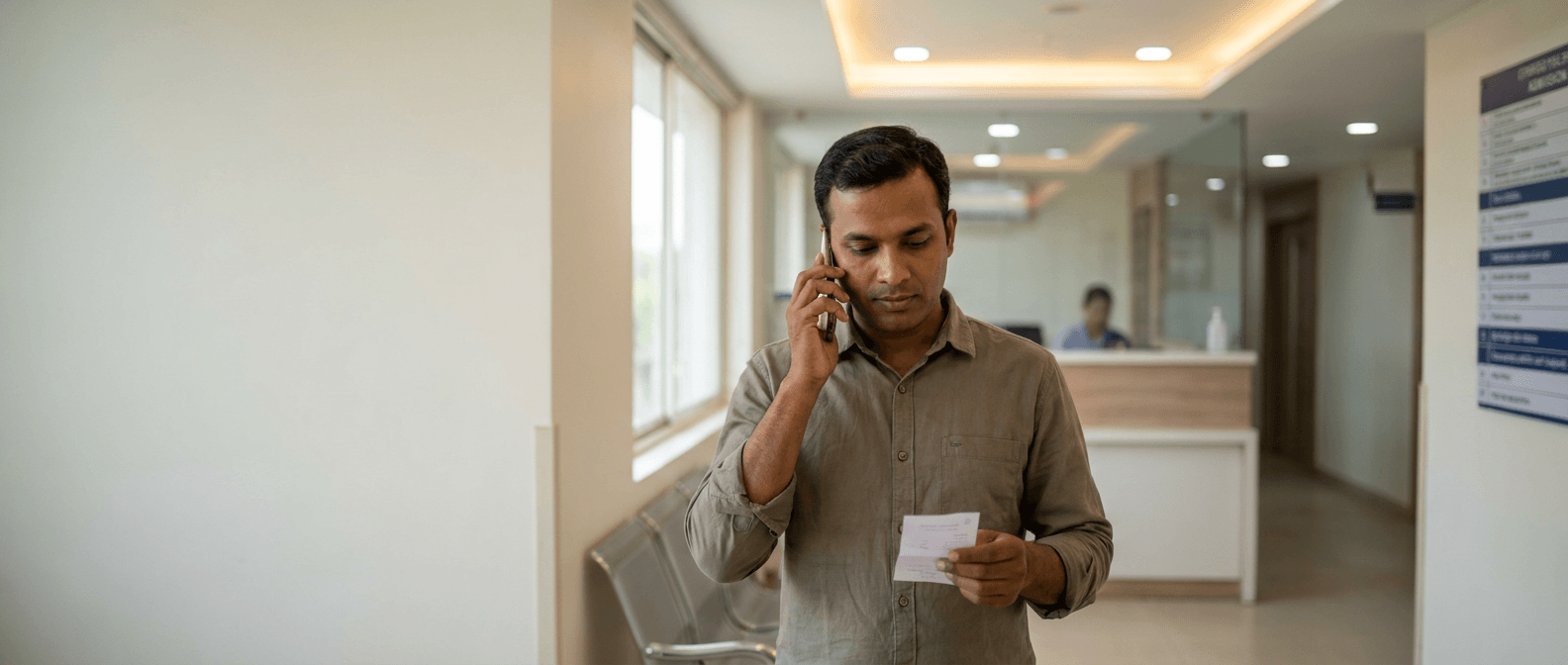
When buying a mediclaim policy, don't rely solely on the premium. It's equally important to know what the policy covers, whether the sum insured is enough, what waiting periods apply, if there are room-rent limits or co-payment clauses, how good the cashless hospital network is, and how reliable the insurer is at settling claims. Asking these six questions before you buy can help you choose a mediclaim policy that offers the financial protection you expect during a medical emergency.
What is Covered and Not Covered Under a Mediclaim Policy?
First and foremost, when purchasing a mediclaim policy, you must review what is covered by the policy. Even if there are many benefits provided under the policy, there are some exclusions you should be aware of.
Here's a quick look at what is covered under a mediclaim policy.
| Benefit | Usually covered |
|---|---|
| In-patient hospitalisation (24 hours or more) | |
| Pre-hospitalisation expenses (typically 30 to 60 days before) | |
| Post-hospitalisation expenses (typically 60 to 90 days after) | |
| Daycare procedures (treatments needing under 24 hours, like cataract or dialysis) | |
| Ambulance charges (up to a stated limit) | |
| Domiciliary (home) treatment where hospitalisation is not possible | |
| Cosmetic surgery (non-medical) | |
| Self-inflicted injury and treatment for substance abuse | |
| Expenses arising outside the policy period |
Many mediclaim policies cover modern treatments, mental health treatment, and maternity benefits. However, expenses for cosmetic procedures without medical necessity and for certain consumables, such as gloves and syringes, are commonly excluded.
What is the Minimum Sum Insured for a Mediclaim Policy?
The sum insured is the maximum coverage amount your mediclaim policy will pay in a policy year. Like any health insurance plan, choosing the right sum insured is important because major treatments like heart surgery, accidents, or cancer treatment can cost several lakhs, so if your sum insured is not enough to cover these expenses, you'll have to pay the remaining amount yourself.
Let's consider an example: If your sum insured amount is Rs. 5 lakh and the cost for a heart surgery is Rs. 7 lakh, then the insurer will pay Rs. 5 lakh, and the rest, Rs. 2 lakh, will be borne by you. Had the same person held a Rs 10 lakh cover, the full Rs 7 lakh would have been payable (subject to any sub-limits and co-payment).
What are the Types of Waiting Periods in a Mediclaim Policy?
A waiting period is the time you must hold the policy before certain claims are payable. There are usually three kinds.
| Type of waiting period | Typical duration | What it applies to |
|---|---|---|
| Initial waiting period | 30 days | All illnesses except accidents from the start date |
| Specific-disease waiting period | 1 to 2 years | Named conditions like hernia, cataract, and some joint problems |
| Pre-existing disease (PED) waiting period | 2 to 4 years | Conditions you already had when buying (diabetes, hypertension, thyroid, etc.) |
Non-disclosure can void your claim
Failing to disclose an already existing health condition could result in rejection of your claim, and even cancellation of your mediclaim policy by the insurance company due to nondisclosure. Declaring a pre-existing condition doesn't mean your claim will be rejected. It simply means you'll need to complete the waiting period for that condition before related claims become eligible.
Does a Mediclaim Policy Have Room Rent Limits or Co-payment Clauses?
Before buying a mediclaim policy, check whether it has a room-rent limit or a co-payment clause. Both can increase the amount you have to pay from your own pocket, even if your sum insured is enough.
Room-rent limit
Some mediclaim policies limit how much they will pay for your hospital room. This may be a fixed amount per day or a specific room category. If you choose a room that costs more than your policy allows, you may have to pay not only the extra room rent but also a part of other hospital expenses, such as doctor fees, nursing charges, and procedure costs.
Say your policy caps room rent at Rs 5,000 a day, but you take a room costing Rs 10,000 a day. Because your room is twice the eligible limit, the insurer can apply a proportionate deduction to the associated charges. So, even if your total hospital bill is ₹2 lakh and your sum insured is enough to cover this bill, you may still have to pay a part of the bill yourself because of the room-rent limit.
Co-payment
A co-payment is the percentage of the claim that you have to pay yourself. For example, if your policy has a 20% co-payment and your hospital bill is ₹3 lakh, the insurer will pay ₹2.4 lakh, and you will pay the remaining ₹60,000. Co-payment clauses are commonly found in senior citizen health insurance plans. Before buying a policy, check whether a co-payment applies to all claims or only to specific situations.
How Large is the Cashless Hospital Network in a Mediclaim Policy?
Inquire about the number of hospitals that the insurance provider has, how many are near your home and workplace, and if they provide cashless claims. There are two ways to claim:
Cashless claim: This is available only at network hospitals. You need to show your health card or policy details at the hospital, and the hospital will send a pre-authorisation request to your insurer. Once it's approved, the insurer settles the eligible hospital bill directly with the hospital.
Reimbursement claim: Used at non-network hospitals or for emergencies. You pay the bill, then submit documents and get reimbursed later.
How Fast Does a Mediclaim Insurer Settle Claims?
There are two figures that can give you an idea: the claim settlement ratio and the average claim settlement time.
Claim Settlement Ratio (CSR): The percentage of claims settled by the company among the total received in one year.
Claim settlement time: How quickly cashless pre-authorisation and claim processing take place. Find out the insurer's stated timelines for cashless approval.
Before choosing a policy, learn the key differences between a mediclaim policy and health insurance.
Select a network hospital
Ensure the hospital selected by you is included in the cashless hospital list of your insurance provider before admission
Present the medical card/details of your policy
The hospital's insurance desk starts the pre-authorisation on your behalf.
Insurer reviews pre-authorisation
The insurer or TPA checks the estimate against your policy and approves an amount.
Get treated
You receive treatment while the insurer coordinates directly with the hospital.
The insurance company makes a payment
The amount approved is then paid directly to the hospital, and you pay the difference, if any.
Key Takeaways
Be careful with the list of exclusions. Keep in mind that cosmetic surgery and self-inflicted harm claims are commonly excluded.
A room-rent cap can result in proportionate deductions from the total bill, and a co-pay requires that you pay a certain percentage of all claims.
If a bill exceeds the sum insured, you will need to pay the excess.
Cashless hospitalisation can be done only through network hospitals.
The claim settlement ratio and settlement period reflect the insurer’s payment record.
Frequently asked questions
Mediclaim policies cover hospitalisation expenses, while health insurance policies offer features such as daycare treatment, no-claim bonus, restore bonus, and wellness benefits.
Yes, if a policy does not cover the entire cost of hospitalisation, you can claim the rest of the amount through your other mediclaim policy, but the total sum should not exceed your medical expenses.
Most mediclaim policies cover hospitalisation expenses and related pre- and post-hospitalisation costs. Routine doctor consultations, OPD visits, and medicines are covered only if your policy includes an OPD benefit.
Most insurance companies provide their customers with a 'no-claim bonus' if there are no claims in the previous year.
Not generally. The majority of mediclaim policies have a waiting period for pre-existing diseases ranging from 2 to 4 years. Once that period ends, claims for those conditions can be covered as per the policy terms.
About the authors

Neviya Laishram
Written by · Senior Editor – Health, Life and Group Health Insurance Content at ACKOWith a journalism background, she brings 9 years of experience in strategising and editing health, life, and group health insurance content. Having written for magazines and digital publications, she combines research and editorial expertise to create credible, useful content for readers.

Dr Nitin Kumar Gupta
Reviewed by · SVP – Health Underwriting & Claims at ACKO General InsuranceWith 20+ years of experience in digital transformation and growth, he is a leader specialising in health, life, accident, and disability insurance. Backed by an MBBS degree and insurance designations (FLMI, FALU, FLHC, ACS, ARA), he combines expertise with leadership.