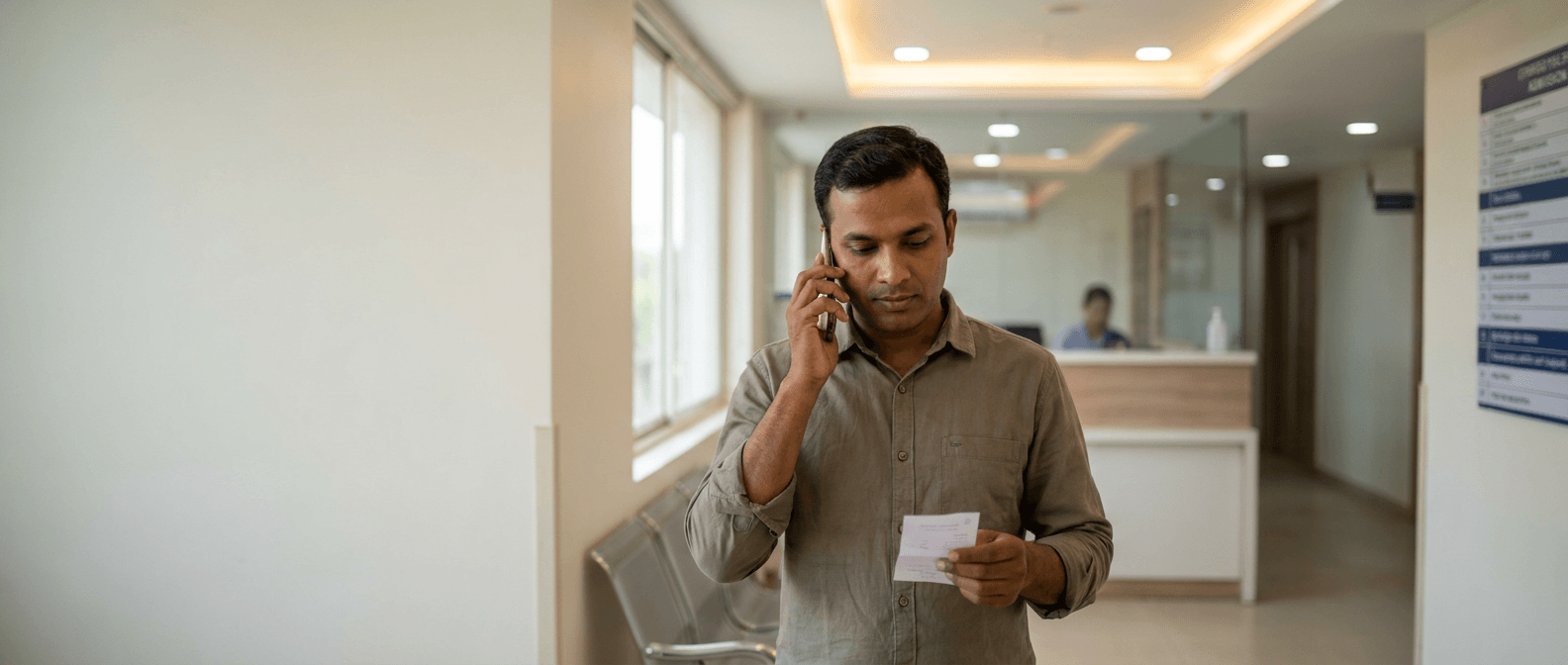
Health insurance for anxiety disorders is health cover that pays for the diagnosis and treatment of anxiety and other mental illnesses on the same basis as physical illnesses. Since 2018, the Insurance Regulatory and Development Authority of India (IRDAI) has required every health insurer in India to treat mental illness like physical illness under the Mental Healthcare Act, 2017.
In practice, this means a hospitalisation for a severe anxiety disorder, panic disorder, generalised anxiety disorder, or obsessive-compulsive disorder is a valid claim under a standard health insurance policy, subject to the policy terms.
What anxiety disorder treatment is covered by health insurance?
The form of treatment that is always covered by health insurance is the inpatient treatment of an anxiety or related disorder. Outpatient visits, counselling, and medication are covered only if the policy covers OPD or a mental health add-on.
Treatment type | Usually covered under a standard policy? |
|---|---|
Hospitalisation for a diagnosed anxiety or psychiatric condition (24+ hours) | Yes |
In-hospital doctor, room, nursing, and medicine charges | Yes |
Pre and post-hospitalisation expenses within policy limits | Yes |
Day-care psychiatric procedures listed by the insurer | Yes |
OPD psychiatrist consultations and therapy sessions | Only with an OPD or mental-health benefit |
Ongoing medication bought at a pharmacy without hospitalisation | Only with an OPD benefit |
Counselling or wellness sessions without a medical diagnosis | No |
Is there a waiting period for anxiety disorders in health insurance?
Yes. Anxiety disorders are subject to the same waiting periods as any other condition, and the applicable period depends on whether the condition is new or pre-existing.
Situation | Typical waiting period |
|---|---|
The initial waiting period for most illnesses after buying the policy | 30 days |
Specific illness waiting period (mental illness is treated like other listed conditions, where applicable) | Commonly up to 2 years, per policy wording |
Pre-existing disease (diagnosed before buying the policy and declared) | Up to 3 years, per IRDAI norms and policy wording |
What is not covered under health insurance for anxiety disorders?
The following are some of the common exclusions:
Treatment of alcoholism/substance abuse and complications arising from them is generally not covered.
Consultations/therapy/medicines taken exclusively on an outpatient basis when there is no OPD provision are not covered.
Any costs exceeding the sub-limit, room rent limit, or copayment are not covered.
Non-medical items and lifestyle or wellness services without a clinical diagnosis are not covered.
How does health insurance for anxiety disorders work?
Let's say you have a Rs. 10 lakh health insurance policy with a 10% co-payment and no room-rent limit. After completing the waiting period, you're admitted to the hospital for five days to receive treatment for a severe anxiety disorder.
Your expenses look like this:
Expense | Amount |
|---|---|
Hospitalisation expenses | Rs. 1,20,000 |
Covered pre- and post-hospitalisation costs (consultations, tests, medicines) | Rs. 15,000 |
Total eligible claim amount | Rs. 1,35,000 |
Since your policy has a 10% co-payment, you'll pay Rs. 13,500 from your pocket. The insurer will pay the remaining Rs. 1,21,500. After this claim is settled, Rs. 8,65,000 of your Rs. 10 lakh sum insured will still be available for the rest of the policy year.
Learn everything you need to know about copay in health insurance.
How to claim health insurance for anxiety disorder treatment
Confirm the diagnosis
Get the diagnosis and documentation of anxiety disorder from a certified medical professional or a psychiatrist, with the treatment being medically essential.
Cashless or reimbursement
In case of planned hospitalisation at a network hospital, request cashless pre-authorisation; otherwise, opt for reimbursement.
Notify the insurer
Inform the insurer or TPA within the required time mentioned in the policy document. In case of planned admission, notify before admission and in case of an emergency, inform within 24 to 48 hours of admission.
Submit documents
Submit discharge letter, bill statement of hospital, prescription, reports of diagnosis, and claim form.
Follow up
The claim will be settled after verification based on the terms of the policy.
How to choose health insurance for anxiety disorders
Since all IRDAI-approved health insurance policies are required to cover mental illnesses, the real difference lies in the policy terms. When comparing plans, pay close attention to these features:
OPD mental health benefit: See if the OPD consultation with a psychiatrist and therapy are covered in the plan, along with their limits.
Waiting periods: Find out how long you will have to wait before you can claim for any mental health condition, and specifically, if you already have any pre-existing mental condition.
Sub-limits & co-payment: Check if there is a sub-limit for psychiatric treatment or any co-payment s these can reduce the amount your insurer pays and increase your out-of-pocket expenses.
Sum assured: Select a sufficient sum assured in your policy to be able to bear a major hospitalisation without exhausting all your policy limits.
Network hospitals: Ensure there are sufficient network hospitals nearby where you can receive cashless treatment for mental health conditions.
Read our complete guide to health insurance for mental illnesses in India.
Key takeaways
Hospitalisation for a diagnosed mental health condition is usually covered under a standard health insurance policy. However, psychiatrist consultations, therapy sessions, and other outpatient treatment are covered only if your plan includes an OPD or mental health benefit.
There is generally an initial 30-day waiting period, up to a 2-year waiting period for certain diseases, and a 1-3 year waiting period for any pre-existing mental disorders.
A pre-existing diagnosis must be stated in the proposal form, as non-disclosure leads to claim rejection.
Frequently asked questions
Yes. Ever since 2018, IRDAI has made it mandatory for all health insurance providers to cover mental illness, including anxiety disorders, on the same basis as physical illness.
Yes, they are covered if your health plan offers OPD (outpatient care) or a mental health benefit.
A claim can be rejected if the disease was pre-existing and not disclosed, if the claim was filed during the waiting period for the disease, or if the treatment is purely outpatient, and you do not have an OPD benefit.
Yes. All diagnosed diseases must be declared in your proposal form. Once the pre-existing disease waiting period is over, it becomes claimable according to your policy terms.
About the authors

Neviya Laishram
Written by · Senior Editor – Health, Life and Group Health Insurance Content at ACKOWith a journalism background, she brings 9 years of experience in strategising and editing health, life, and group health insurance content. Having written for magazines and digital publications, she combines research and editorial expertise to create credible, useful content for readers.

Dr Nitin Kumar Gupta
Reviewed by · SVP – Health Underwriting & Claims at ACKO General InsuranceWith 20+ years of experience in digital transformation and growth, he is a leader specialising in health, life, accident, and disability insurance. Backed by an MBBS degree and insurance designations (FLMI, FALU, FLHC, ACS, ARA), he combines expertise with leadership.