No, there is no mandatory requirement to buy bike insurance from your dealer. Purchasing a motorbike insurance policy under the Motor Vehicles Act, 1988, is a legal prerequisite, but the law does not specify where it must be done. You are free to choose your own insurer and purchase the policy online, directly from an insurance company, through an agent, or through the dealer, whichever you prefer.
Is bike insurance mandatory by law in India?
The law mandates the insurance, not the seller. As per Section 146 of the Motor Vehicles Act, 1988, each vehicle that a person drives in a public area is required to be covered by a valid third party bike insurance policy at least. Going around on a two-wheeler without it is an offence, punishable by Rs 2,000 plus three months' jail for a first offence and Rs 4,000 for a repeat violation.
Two things result from this:
In India, it's mandatory by law to have two wheeler insurance before registering or riding a new bicycle on public roads. That is, you can't have a new bike delivered to you without also having a policy.
There's no requirement under the Act or IRDAI regulations that you must buy the insurance policy from your dealer. It can literally be issued by any IRDAI-approved insurer.
The insurance is compulsory, the seller is not
You're only allowed to ride legally if you have a valid insurance policy. Moreover, a new bike has to be insured before registration. However, buying that insurance is optional; you can do it through any insurer. Also, the dealer cannot legally require you to purchase their insurance to get the bike.
Why do dealers bundle bike insurance with the purchase?
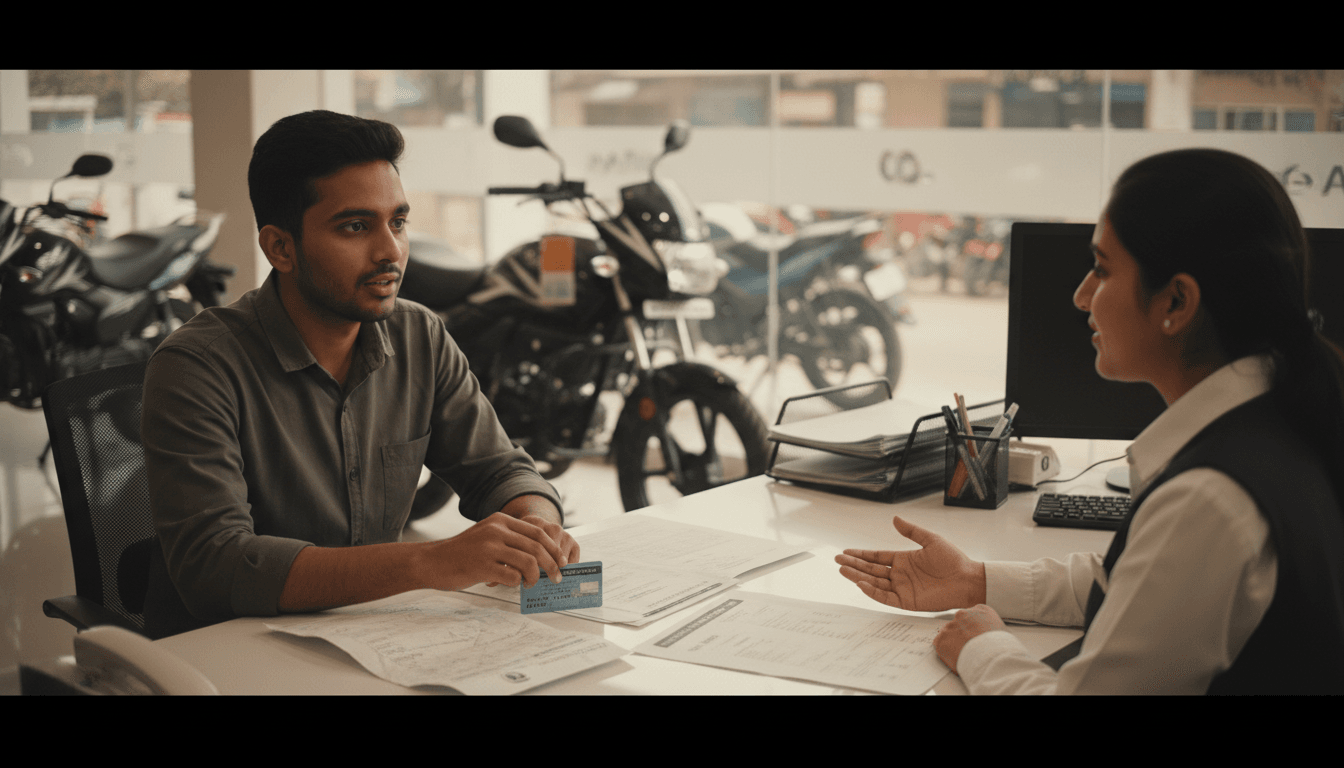
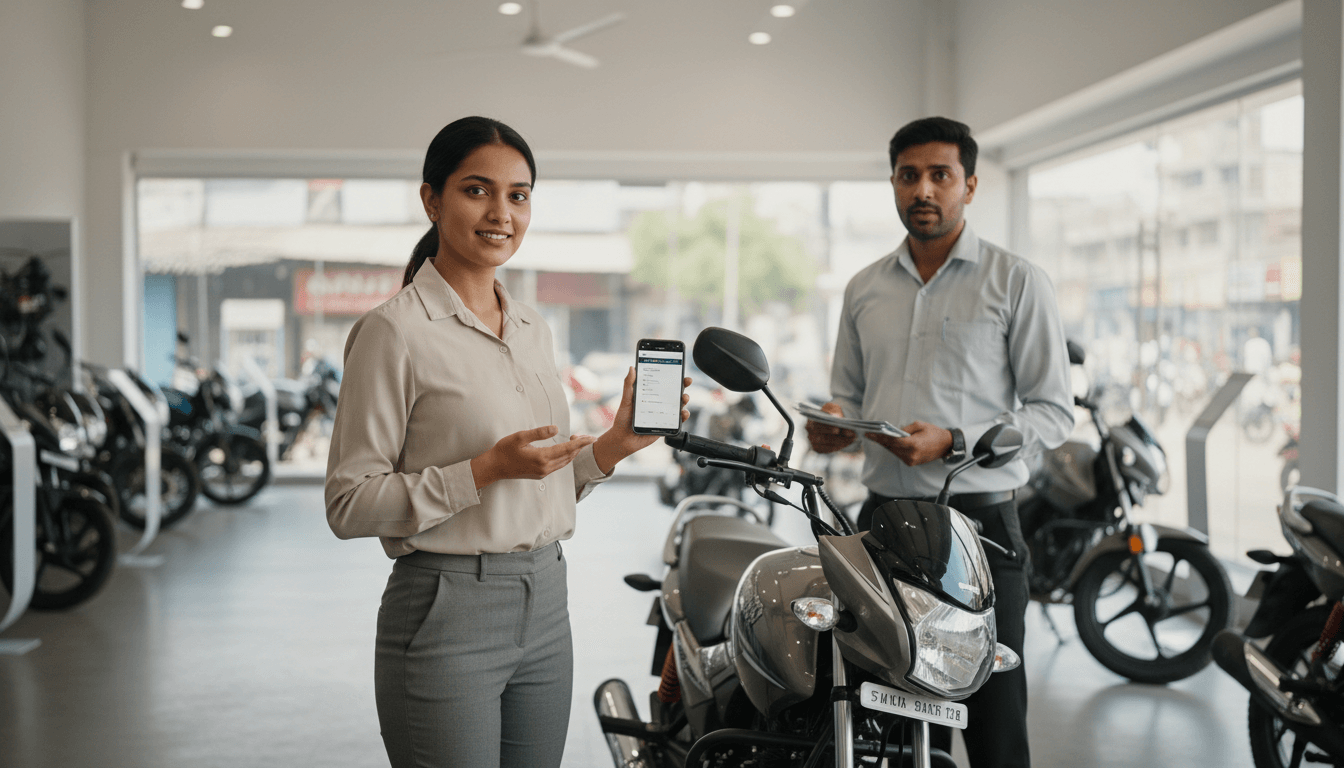
Dealers mainly offer insurance so their customers can get it quickly and for their profit too. When buying a new bike, the showroom is one of the easiest places to get your insurance. Here, a dealer gets the policy done instantly to make your motorcycle road-legal the moment you drive it away, and he also generally earns a commission from the insurance company for the business he has placed them.
While the bundling is legitimate and can be very useful, it also has the potential to get you:
Limited choice: In a showroom, you will find the dealer works with very few insurers. So you get offered only the selected few insurers, and that is it, no one else, i.e., the rest of the market.
More cost: Generally, dealer-arranged insurance contains extra features, which are not even needed, and so you end up paying for that as well in terms of premium.
Lower transparency: The insurance coverage price is combined with the on-road price (the latter is what you pay after registration and other taxes). Thus, it becomes difficult to see the amount of insurance one is buying.
Ask for a breakdown of the on-road price so that you can see your insurance cost as a separate item. You can then compare that insurance cost with quotes you've compiled yourself.
Difference between buying bike insurance from a dealer vs yourself
When you buy insurance from a dealer or separately, both give you a legally valid policy. The difference lies in choice, price transparency, and effort.
| Dimension | Buying from the dealer | Buying it yourself |
|---|---|---|
| Legal validity | Valid | Valid |
| Choice of insurer | Usually one or two tie-ups | Any IRDAI-licensed insurer |
| Ability to compare premiums | Limited | Full, compare online |
| Price transparency | Often bundled into on-road price | Premium shown clearly |
| Control over add-ons | Often pre-selected | You pick what you need |
| Convenience at delivery | High, done on the spot | Needs a few minutes beforehand |
How much can you save on bike insurance by not buying from the dealer?
Most of the time, the difference is due to add-ons and comparisons, not the base rate. The insurance premiums of third-party services are determined only by the policy and are identical across insurers for the same engine size, so it is impossible for anyone to compete on that basis.
In contrast, premium rates for own-damage and add-ons can be quite different, and that is where you can cut down your expenses.
Let’s take an example. Imagine a dealer offers a bundle of all the insurance policies required for a 150cc bike for Rs 6,000. Split it up:
| Component | Dealer quote | Self-arranged quote |
|---|---|---|
| Third-party premium (IRDAI-fixed) | Rs 1,500 | Rs 1,500 |
| Own-damage premium | Rs 2,800 | Rs 2,400 |
| Add-ons (zero-dep, roadside, etc.) | Rs 1,700 | Rs 900 |
| Total | Rs 6,000 | Rs 4,800 |
If we take the third-party part as an example, which is the same here, then only by selecting the add-ons that you require and also comparing the own-damage rate, you actually save Rs 1, 200 on the total. These numbers are just to give you an idea; your premium will vary depending on the bike, city, and the insurer you choose.
Can you refuse the dealer's bike insurance and buy your own?
As a rule, if you provide a copy of your own insurance policy to the dealer, then you can be free of the dealer's insurance requirement. You have to, however, make sure you do this before registration and when the dealer hands over the bike.
An efficient way of doing it:
Ask the dealer to give you the bike's manufacturer details, model, variant, engine and chassis number from the proforma invoice.
Check out comprehensive coverage of various insurance companies online (or by contacting an insurance company directly).
Purchase the insurance policy and, in most cases, even get a digital copy on the spot.
Inform the bike dealers of your policy details so that the registration can take place.
Usually, a new bike also needs long-term third-party coverage (5 years for two-wheelers, which is what the law requires for newly purchased vehicles), which you can easily get from any insurance company, regardless of whether or not you deal directly with the dealer.
Does the same rule apply at bike insurance renewal?
Yes, and you are given more choice at the time of bike insurance renewal.
Towards the end of the policy period, you will probably have a renewal period during which you must make an entirely new choice. At this time, you won't have to follow your original insurer. Besides, you won't have to stick to your dealer or original dealer, or previous policy.
At any rate, you will be allowed to make your decisions about which IRDAI-licensed insurer to go to, the level of insurance coverage to have, whether to get the add-ons, and if you want to carry forward your No Claim Bonus (NCB) which is based on whether you claimed or not.
Actually, the NCB is a discount on the own-damage premium. Each claim-free year brings the level of discount closer i.e. 20% after one year, up to 50% after five consecutive claim-free years. The NCB is actually the one who makes use of the discount so changing insurer won't make you lose the discount if you only change insurer without missing one year of insurance.
Key takeaways
Although bike insurance is legally mandatory in India, the government only makes it compulsory. A dealer selling it is not mandatory.
The Motor Vehicles Act, 1988, only mandates minimum third-party insurance cover to get one's two-wheeler on the road; it does not fix your insurance buying source.
Your bike insurance policy can be from any IRDA-licensed insurer, and also available online, directly with or even through an insurance representative or agent.
Your new bike must be supported by a valid policy at the time of registration and delivery, but you may also use the invoice details to make your own arrangements.
Insurance premiums for third-party liability are pre-determined by IRDAI and uniform across all insurers. Own-damage premiums and extra covers are where you may get different prices.
Driving without valid insurance, you are liable to pay Rs 2, 000 for the first offence, and a second offence is penalised at Rs 4, 000.
You are entitled to change your insurers at renewal, and if you opt for continuous cover with a new company, you will retain your No Claims Bonus.
Frequently asked questions
A dealer cannot lawfully make their own insurance a condition of the sale. They can ask you to show that a valid policy is in place before registration and delivery, but you can satisfy that requirement with a policy you buy yourself from any insurer.
Usually within minutes. Using the make, model, engine number, and chassis number from the dealer's proforma invoice, an insurer can issue and email the policy the same day, so the bike can be registered on time.
No. Third-party premiums are set by IRDAI and are the same across all insurers for a given engine capacity. Savings come from the own-damage premium and add-ons, which you can compare and trim when you buy on your own.
No, the No Claim Bonus belongs to you, not the insurer. As long as you renew without a break in cover, you can transfer the accumulated discount to a new insurer.
Legally, third-party cover meets the minimum requirement. It does not pay for damage to your own bike, so many riders choose a comprehensive policy that adds own-damage cover. New two-wheelers are typically issued a five-year third-party component along with a one-year own-damage component.
About the authors

Nikhila PS
Written by · Senior Content EditorNikhila is a content creator with 6+ years in EdTech and motor insurance, turning complex policies into clear, engaging content. She enjoys exploring digital trends, social media, and art while planning her next short escape.

Rekhit Singh Kaushal
Reviewed by · Senior Director - Motor UnderwritingRekhit Singh Kaushal is Senior Director at ACKO, a leading digital motor insurance provider in India. With deep expertise in insurance strategy and innovation, he brings trusted insights on car and bike insurance to help drivers stay protected.