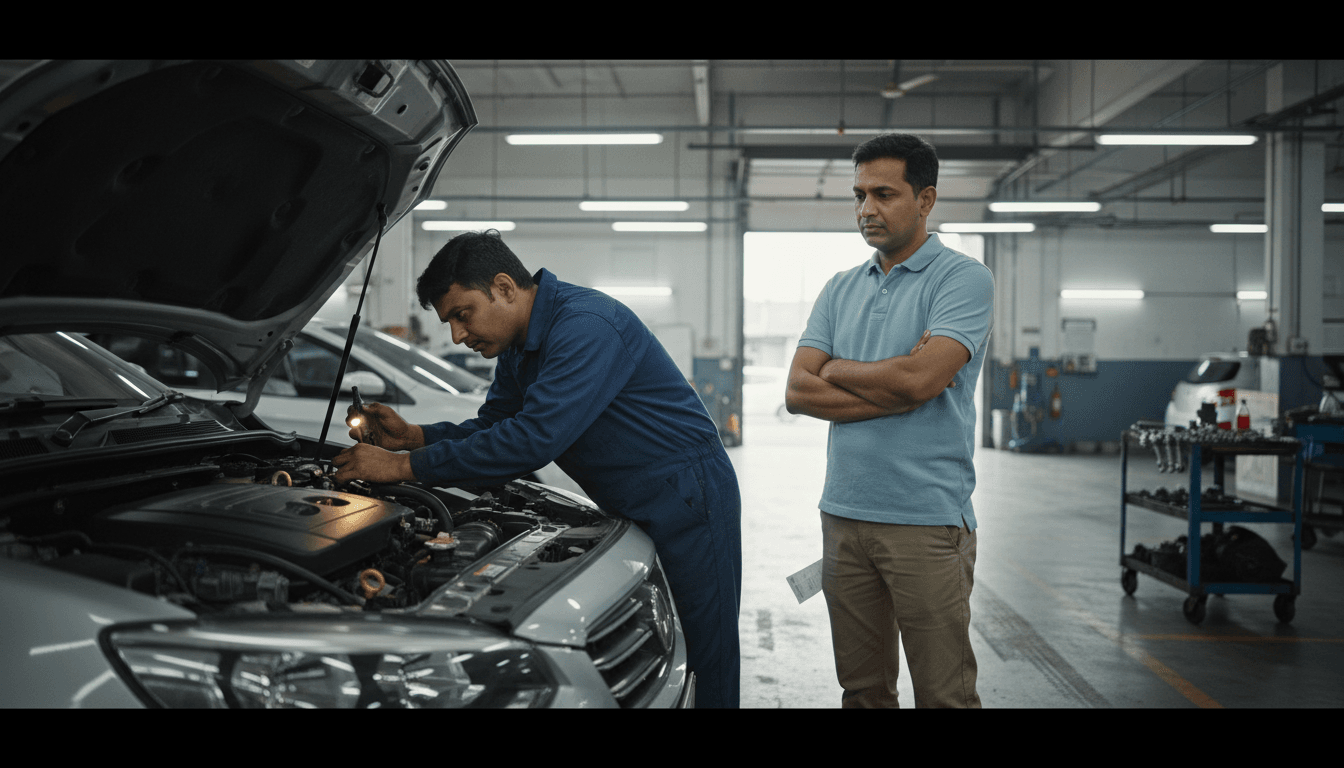
No, the standard car insurance policy will not pay for engine damage caused by E20 fuel. It considers the damage as resulting from wear and tear or fuel-related issues, which motor policies do not cover. However, the policy remains valid.
Most insurance policies cover only accidental and unexpected damages, but if the damage happens due to the use of the wrong type of fuel, it is likely that it will be recognized as a problem related to maintenance or usage. However, different companies, different policy types, and different damage situations may result in different coverage.
What is e20 fuel, and why does it worry car owners?
E20 consists of petrol combined with 20% ethanol. It was launched at petrol stations all over India by almost 2025. Ethanol is a sort of alcohol, and at this greater proportion, it can have an impact on certain elements of an old engine.
Motorists are concerned as a vehicle that was designed for an earlier type of fuel might not be able to tolerate 20% ethanol well. In fact, a message going viral even stated that E20 will void your insurance, which further heightened the concern.
Is your car e20 compatible?
It really depends on the date of manufacture of your car. Vehicles manufactured and sold from approximately April 2023 onwards are engineered and certified to operate on E20, so this type of fuel is safe for them.
On the other hand, lots of older cars were made for petrol with a lower percentage of ethanol, so they might not be fully compatible with E20. To be safe, refer to your owner's manual or contact the carmaker as compatibility is based on the model, not on estimations.
Using the wrong fuel can also void a claim
If your car is not certified for E20 and the manufacturer's manual specifies a different fuel, running it on E20 can be treated as failing to maintain the vehicle in a fit condition. Insurers can cite this to reject even an otherwise borderline claim. Always check your owner's manual and the manufacturer's guidance on fuel compatibility.
What engine damage can e20 fuel cause in older cars?
E20 fuel has the potential to slowly effect the fuel system and certain parts that are made of rubber in older cars which are not compatible.
Ethanol is capable of deteriorating rubber tubes; it can also cause the shrinkage and hardening of rubber parts such as gaskets and seals that are not intended for use with it. Besides that, it is hygroscopic, which means that it not only absorbs water, but the presence of water in fuels leads to the formation of acids and rust, and thereby to the corrosion of metallic parts inside the fuel system over time.
Another point worth mentioning is that there might be a slight decrease in fuel consumption. For a detailed breakdown of how much mileage you can actually lose on E20, read our article on how E20 fuel affects your car's mileage.
Does a standard car insurance policy pay for this engine damage?
No. A car insurance policy generally covers the cost of repair or replacement of a vehicle resulting from the sudden, accidental and unintended events, e.g., accident, fire, theft, and natural disasters. Engine damage caused by E20 fuel, in fact, is none of these.
It is the degradation of the unit or the interdependent damage from the fuel, which the policy explicitly mentions as an item of exclusion in coverage. So a company having a full cover even can decline a claim for a repair that the company associates with the fuel.
| Type of damage | Paid by a standard car insurance policy? |
|---|---|
| Damage from a road accident | |
| Fire, theft or a natural event like a flood | |
| Wear and tear of parts over time | |
| Mechanical or electrical breakdown | |
| Engine damage blamed on E20 or the wrong fuel |
Note: If your vehicle was not designed to run on E20 and as a result the fuel caused a breakdown in the engine, the insurer may consider it as an instance of car misusage and refuse to pay the repair claim. The other parts of your policy will continue to operate normally.
The government has clarified that using E20 fuel does not void your insurance and a claim will not be denied just because the car was running on E20.
Does an engine protection add-on cover e20 fuel damage?
Usually, no. An engine protection cover that you buy as an additional policy on top of the base one is specifically designed to cover sudden engine damages. This is the kind of situation when water enters the engine during the flood, or oil leaks, etc. not the damage caused by the fuel you used.
Therefore even with a comprehensive car insurance along with such an add-on, the insurance company is still very unlikely to cover the repair of an engine problem caused by E20. You should always check the add-on coverage before relying on it.
What should you do to protect your car and your claim?
First check if your car is compatible with E20, then fuel and maintain it correctly to prevent problems. Here are a few simple tips:
Consult your vehicle owner's manual or contact the manufacturer to confirm whether your car is E20-compatible.
If your vehicle is not approved for E20, follow the manufacturer's fuel recommendations and avoid using incompatible fuel blends.
Pay attention to any fuel-related warnings or advisories issued by the manufacturer.
Service your vehicle regularly to ensure that fuel system components, such as hoses, seals, and gaskets, remain in good condition.
Keep records of vehicle servicing and maintenance, as they may be useful if you ever need to support an insurance claim.
Read what your own damage insurance does and does not cover, so a repair bill does not surprise you.
Key takeaways
Regular car insurance policies never cover engine damages caused by E20 fuel. E20 fuel-related issues are regarded as wear and tear or fuel-related damages, which the policy does not cover.
Your policy will still be valid if you use E20, and the mere fact of using that fuel type cannot be the reason for denying a claim. The government has reaffirmed this.
Generally, vehicles manufactured around April 2023 are compatible with E20 fuel. However, a considerable number of older models may not be. Therefore, it is wise to refer to the owner's manual before you depend on the fuel.
Usually, an engine protection cover will not include fuel-related engine damages but only water and oil damages. Hence, it is highly recommended that you go through the add-on's terms to see what can be expected from it.
Frequently asked questions
No. Simply changing to a new type of fuel cannot serve as a main reason to reject a claim. On top of that, the authorities have strongly guaranteed that the insurance will remain effective.
A warranty and an insurance policy are two completely different things. The government has made it clear that car warranties cannot be voided just because of E20, but if you want to be sure, especially if you have an old model, you should check your car manufacturer's policy on E20 fuel.
Short-term use is usually regarded as safe. In the long run, a vehicle that is older and that has not been designed for the use of E20, may experience more rapid deterioration of the rubber components and a slight reduction in fuel economy.
Maintain a paperwork trail of your fuel purchases and vehicle repairs, adhere to the fuel type recommended by your car manufacturer, and do not delay fixing worn-out parts.
You can start by requesting the insurer to disclose the reason in writing and also provide your vehicle's service history. If things do not get resolved, then you might want to elevate the issue to the insurer's complaints department or the insurance ombudsman.
About the authors

Nikhila PS
Written by · Senior Content EditorNikhila is a content creator with 6+ years in EdTech and motor insurance, turning complex policies into clear, engaging content. She enjoys exploring digital trends, social media, and art while planning her next short escape.

Rekhit Singh Kaushal
Reviewed by · Senior Director - Motor UnderwritingRekhit Singh Kaushal is Senior Director at ACKO, a leading digital motor insurance provider in India. With deep expertise in insurance strategy and innovation, he brings trusted insights on car and bike insurance to help drivers stay protected.