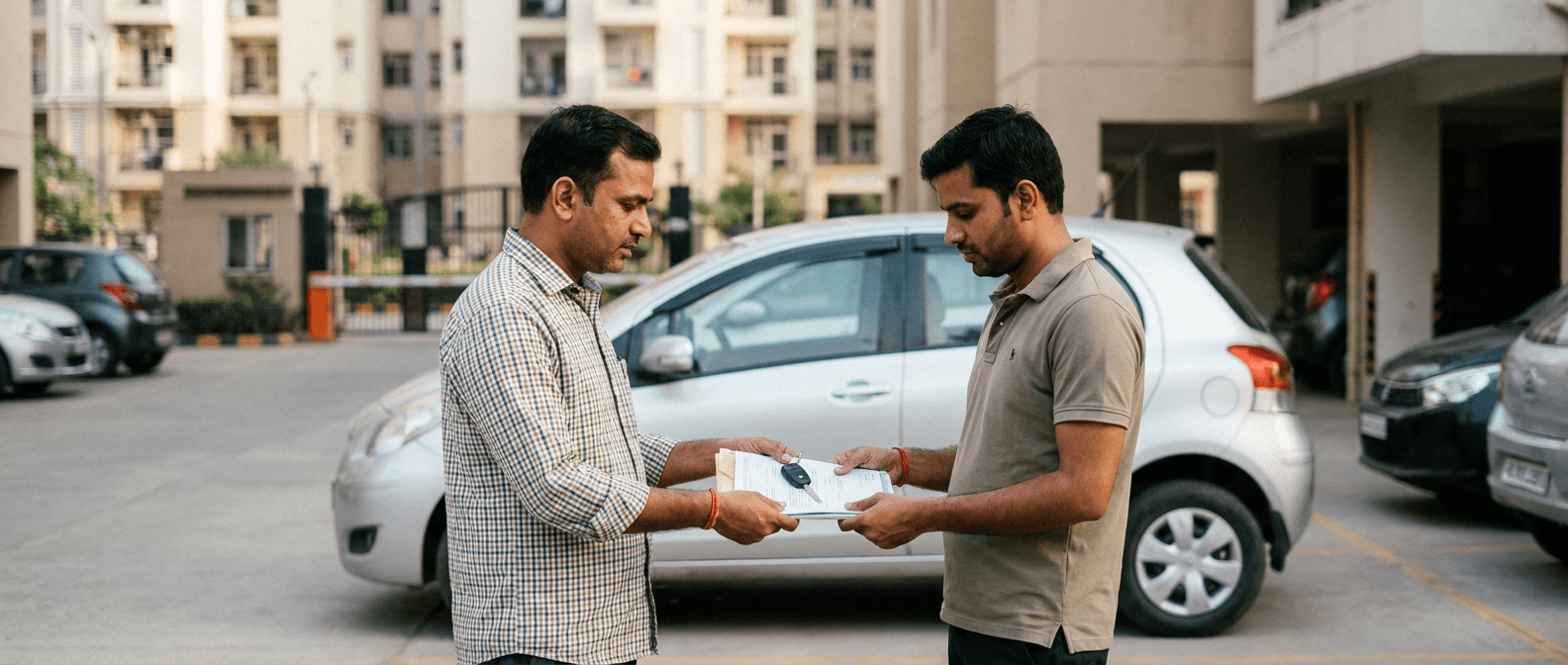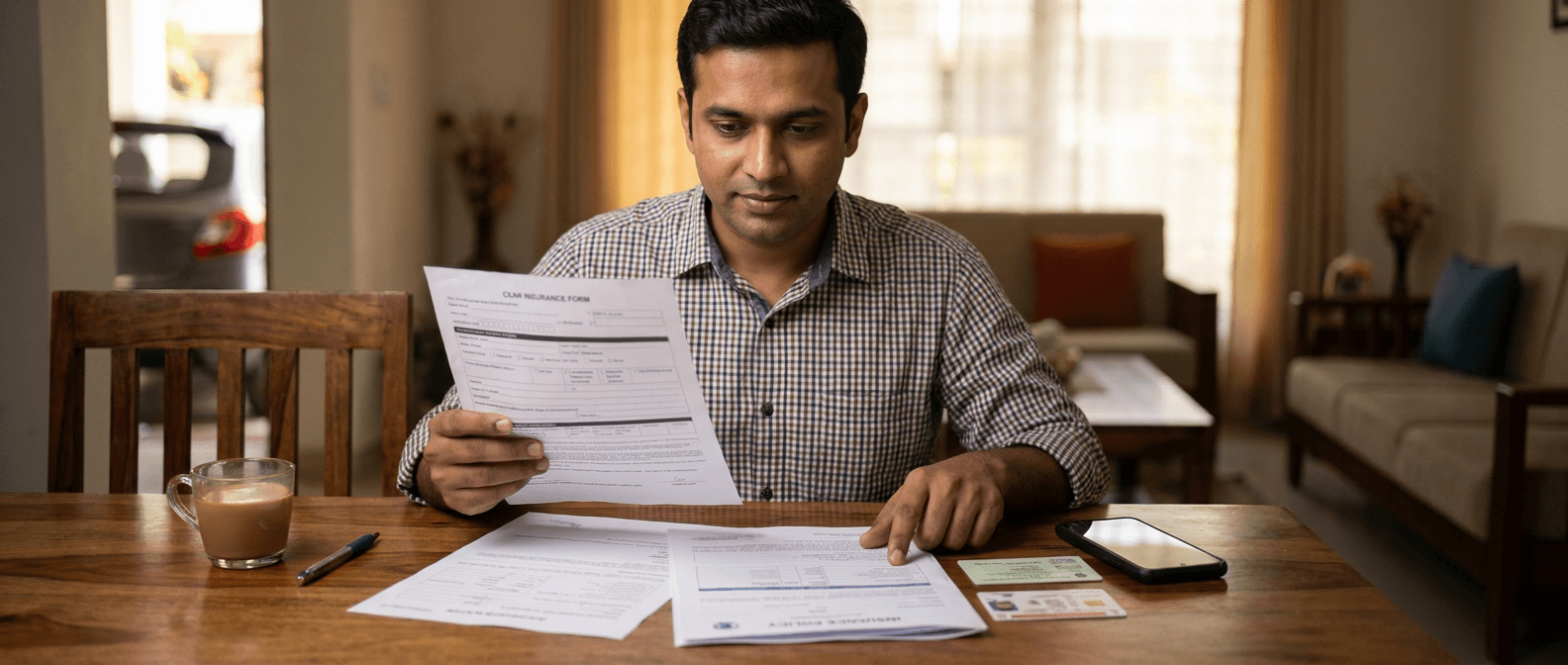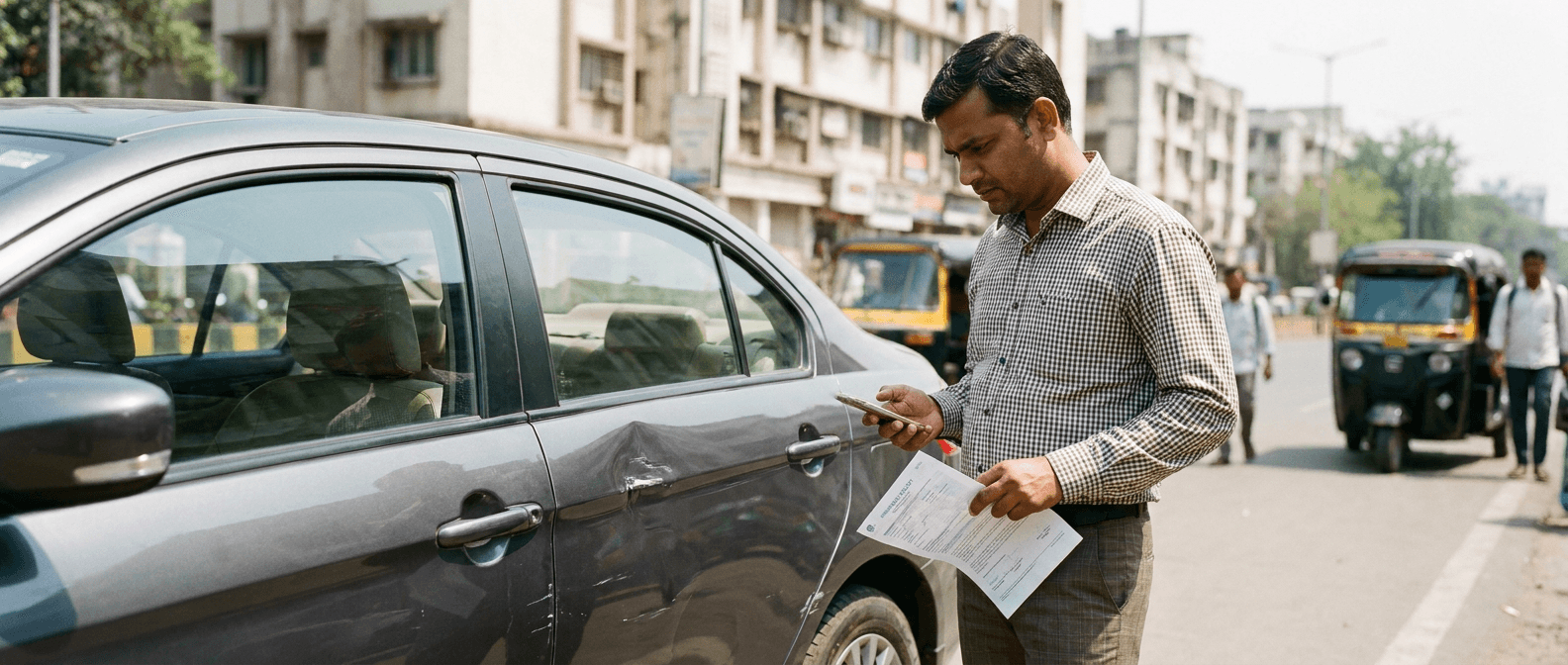
If your vehicle is involved in an accident, deciding when to claim and when to pay out of pocket can be a tough decision to make. Some accidents cause only a minor scratch or dent do not require significant repairs. For such repairs, it is recommended to pay out of pocket.
You should claim car insurance after an accident when the repair bill is high, there is a third-party injury or property damage or the insurer payout is more than the deductible and No Claim Bonus loss.
You should pay out of pocket when the damage is minor and the amount you receive from the claim is close to, or lower than, what you lose through deductibles and NCB at renewal.
To decide, compare three parameters: repair cost, compulsory or voluntary deductible and the No Claim Bonus (NCB) discount you may lose. NCB is a discount on the own damage premium for claim-free years.
When does paying out of pocket make more sense?
Paying out of pocket usually makes more sense for small cosmetic damage, minor dents, scratches, mirror damage, or low-cost bumper repairs where the net insurance benefit is small. The practical test is this: if the repair cost is lower than the deductible plus the NCB value you may lose, paying yourself is usually financially cleaner.
The table below uses three common repair-cost levels from the decision brief. The exact answer can change based on your policy deductible, your current NCB, and your own damage insurance premium.
| Repair Cost | Situation | Pay Out of Pocket or Claim? | Reason |
|---|---|---|---|
| Rs 5,000 | Small scratch, dent, mirror, minor bumper repair | Usually pay out of pocket | A deductible and lost NCB can wipe out most or all of the claim benefit. |
| Rs 15,000 | Panel repair, paint damage, moderate to light bumper damage | Compare | File a claim if your deductible is low and NCB loss is smaller than claim amount. |
| Rs 40,000 or more | Major body repair, multiple panels, airbags, suspension, radiator, high-value parts | File a claim | The claim payout is likely to be more than the deductible and NCB loss. |
Paying yourself also ensures your NCB keeps getting accumulated with every claim-free year. .
When should you file a claim for vehicle repairs?
Consider filing a claim if structural damage is high, another person was injured or third-party property was damaged. In India, filing a minor claim can cost you more in lost discounts than the value of the payout. It is also the safer option if accident involves another person, another vehicle, public property, bodily injury, theft, fire, flooding or damage.
Here is an example: Assume your current NCB is 20% and at next renewal your NCB would become 25%.
Also assume your policy deductible for the repair is Rs 1,000.
| Decision | File a claim | Pay out of pocket |
|---|---|---|
| Best suited for | Major repairs, third-party liability, theft, total loss, fire, flood, high-value parts | Small scratch, dent, low-cost cosmetic repair work |
| Cash outflow | Lower in a cashless claim, but you still pay deductible and for non-covered items | You pay the full repair bill to the garage |
| Your NCB | Own damage claim can reduce NCB at the next renewal | NCB can continue if no claim is made in the policy year |
| Documents required | Claim intimation, survey, documents, repair approval, bills | Garage estimate and direct payment only |
| Risk of hidden damage | Better when inspection may reveal costly internal damage | Riskier if you approve repairs before knowing the full damage |
| Third-party injury or property damage | Informing the insurer is usually the safer route because liability can be unpredictable | Not advisable for serious third-party injury or legal liability situations |
If the accident involves only your own car, the choice is mainly financial. If the accident involves another person's vehicle, property, or injury, the choice is not only financial because third-party liability can become a legal matter.
How does NCB change the claim payout?
The NCB is a discount on your Own Damage (OD) premium given for every claim-free year. It builds up every year, if you make no claims but resets to 0% immediately after a single claim.
Here is an example: Assume your current NCB is 20% and at next renewal your NCB would become 25%. Also assume your policy deductible for the repair is Rs 1,000.
| Item | Rs 5,000 repair | Rs 15,000 repair |
|---|---|---|
| Garage repair bill | Rs 5,000 | Rs 15,000 |
| Deductible paid by you | Rs 1,000 | Rs 1,000 |
| Approximate claim payout | Rs 4,000 | Rs 14,000 |
| Next renewal NCB if you do not claim | 25% of Rs 18,000 = Rs 4,500 | 25% of Rs 18,000 = Rs 4,500 |
| NCB value at risk if claim resets NCB | Rs 4,500 | Rs 4,500 |
| Financial result | Claim payout of Rs 4,000 is lower than Rs 4,500 NCB value at risk | Claim payout of Rs 14,000 is higher than Rs 4,500 NCB value at risk |
| Likely better choice | Pay out of pocket | File a claim |
Your actual claim settlement will depends on your vehicle's depreciation, policy exclusions, voluntary deductible and add-ons.
When to pay out of pocket versus when to claim?
Here's a quick decision rule to help you decide whether to claim or not:
- Pay Out of Pocket if:
- Repair cost is less than or equal to your Deductible + Depreciation Amount + Value of Lost NCB.
- File a Claim if:
- Repair cost is more than your Deductible + Depreciation Amount + Value of Lost NCB.
How to select between a cashless or reimbursement claim?
In a cashless claim, your insurer settles repair costs directly with a network garage, and you only have to pay the deductible, depreciation or non-covered items.
In a reimbursement claim, you pay the garage first and then submit bills and documents to the insurer to get a reimbursement for your repair bills.
- Choose Cashless Claim
- High Repair Estimates: The structural damage is major and the bill is significant
- Network Availability: You have network garage close to you
- Choose Reimbursement Claim
- No Network Garages Nearby: Accident occurred in a remote location or highway
- Preferred Garage: You prefer a trusted independent garage
- Emergency: You require immediate help to be in a safe position before an official insurance surveyor can inspect it.
- Choose to Pay Out-of-Pocket
- Minor Dents or Scratches: Minor fixes that cost less
- Accumulated NCB: You currently have a 35% to 50% NCB discount. Filing a claim will reset this to 0%.
- High Depreciation: Your vehicle is older and you don't have a Zero-Depreciation add-on.
Key takeaways
- Pay out of pocket for minor repairs: If the damage is minor and your deductible plus possible NCB loss are higher than the claim benefit, paying yourself may make more sense.
- File a claim for major repairs: If the repair bill is high, claiming insurance can help, subject to your policy terms and exclusions.
- Calculate your NCB savings: NCB is a discount offered by an insurer on the renewal premium for every claim-free year.
- The NCB discount can range from 20% after one claim-free year to 50% after 5 claim-free years.
Frequently asked questions
Usually, a Rs 5,000 repair is better paid out of pocket if your deductible and possible NCB loss are close to or higher than the claim payout. For example, if the deductible is Rs 1,000 and your NCB value at risk is Rs 4,500, claiming for a Rs 5,000 repair is not financially useful.
A Rs 15,000 repair needs comparison. If your likely payout after deductible is much higher than the NCB value at risk, a claim may help. If you have a high NCB and a high deductible, paying yourself may still be better.
Repairs above Rs 40,000 are usually worth claiming because the insurer payout is likely to exceed the deductible and NCB loss. You should still check policy exclusions, depreciation, add-ons, and approval terms.
An own damage claim can reduce or reset the No Claim Bonus at renewal. NCB is earned for claim-free years and is applied as a discount on the own damage premium.
The standard NCB scale can go up to 50% after five consecutive claim-free years. The scale starts at 20% after one claim-free year.
No. NCB is calculated on the own damage premium, not on the third-party premium. This is why you should check the own damage premium amount in your policy schedule before calculating the NCB value.
About the authors

Nikhila PS
Written by · Senior Content EditorNikhila is a content creator with 6+ years in EdTech and motor insurance, turning complex policies into clear, engaging content. She enjoys exploring digital trends, social media, and art while planning her next short escape.

Rekhit Singh Kaushal
Reviewed by · Senior Director - Motor UnderwritingRekhit Singh Kaushal is Senior Director at ACKO, a leading digital motor insurance provider in India. With deep expertise in insurance strategy and innovation, he brings trusted insights on car and bike insurance to help drivers stay protected.