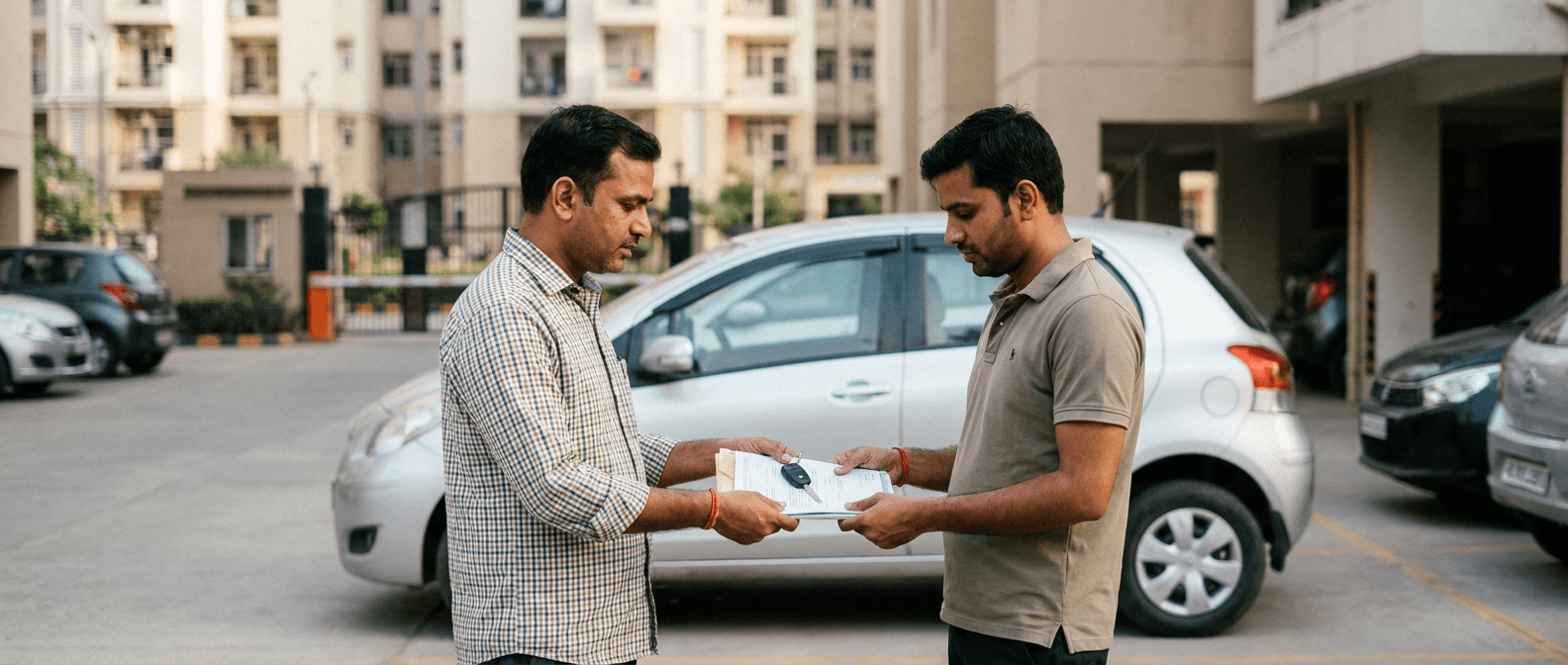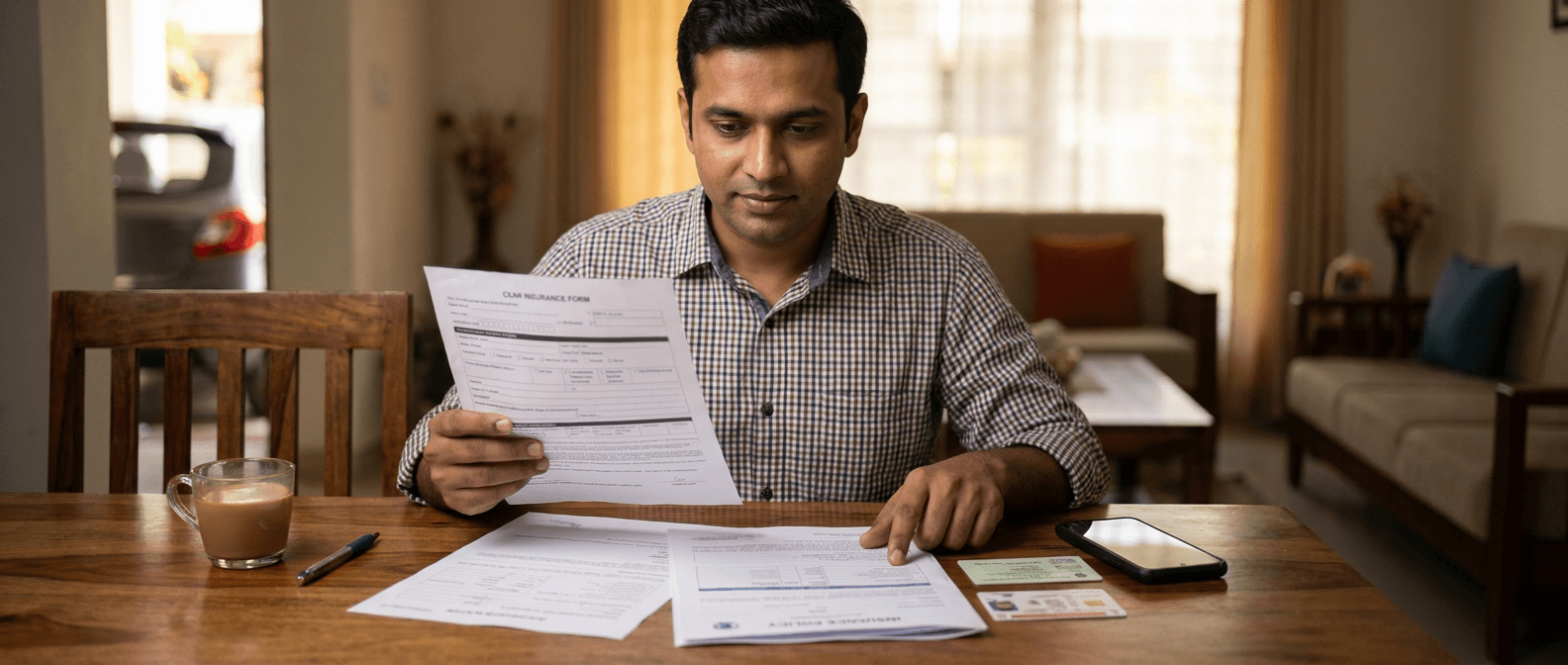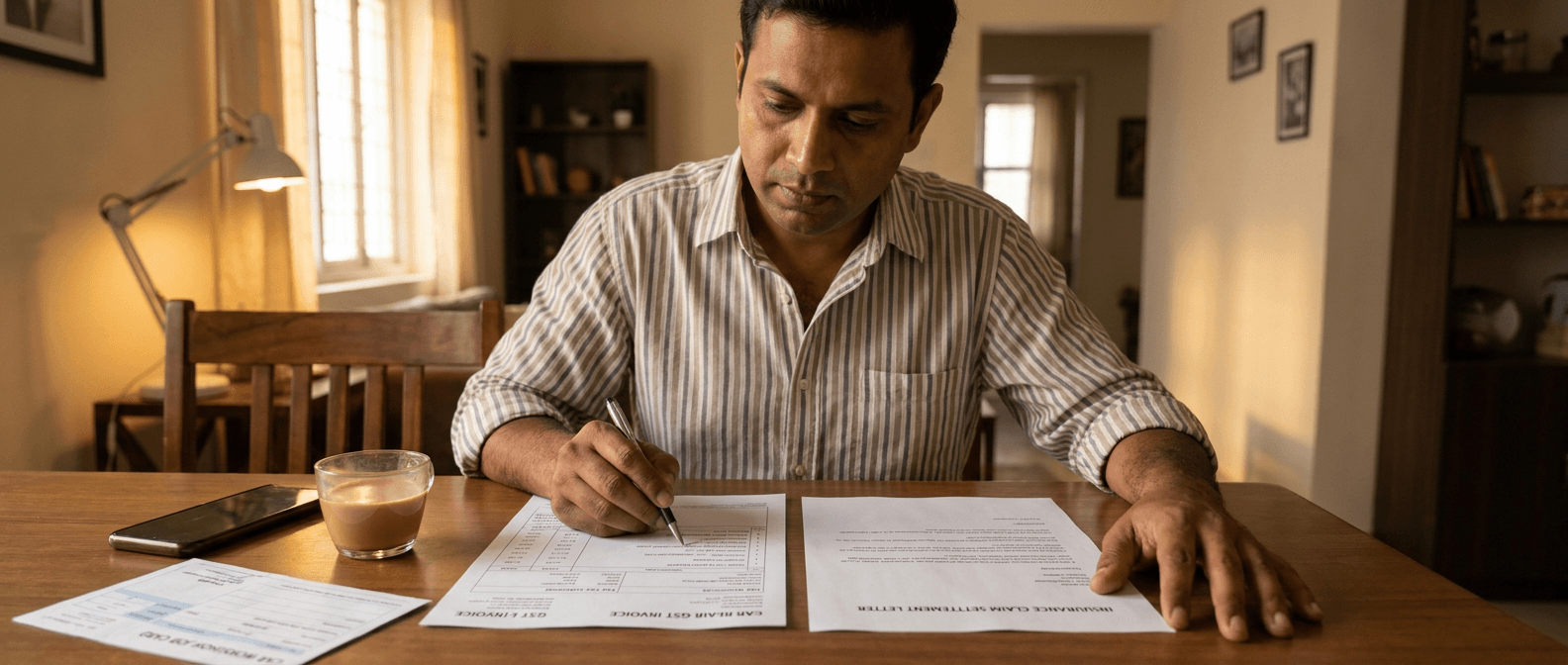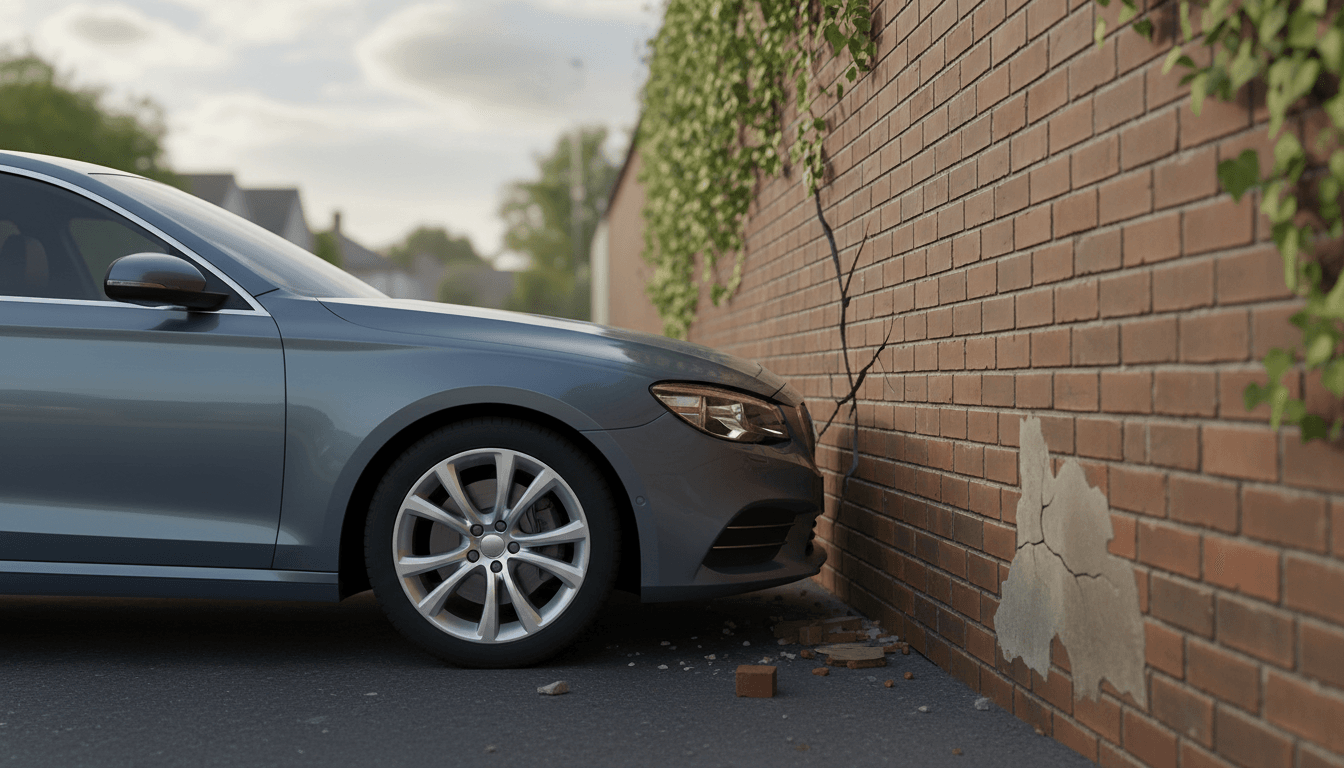
Yes, car insurance includes hitting a wall, but only if your policy has an own-damage cover. A wall collision is a single-vehicle accident. The repair cost to your car may be reimbursed by you under comprehensive covers or standalone own-damage policies. It will also be after applying your deductible and depreciation. A standalone third-party policy is the legal minimum, so it will not cover damage to your own car and therefore a wall collision.
So to sum up, it's basically going to depend on your type of car insurance.
Which Car Insurance Policy Types Pay for a Wall Collision?
Whether you are covered comes down to the policy you bought. In India there are three common structures. Only two of them cover damage to your own car when you hit a wall.
| Policy type | Covers damage to your own car (wall collision) | Covers damage to others |
|---|---|---|
| Third-party liability only | ||
| Standalone own-damage | ||
| Comprehensive (own-damage + third-party) |
A third-party policy, legally required by the Motor Vehicles Act, only covers injuries or property damage you cause to others. It doesn't pay for any damage to your own car.
Therefore, if you have a third party insurance only, driving your car into a wall will mean the wall is the one doing the costing.
"Own-damage" is a feature of your policy that can be purchased separately or combined with third-party to create a comprehensive policy. It will cover you for the damage to your vehicle as the result of an accident including for example you driving into a wall, gate, pillar, kerb or any other stationary object.
Which Incidents Count as "Hitting a Wall"?
The insurance policy's own damage cover does not differentiate between hitting your car and a parked car, a wall is simply an immobile object and hitting it by accident would be treated in the same way as a normal collision. Even if the other car isn't involved in the accident the claim can still be settled.
Some of the normal happenings that fit with this and are usually included in your own-damage cover are:
Bumping into a compound wall or a gate while moving backwards.
Marking a parking pillar or garage wall with paint.
Hopping a kerb and bouncing off of a low wall.
Sliding sideways and crashing into a street wall because of the wet road.
Smashing into the wall to prevent another car or a pedestrian from getting hurt.
In each case, the damage to your car's bumper, panels, headlights, or structure is assessed and repaired under the own-damage section of your car insurance.
What's Covered Vs What's Not Covered by Car Insurance?
Own-damage cover definitely lists the situations for which it does not cover. A wall claim will be rejected if it matches any of the situations mentioned. Though damage may have occurred actually, insurer is not liable if it is covered under the list of situations as mentioned.
Now let's check how the frequently occurring scenarios can be classified under covered and not covered.
| Scenario | Covered? | Why |
|---|---|---|
| Accidental collision with a wall | Yes | A genuine accident falls under the own-damage section. |
| Damage to someone else's wall or property | Yes | Covered under the third-party liability section, not own-damage. |
| Driving under the influence of alcohol or drugs | No | Claims made while under the influence are not payable. |
| Driving without a valid licence | No | Driving without a valid driving licence voids the claim. |
| Deliberately driving into a wall | No | Intentional damage is not an accident and is excluded. |
| Consequential damage, such as engine failure from driving on | No | Damage that develops later, not from the impact itself, is usually excluded. |
| Pre-existing scratches or mechanical wear | No | Wear and tear is not covered. |
| Collision after the policy had expired | No | A lapsed policy means there is no cover. |
Possibly, a damage made to the wall will not be related to the matter at hand. When damage is made to the wall that actually belongs to you, the injury will be regarded as a third-party act of the person responsible which will be dealt under the third-party portion of the policy, the self-inspection portion not being the place to handle such a matter.
How Do Claims Work?
Your payout from the insurer will be less than the sum of the repair cost. Your insurer will deduct depreciation on parts that are replaced and your compulsory deductible. If you hold car add on covers which remove these deductions, you will get the full amount. The example below illustrates this.
Let us say that you reverse into a wall and the repair bill assessed by the insurer is Rs 40, 000 for parts and labour altogether.
| Item | Amount |
|---|---|
| Total assessed repair cost | Rs 40,000 |
| Less: depreciation on replaced plastic and metal parts (example 30%) | Rs 6,000 |
| Less: compulsory deductible | Rs 1,000 |
| Insurer pays | Rs 33,000 |
| You pay out of pocket | Rs 7,000 |
The compulsory deductible is fixed by regulation and is commonly Rs 1,000 for cars up to 1500cc and Rs 2,000 for cars above 1500cc. Depreciation rates rise with the age of the car and depend on the material of the part. A zero depreciation (bumper-to-bumper) add-on removes the depreciation deduction, so in the example above you would receive Rs 39,000 instead of Rs 33,000, still net of the deductible.
How Do You File The Claim After Hitting a Wall?
Ensure safety and note the details
Move to a safe spot, check for injuries, and note the time, location, and what happened.
Photograph the damage
Take clear photos of the car, the wall, and the surroundings before moving the vehicle if possible.
Inform your insurer promptly
Report the incident through the insurer's app, website, or helpline, ideally within 24 to 48 hours.
File an FIR if required
For major damage or third-party property damage, a police report may be needed by the insurer.
Get the car surveyed
A surveyor or the insurer's cashless network garage assesses the damage and approves the repair.
Choose cashless or reimbursement
Make use of a network garage for cashless repair, or opt for reimbursement by paying and keeping the bills.
A claim affects your No Claim Bonus
Filing a claim for a small wall scrape resets your No Claim Bonus (NCB), the discount you earn for claim-free years, which can reach 50% after five years. If the repair cost is close to or below your deductible plus the discount you would lose, paying out of pocket and keeping your NCB may cost you less overall. Compare the two before you file.
Key Takeaways
- Own-damage and comprehensive car insurance will cover the expenses if you hit another car or wall, not standalone liability cover.
- Accidental damage through reversal into an opening, scratch or scuffing of a column, or collision with a roadside wall is all covered.
- After deducting the cost of depreciation on the components being replaced and your compulsory deductible, the settlement amount will be repair costs only.
- In most cases, the compulsory minimum of a car less than 1500cc is Rs 1, 000 whereas the minimum for car over 1500cc is Rs 2, 000.
- A zero-depreciation cover will remove the depreciation deduction while at the same time, the claim amount will be increased.
- The claim may be turned down for reasons like operating under the influence of alcohol, not having a valid driving licence, doing damage intentionally, or having an out-of-date insurance.
- To claim the insurance you will lose NCB which is one of the incentives and also you should think whether the loss is worth of that small claim.
Frequently asked questions
No. A third-party motor insurance plan is only for damages caused to other person, vehicle or property so the insurer will not cover the vehicle repair cost if your car goes off the road by hitting a wall because that belongs to you only.
If you damage someone else's wall, it's classified as a third-party property damage claim, which is covered through the third party section of the Comprehensive Policy up until the limit allowed by the policy. But, damage to a boundary wall of your own property isn't covered under the insurance.
Yes. A single-vehicle collision with a fixed object is treated as at-fault for the purpose of your No Claim Bonus, which resets after any own-damage claim.
It would technically be possible but a light scratch frequently ends up being cheaper than your deductible combined with the No Claim Bonus you could lose. We suggest you make the repair quote and the quoted costs a benchmark before you opt to file the complaint.
Not all the time. If you are filing for damage to third party property or major damage, police report can be very helpful. For minor own-damage, however, some insurer just need pictures and a survey to approve the claim.
About the authors

Nikhila PS
Written by · Senior Content EditorNikhila is a content creator with 6+ years in EdTech and motor insurance, turning complex policies into clear, engaging content. She enjoys exploring digital trends, social media, and art while planning her next short escape.

Rekhit Singh Kaushal
Reviewed by · Senior Director - Motor UnderwritingRekhit Singh Kaushal is Senior Director at ACKO, a leading digital motor insurance provider in India. With deep expertise in insurance strategy and innovation, he brings trusted insights on car and bike insurance to help drivers stay protected.