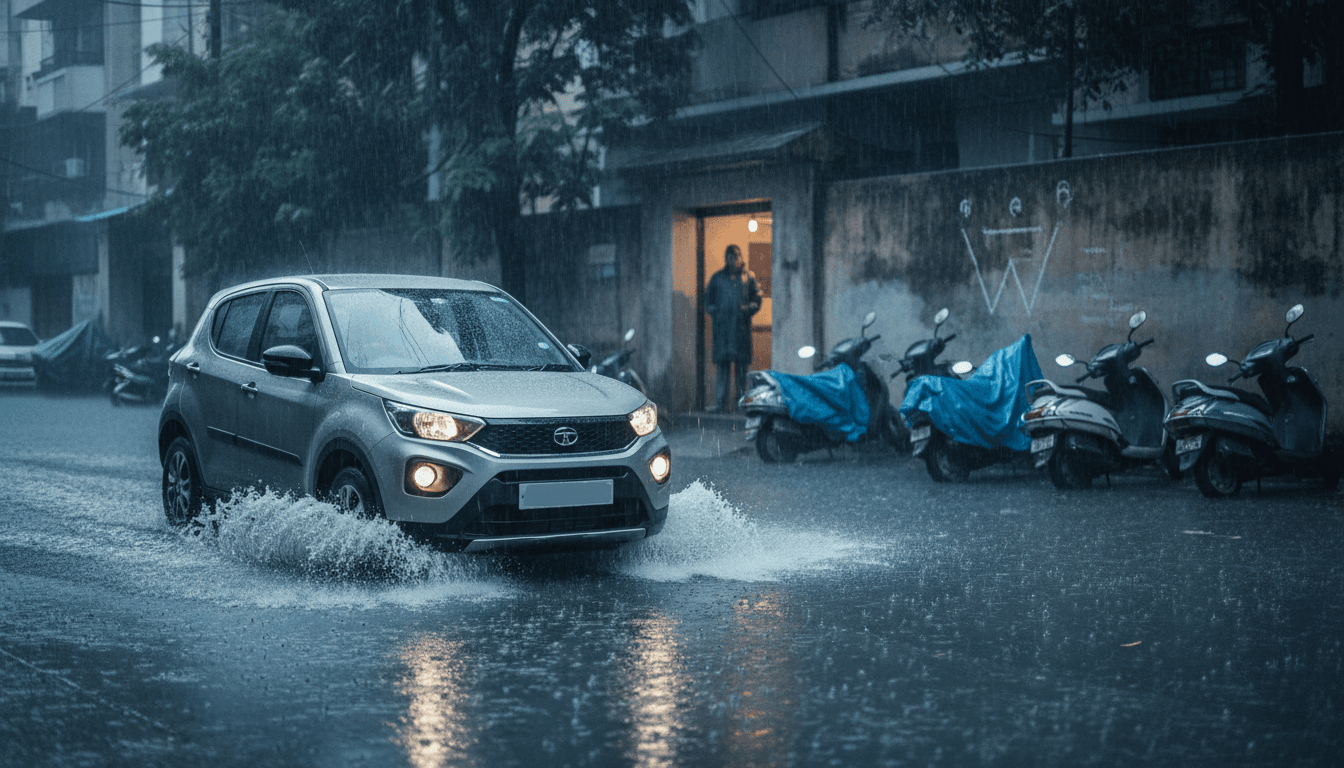
Car insurance premiums are increasingly getting influenced by climate change as it is responsible for weather extremes that are frequent and more disastrous as a result of this climate, hence it increases the number and the size of the claims that the insurers are paying. Floods, cyclones, and hailstorms are destroying and damaging more car than in the past are leading the insurance companies not only to pay big bills but eventually to increase their premiums accordingly since they perceive the risk factor to have grown.
Impact of Climate Change on Car Insurance Premiums
Car insurance companies determine how much your premium is going to be on the basis of how likely you are to make a claim. If floods, storms, and heavy rainfall damage more vehicles each year, the risk pool becomes more expensive.
Here is how climate change leads to increases your car insurance costs:
- More frequent extreme weather: Cities such as Chennai, Mumbai, and parts of Kerala have already witnessed severe flooding in recent years. If an engine is underwater, then waterlogged cars can lead to very expensive claims.
- Climatological events causing more damage: Imagine a heavy storm destroys a thousand cars at the same location! Then, to survive, insurance companies would necessarily raise insurance rates, especially for own-damage cover, to compensate for their huge losses from payouts.
- Pricing per location: Residents of flood- or coastal-prone areas might find themselves paying higher insurance premiums than those living elsewhere, where the risk is very low.
- Higher repair costs: Vehicles with advanced features and complex systems often have more expensive, delicate parts and electronics. Damage from floods or hail to these parts drives up repair costs, which insurers take into account when setting prices.
Take note of the fact that basic third party insurance will not cover any damage to your vehicle due to flood or storm damage. If you wish to be covered for that kind of damage, you will have to opt for comprehensive insurance, which is why many owners choose engine damage insurance.
Is Weather Damage Covered by Comprehensive Car Insurance?
Yes, a comprehensive car insurance policy cover natural disaster damage to your car as a default. The table illustrates what kinds of claims you can probably expect under base own-damage cover, and which ones you'll need to get as add-ons.
Situation | Covered by base own-damage? | Needs an add-on? |
|---|---|---|
| Flood water submerging body, seats and interiors | ||
| Falling tree or hoarding in a storm | ||
| Hailstorm dents and glass damage | ||
| Fire from a lightning strike | ||
| Engine damage from trying to start a flooded car (hydrostatic lock) | ||
| Deduction for depreciation on replaced parts |
Standard car insurance does not fully cover flood engine damage
A comprehensive policy will usually cover losses related to water damage to your car. However, if water gets into the engine and you try to start the car afterwards, the damage caused by the hydrostatic lock is generally considered consequential loss and excluded. If you want to be covered for this, an engine protection add-on must be obtained. This is very relevant at precisely the moment that weather-related flooding is a high-risk scenario.
How Can Car Owners Adapt to Changing Climate?
As floods, cyclones, and heatwaves push claims higher and raise premium costs, a few practical steps can protect both your car and your wallet.
- Add engine protection cover: A standard policy won't pay for hydrostatic lock, the engine damage that happens when water gets sucked in during a flood. If you live in a flood-prone city, this add-on is worth every rupee.
- Choose comprehensive over third-party: Third-party insurance only covers damage you cause to others. Only a comprehensive policy pays for damage to your own car from floods, storms, or falling trees.
- Park in a safe manner: Move your car to a higher ground or a safe cover during monsoon or cyclone alerts. Stay away from low spots and underpasses that would flood first.
- Do not attempt to start a car that has been water-injected: When your vehicle has been submerged, starting the engine might resolve the issue with repairs, but the situation could result in the car's complete loss. Rather, you should call your car insurer and arrange for the car to be towed to the garage.
- Have papers/images with you: Once damage has occurred, take images of the damaged area immediately before any repair work begins. With clear, quick snapshots, your insurance claim will be processed faster.
If you make the change before claiming, you retain your bonus without a claim and are not subject to the significant premium increases that usually accompany a major claim.
Key Takeaways
- The rising costs associated with climate change lead to increased car insurance premiums since the number of claims made due to weather becomes higher.
- This is only applicable to the own-damage section of the policy as the third-party premium rate remains constant despite weather conditions.
- Base comprehensive cover includes flood, storm, hail, falling-object and lightning-fire damage to your own car.
- Engine damage from restarting a flooded car (hydrostatic lock) is excluded unless you buy an engine protection add-on.
- If you do not opt for the zero depreciation add-on, the depreciation on parts that you replace will be deducted from the claim amount. If you have the zero-depreciation add-on, the insurance company will pay the full cost of replacing the parts, regardless of depreciation.
- The own damage premium is determined by the city and parking space you use because it relates to the risk factors involved in making a claim based on previous instances of damage due to weather and city.
- Integrating no-claim bonus coverage, opting for a reasonable IDV, and timely renewal through proper comparison are some of the techniques to control increasing costs.
Frequently asked questions
It is not only about a single disaster, but even the recurrence of weather losses in a district will have an impact on the risks statistics that insurers use to price own-damage coverage. Usually, after some time, high-risk locations tend to see higher own-damage premiums than low-risk ones.
No. Third party insurance only insures you for injury or damage caused by yourself to another. To protect yourself from floods or storms, you must have a comprehensive policy.
It fills a particular expensive gap: engine damage caused by water getting into the engine, which is considered a consequential loss under base cover and is excluded. That risk is a greater danger in flood-prone regions, and the add-on directly addresses your most likely large loss.
If you want to keep your no-claim bonus, then you shouldn't make small claims. You should pick a sensible voluntary deductible to protect yourself against large bills, but also pay less, and by comparing the different insurers on the renewal of your insurance, you can get a lower insurance premium.
Third-party cover rates are determined at the centre by IRDAI, altered via regulatory means, and are not based on individual claim experience. Own-damage risk-based pricing is determined by the insurer, and they take up claim costs due to weather changes.
About the authors

Nikhila PS
Written by · Senior Content EditorNikhila is a content creator with 6+ years in EdTech and motor insurance, turning complex policies into clear, engaging content. She enjoys exploring digital trends, social media, and art while planning her next short escape.

Rekhit Singh Kaushal
Reviewed by · Senior Director - Motor UnderwritingRekhit Singh Kaushal is Senior Director at ACKO, a leading digital motor insurance provider in India. With deep expertise in insurance strategy and innovation, he brings trusted insights on car and bike insurance to help drivers stay protected.