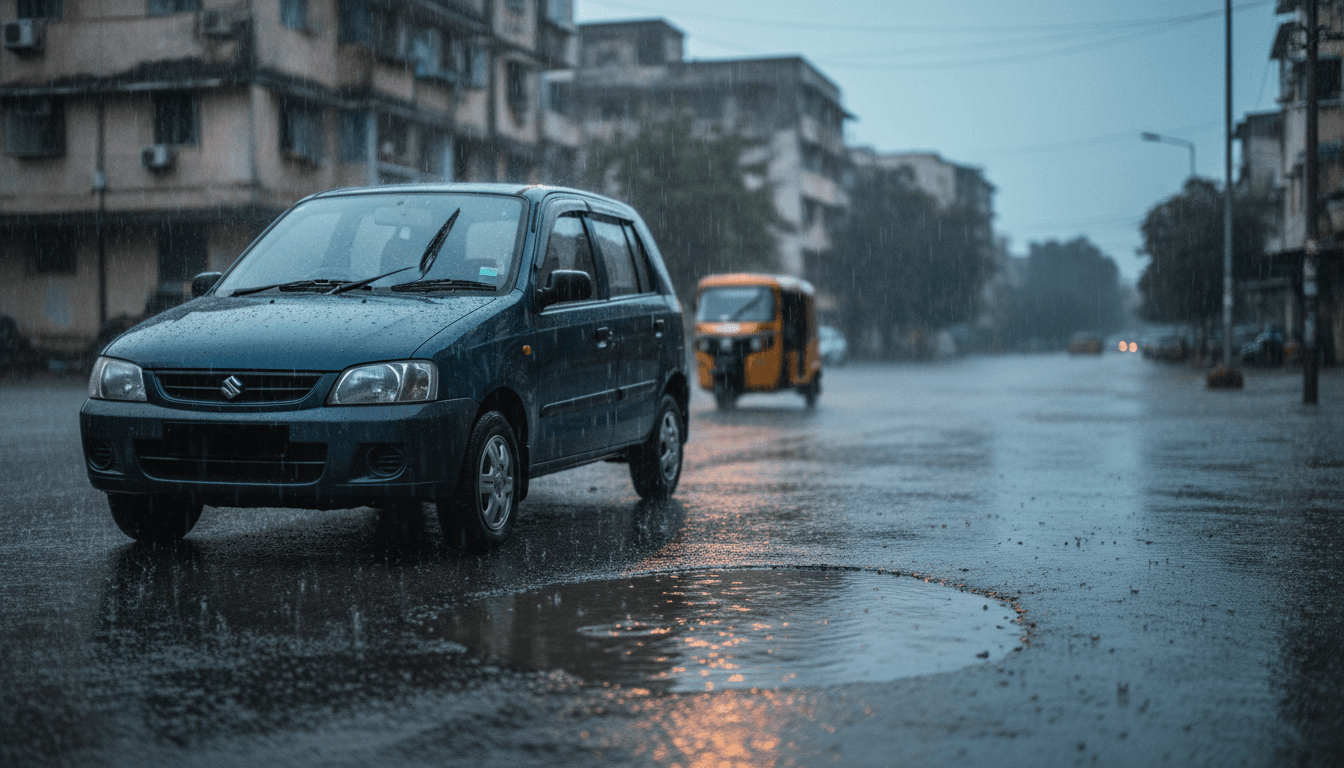
The three car insurance covers that make your car monsoon-ready are engine protection cover, zero depreciation cover, and roadside assistance cover. These are add-ons you buy on top of a comprehensive car insurance policy. A standard comprehensive policy covers flood and water damage to your car, but it does not cover engine damage caused by water entering the engine, it deducts depreciation from your claim payout, and it leaves you stranded if your car breaks down in waterlogging. The three add-ons above close each of these gaps.
Does Standard Car Insurance Cover Monsoon Damage?
Monsoon damage is typically not covered by third-party liability insurance. A comprehensive car insurance policy, however, includes coverage for physical damage to your car caused by floods, heavy rains, and waterlogging.
The comprehensive plan doesn't cover these things:
Water entry into the engine: When water enters the engine, and you are forced to restart, causing hydrostatic lock, the resulting engine damage is treated as a consequential loss and is usually excluded.
Depreciation: Usually, the insurer deducts depreciation on parts that are replaced, such as those made of plastics, rubber, and metal, whereas you will have to pay a portion of the repair yourself.
Breakdowns and stranding: The least expensive policy covers repairs, but you will be on your own if your car breaks down in a flooded area.
Comprehensive coverage plus the correct add-ons are the only ways to keep your car safe during heavy seasonal rains.
Never restart a flooded engine
If your vehicle stalls in water, do not attempt to restart it. Trying to start it again will bring water into the cylinders and cause hydrostatic lock, which may bend the connecting rods and ultimately destroy the engine. Unless you have an engine protection add-on, this kind of damage is considered a consequential loss, and the insurance company will not compensate it from a standard policy.
How does Engine Protection Cover Help?
Engine protection cover repairs or replacement of your engine and its components when the damage is caused by water ingress, hydrostatic lock, oil leakage, or loss of lubricant.
A standard comprehensive insurance policy will, in most cases, cover the cost of drying and repairing the car body, but if water enters the engine, it will not be covered.
What it typically covers
Water ingress in the engine likely leads to hydrostatic lock and damage.
The gearbox and transmission components are susceptible to damage.
Leakage of lubricating oil accompanies loss.
Pistons, connecting rods, cylinder heads, and other internals have to be replaced.
How does the Engine Protect Cover Impact your Car Insurance Claim?
For example, a mid-size petrol car has an engine that suffers a hydrostatic lock after being restarted in floodwater. The following numbers show how the payment will differ with and without the add-on.
| Repair item | Cost |
|---|---|
| Engine teardown and inspection | Rs 15,000 |
| Pistons and connecting rods | Rs 45,000 |
| Cylinder head and gaskets | Rs 30,000 |
| Labour and consumables | Rs 30,000 |
| Total engine repair | Rs 1,20,000 |
Without the engine protection cover: In the case of water entering the engine, the insurer only considers the engine damage as a consequence, so it pays Rs 0 for it. That means you pay the entire Rs 1,20,000.
With engine protection cover: Your engine repair will be considered a valid claim. You will be required to pay the standard deductible, say Rs 1,000, and the depreciation amount on the replaced parts. In most cases, the insurance company will pay you the major portion of Rs 1,20,000, and you will have to pay only a small portion of it.
What is Zero Depreciation Cover and How Does it Help?
A zero-depreciation cover is a car insurance add-on in which the insurer does not levy depreciation on the policyholder when claims are made. Simply put, with this swipe also known as a bumper-to-bumper or nil depreciation cover, the insurance company will settle the complete expense of the brand new parts, which is why a larger share of your repair costs will be borne by the insurance company, and you will have to pay a smaller amount. In the monsoon season, it is generally the plastic, rubber, and fibre parts like bumpers, door panels, and trims that get damaged due to water, and these are exactly the parts that get the highest depreciation in a normal claim.
For a regular claim, depreciation percentages are determined according to the insurance regulatory authority and its corresponding scale. In case of a monsoon claim that mostly consists of plastic and rubber replacements, this cover has the potential to facilitate a large portion of the payment.
| Part material | Depreciation deducted on a normal claim |
|---|---|
| Rubber, nylon, plastic parts, batteries | 50% |
| Fibreglass components | 30% |
| Metal parts (by vehicle age) | 0% to 50% |
Imagine monsoon water damaging plastic and rubber parts worth Rs 40,000. On a regular claim, the insurance company normally deducts 50% depreciation of these parts, so it pays Rs 20, 000 and you pay Rs 20, 000. If there is zero depreciation cover, the insurer pays the full Rs 40,000, less only the compulsory deductible and your policy excess. Thus, the savings on this single claim is almost Rs 20, 000.
Why should you get Roadside Assistance Cover for Monsoons?
Roadside assistance cover will be of help when your vehicle breaks down or gets stuck, a situation that usually happens quite frequently during the rainy season. A basic cover only pays for the repair of the car after the event, but it never helps you if your vehicle breaks down on a flooded street.
Some of the roadside assistance features that are provided as standard are:
In case your car cannot be driven, it will be towed to the nearest garage.
Perform on-spot minor repair so you can get going again.
When damp weather causes the battery to drain or short, a battery jump-start is provided.
In case of a flat tyre on slippery, pothole-filled roads, help will come your way.
If you are running dry and there is a traffic jam, emergency fuel delivery will be provided.
How to Add these Covers to your Car Insurance Policy?
You can add these covers while buying a new comprehensive policy or during your car insurance renewal. Generally, add-ons do not come with a standalone third-party policy, and in fact, you can't add most of them during your policy term. Thus, renewal is the right time to think about them.
Start with a comprehensive policy
Add-ons attach to comprehensive (own-damage plus third-party) cover, not to third-party-only cover.
Choose the monsoon add-ons
While buying or renewing, selecting engine protection, zero depreciation, and roadside assistance will be helpful for you at the time of need.
Consider the terms
Sometimes, certain add-ons like zero depreciation come with specific vehicle age restrictions and limit the number of claims in a year.
Confirm the impact on your premium
Your premium will go up with every feature you add; before you make the payment, make sure you check the total premium, including all your changes.
Gather the necessary documents
Note the roadside assistance helpline and keep your policy number saved for a quick monsoon claim.
Key Takeaways
Comprehensive car insurance will cover damage caused by flood or water to the car's body and interiors only; however, separate engine damage from water is not covered, and depreciation on replaced parts is deducted.
With a third-party plan, you will receive no relief for the damage your car suffers during the monsoon.
Engine protection cover can pay for support for engine damage caused by water ingress, hydrostatic lock, and lubricant loss, which a regular policy normally considers a consequential loss and excludes.
Zero depreciation cover simply eliminates any depreciation deduction, which can amount to 50% on rubber, plastic, and battery parts and 30% on fibreglass, so a fuller payout will be given for monsoon claims under this cover.
Roadside assistance cover is like a safety net when your car is stuck in waterlogging, providing you with towing, jump-starts, on-the-spot repairs, flat-tyre help, and emergency fuel.
One of the major reasons for engine damage if an engine is restarted after stalling in floodwater is hydrostatic lock.
Add-ons are chosen at the point of purchasing or renewing the policy and will only be part of a policy if it is a comprehensive one.
Frequently asked questions
No. A comprehensive car insurance policy normally includes flood damage to the vehicle's body and the interiors. However, engine damage caused due to water getting into the engine will be treated as a consequential loss and thus excluded. You can get engine protection as an additional cover.
No. Most add-ons are available only when you purchase a new policy or upgrade your cover at renewal. Therefore, check them before the monsoon season at your next renewal.
No. Engine protection, zero depreciation, and roadside assistance get linked with a comprehensive (own-damage) policy. A third-party-only policy will not cover your own vehicle, and hence, these add-ons won't be available.
Typically, these policies restrict the maximum age of the vehicle and the number of claims a policyholder can make within a policy year. Check with your insurance provider for the exact eligibility criteria, since very old cars may be disqualified.
Don't try to restart your vehicles engine since it can cause hydrostatic lock. Move to safety, contact your insurer's roadside assistance or claims helpline, and have the vehicle towed to a garage for the inspection before any repair work is done.
About the authors

Nikhila PS
Written by · Senior Content EditorNikhila is a content creator with 6+ years in EdTech and motor insurance, turning complex policies into clear, engaging content. She enjoys exploring digital trends, social media, and art while planning her next short escape.

Rekhit Singh Kaushal
Reviewed by · Senior Director - Motor UnderwritingRekhit Singh Kaushal is Senior Director at ACKO, a leading digital motor insurance provider in India. With deep expertise in insurance strategy and innovation, he brings trusted insights on car and bike insurance to help drivers stay protected.