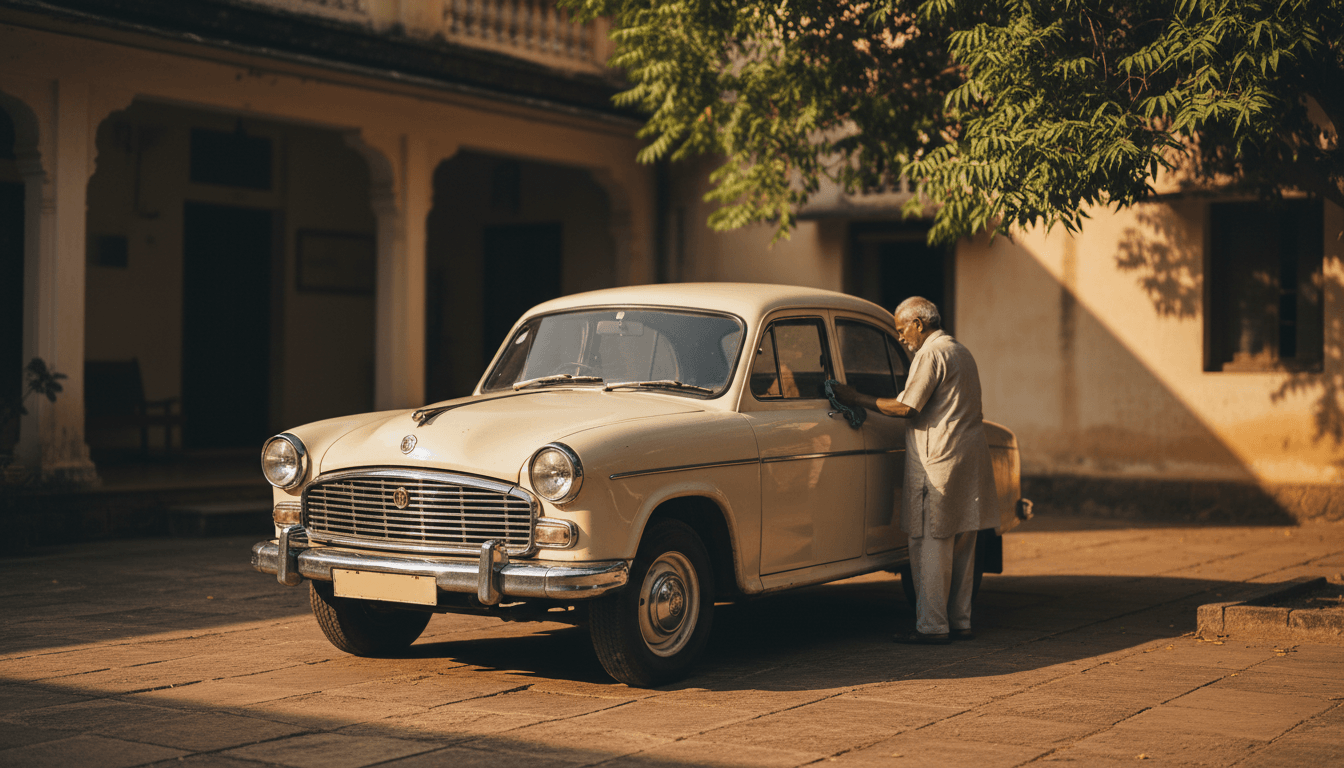
Vintage car insurance is a special type of motor insurance that provides cover for antique cars on an agreed value basis, rather than the regular market value (which factors in depreciation) for general cars. Vintage car insurance cover in India is typically based on a regular motor insurance policy (mandatory third-party liability + voluntary own damage/comprehensive) tailored to cover an antique car. Below are details about antique car cover, including coverage, pricing, and the caveats.
What Counts as a Vintage or Classic car?
There is no set legal criterion for determining whether a vehicle qualifies as "classic," so it depends on the insurance company's criteria. Most often, a classic car is defined by the Vintage and Classic Car Club of India (VCCCI).
| Category | Typical manufacture period |
|---|---|
| Vintage | Manufactured up to 1940 |
| Classic | Approximately 1940 to 1970 |
| Modern classic / collectible | Older or limited-production models an insurer agrees to treat as collectible |
Using the vintage car on road, the Ministry of Road Transport and Highways has provided for registering such vintage or classic cars with a particular plate number. As per these guidelines, a vintage motor vehicle is, in general, a two-wheeler or a four-wheeler that is 50 years old or older from the date of first registration and unaltered in its original condition.1 Since there are different criteria based on the club’s definition, registration guidelines, and insurance policies, always check how your particular vehicle has been classified.
Types of Insurance Plan for Vintage and Classic Cars
Same three broad motor cover structures are also applicable in covering the collectable cars except that in the case of the car that is not collectable, but the wording is different in the own-damage section.
| Cover type | What it protects | Status |
|---|---|---|
| Third-party liability | Injury, death, or property damage you cause to others | Legally mandatory to drive on public roads |
| Own damage | Damage to your own car from accident, fire, theft, riot, or natural events | Optional, added on top of third-party |
| Comprehensive (agreed value) | Third-party plus own damage, with the payout based on an agreed value | Optional, most common choice for collectibles |
Vintage or classic cars are always comprehensive or own damage coverage only when they are covered under the agreed-value basis. Agreed-value coverage is the form where both the insurer and the owner come to an agreement regarding the value of the car that will be used in the insurance coverage process rather than relying on Depreciation Table according to age to arrive at the Declared Value. Other coverages that are optional may include coverage for spares, transport coverage, exhibition coverage, and restoration coverage.
Third-party cover is still compulsory
Even a museum-piece collectible driven occasionally on public roads must carry at least third-party liability insurance under the Motor Vehicles Act. Own-damage and agreed-value cover are optional additions, but driving without third-party cover is an offence.
What is the Agreed Value for a Vintage Car?
The value agreed upon is the predetermined value that the insurer has agreed to consider in case of a total loss, calculated together with the owner before the commencement of the insurance contract, based on an independent valuation. The IDV works for standard cars, where the IDV for the car is the cost of the car minus depreciation, which is higher as age advances. This table cannot be applied for an appreciating car, which is why there is the need for agreed value.
Suppose you have a 1965-vintage saloon. If we consider the normal depreciation rate scale, then any car older than five years is eligible for maximum depreciation, and the IDV is brought down to an insignificant amount of a few thousand rupees only.
| Basis of valuation | Insured amount | What you would receive on total loss |
|---|---|---|
| Standard depreciated IDV | Around Rs 20,000 | Up to about Rs 20,000 |
| Agreed value (with valuation certificate) | Rs 15,00,000 | Up to Rs 15,00,000, subject to policy terms |
Market value is Rs 15,00,000; therefore, premium charges would be made on the basis of this market value. The market value of this antique would largely depend on the valuation certificate issued by an authorized valuer/club, along with photographs and restoration details.
Premiums for a Vintage & Classic Car Insurance
Premium for a vintage or classic car is mostly influenced by the car's value that will be decided between the two parties, the frequency and extent of driving the vehicle, the place where the driving is done and the uniqueness, as well as repair difficulty of the car, not the engine capacity alone. Insurers can rate their own-damage part separately from that of a car used daily without fail of the same age.
The main factors that move the premium are:
The amount of premium you pay for owner: Damage insurance increases the value the car is insured for i.e. the Agreed Value.
Intended Use: Less loading is charged for rallying, exhibiting, and pleasure driving than for commuting.
Security and Storage: Having a garage which is secure is one of the important risk factors.
Parts Availability: Cars that require special or imported parts cost more to fix and increase premiums.
Third Party Rate: The compulsory third party is set by a fixed rate based on the engine size of the car.
Exact figures depend on the specific car and insurer, so request a personalised quote based on your agreed value and expected usage. Before buying car insurance online, compare quotes from different insurers to understand how agreed value, vehicle usage, and restoration costs influence the premium.
What is Included in a Vintage Car Insurance policy?
Unlike a typical motor insurance, a classic car insurance in India provides more coverage options than just scratches and dings associated with a normal vehicle insurance plan. This is because these kinds of cars have a rare element attached to them, which needs to be considered by the insurance providers. Here are some of the coverages included:
Agreed value cover: Instead of the standard IDV, which is calculated according to the depreciation rate, an agreement between you and the insurance provider is made regarding the value of your car before hand. In case of total loss or theft of the car, the payment will be made depending on the value agreed upon,
Third party liability: Just like any other vehicle, this insurance policy covers the legal liabilities in case of any damage, injury or death to another person.
Own damage cover: Protection in case the vehicle suffers damage as a result of accidents, fire, rioting, and other natural catastrophes such as floods.
Theft protection: In case the vehicle is stolen, compensation is made based on the agreed value.
Replacement parts and restoration: Some of the insurance policies factor in the cost of buying expensive parts for the restoration of the car.
Read the policy wording closely. Coverage for vintage cars often comes with usage conditions, such as limits on annual mileage or requirements that the car be stored in a secured garage.
What is Excluded in a Vintage Car Insurance Policy?
Collectible car policies usually trade a lower premium for tighter usage conditions, and breaching those conditions can reduce or void a claim. Common restrictions and exclusions include:
Limited usage: the car may be covered only for occasional, non-commercial use such as rallies, exhibitions, club drives, and pleasure trips, not daily commuting.
Storage conditions: the car may need to be kept in a secure, covered location when not in use.
Approved repairers: repairs may have to be carried out by specialists the insurer accepts, to protect originality.
Standard motor exclusions: normal wear and tear, mechanical or electrical breakdown, driving without a valid licence, driving under the influence, and use outside the geographical area are not covered.
Modifications: non-original modifications not declared to the insurer can affect both the valuation and the claim.
How to Buy a Vintage Car Insurance Policy in India?
A purchase and claim under a collectible policy will follow the general steps involved in motor insurance with one additional step at the beginning.
Confirm classification
Contact the insurer and ask them if your car can be considered as vintage or antique according to their policies. You may also check the registration number or any club recognition of the vehicle.
Get a valuation
Have a valuation certificate made by a recognised valuer or club including pictures and restoration records to help determine the actual value.
Choose cover and add-ons
Opt for third-party cover with own-damage or comprehensive cover. Supplement these bases with spare-parts, transit, event, or restoration cover as per requirement.
Declare usage
It's important for you to state accurately, the number of times you're going to use this service per year, how you are going to handle storage (and other things)
Make a claim promptly
In the event of loss or damage, the insured needs to notify the insurer, provide documentary and photographic proof, and contact a certified repairer when required.
Key Takeaways
- Vintage and classic car insurance covers collectible vehicles on an agreed-value basis, not standard depreciated IDV.
- Vehicles built up until 1940 fall under the vintage category, while those built between 1940 and 1970 fall under the classic category.
- Third party insurance cover is mandatory for all vehicles that operate on the public highway, but own damage and agreed value covers are optional.
- The agreed value is predetermined in consultation with the owner, mostly with the help of valuation certificate, and hence it indicates the actual collector's value and not some nominal value.
- The premium is influenced chiefly by the agreed value, usage, storage and parts' availability along with the fixed third party tariff.
Frequently asked questions
This is usually not without the policy holder knowing about it. Some insurance policies are rated for occasional or non-commercial use of your car for things like rallies, exhibitions, and joy riding. In case you plan on using the vehicle regularly, you should inform the insurance company.
Yes. The valuation is usually sought after by the insurance companies for determining the agreed-upon value and could be required at the time of renewing the policy due to the changing value of the collectible. Photos, repairs and last valuation could be provided for supporting the insured value.
No. Standard own damage insurance covers repair costs, but some insurers can provide an add-on cover for parts or unique parts, which is necessary for your car. Ensure that these are included and know how they are calculated before purchasing.
This may not always be automatically included. Insurance companies usually offer event or transit cover, which protects the vehicle while travelling to races, exhibits, and events. It is important for you to find out whether this is included in your basic policy.
Changes in the vehicle's valuation and specifications due to the restoration process should be reported to the insurer, as some insurance policies provide coverage during restoration and allow the valuation to be adjusted afterwards.
About the authors

Nikhila PS
Written by · Senior Content EditorNikhila is a content creator with 6+ years in EdTech and motor insurance, turning complex policies into clear, engaging content. She enjoys exploring digital trends, social media, and art while planning her next short escape.

Rekhit Singh Kaushal
Reviewed by · Senior Director - Motor UnderwritingRekhit Singh Kaushal is Senior Director at ACKO, a leading digital motor insurance provider in India. With deep expertise in insurance strategy and innovation, he brings trusted insights on car and bike insurance to help drivers stay protected.