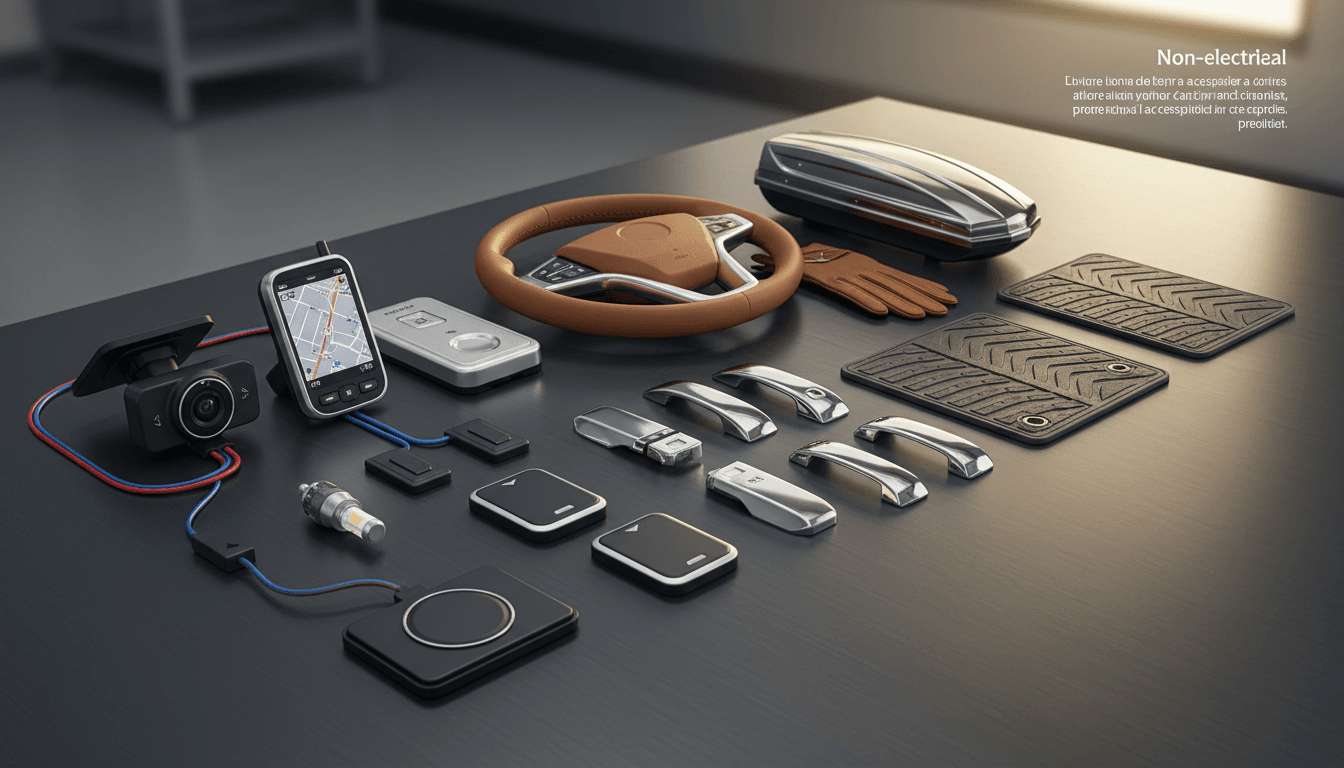
Electrical and non-electrical accessory covers in a vehicle insurance policy are considered as optional additions or extensions that allow you to get coverage for the equipment that you have added to your vehicle after buying it, and which are not fully covered by the standard car insurance policy.
What is an Electrical Accessory?
Electrical accessories are any devices you add to your car that connect to and draw power from the car's electrical system; these were not included by the manufacturer as standard. Since these items depend on wiring, they pose a greater risk of short circuits and fire; therefore, insurance companies charge them separately.
Common items that an electrical accessory cover protects:
Aftermarket music systems, amplifiers and speakers
Reversing or dashboard cameras and parking sensors
Upgraded head units and touchscreen infotainment
Additional LED or HID lighting
Electrically operated add-ons wired into the car's battery
The factory-fitted stereo or sensors that came with the car are already reflected in its IDV. This add-on is for equipment you added later.
What is a Non-Electrical Accessory?
A non-electrical accessory is a car part or fixture that operates without the vehicle's electrical supply. Usually, these are mechanical or cosmetic enhancements made after the initial purchase.
Non-electrical accessory cover mainly protects things like:
Alloy wheels replacing standard steel rims
Custom seat covers and premium upholstery
Interior and exterior trims, body kits and spoilers
Roof rails, mud flaps and floor mats fitted aftermarket
The mechanical fittings of a CNG or LPG kit (the fuel-system hardware, distinct
from any electronic control unit)
As they don't pose any fire risk from wiring, non-electrical accessories often have a lower add-on premium than electrical ones.
Does a Standard Car Insurance Policy Cover Accessories?
A standard comprehensive car policy only covers the car at the condition it was when it left the factory. The amount of your premium and claim settlement is influenced by the IDV of the car, which is figured out from the list price of the manufacturer, less the depreciation. Therefore, any extras you add to the car by yourself are not counted in that price, so they are beyond the insured value.
If a fitted accessory is damaged or stolen and you haven't declared it, the insurer may refuse the claim for that part or pay only for the base vehicle. Declaring the accessories and buying the at corresponding add-ons are just ways to formalise their presence in the policy. Thus, their value will be recognised at the time of a claim.
Declare accessories to keep them insured
An accessory is only covered if you declare its value to the insurer and it is listed in your policy schedule. Fitting a high-value music system or alloy wheels without declaring them means their loss may not be paid, even under a comprehensive car policy. If you're purchasing car insurance online review your policy and update any newly installed accessories to ensure they remain insured.
Difference Between Electrical and Non-Electrical Accessory Covers
Here are the differences between electrical and non-electrical accessory covers under car insurance, and why it is important to select the right one to safeguard the add ons attached to your vehicle.
| Feature | Electrical accessory cover | Non-electrical accessory cover |
|---|---|---|
| What it covers | Power-drawing add-ons: stereo, camera, sensors, extra lights | Non-powered fittings: alloy wheels, seat covers, trims, body kits |
| Main risk insured | Short circuit, fire, theft, accidental damage | Theft and accidental damage |
| Typical premium rate | Higher (around 4% of declared value) | Lower than electrical |
| Depreciation on claim | Applied | Applied |
| Needs declaration | Yes | Yes |
How to Raise a Car Insurance Claim for an Accessory?
Accessory claims essentially go through the same process as car claims; however, they are paid out based on the declared value of the accessory separately, after depreciation and your policy deductible. Depreciation is accounted for the accessory the same way it is for car parts; therefore, an older music system will be recorded at a value lower than its purchase price.
Declare and document
List each accessory and its value when buying or renewing, and keep purchase invoices.
Report the loss
Inform the insurer about the damage or theft and register a claim; file an FIR for theft.
Inspection and assessment
A surveyor may assess the accessory's damage and its depreciated value.
Settlement
The insurer pays for the accessory after applying depreciation and the deductible, alongside the vehicle claim.
Key Takeaways
An electrical accessory cover provides insurance for aftermarket equipment that requires power from the vehicle, such as stereo systems, cameras, and additional lighting.
Non-electrical accessory cover protects installed parts that do not consume power, like alloy wheels, seat covers, and body kits.
Normally, a comprehensive policy calculates compensation based on the Insured Declared Value, which does not include accessories you have installed yourself.
Accesories are only provided with coverage if you declare their value and they are listed in your Policy schedule.
Electrical accessories are generally rated at around 4% of the declared value; non-electrical accessories are rated at a lower level.
Claims will be processed at the declared value of the accessory less depreciation and the policy deductible.
Frequently asked questions
Yes. Equipment installed by the manufacturer comes with the car price and in the Insured Declared Value, hence it is protected with a comprehensive policy. You would require an accessory add-on for post-purchase installation only.
Yes. The covers are two separate additions that you can install only one of, matching the accessories you have installed. If you have a combination of powered and non-powered upgrades, you can install both.
Yes. It is mandatory to declare a CNG or LPG kit to the insurer and have the policy endorsed accordingly. You can also cover the installation's mechanical components under a non-electrical accessory arrangement. On the other hand, the alteration will also affect your third-party premium.
No. Claims for accessories are processed based on the declared value after depreciation and your deductible. Therefore, if the accessory is older, it will be compensated at a value that is less than what you initially paid for it.
About the authors

Nikhila PS
Written by · Senior Content EditorNikhila is a content creator with 6+ years in EdTech and motor insurance, turning complex policies into clear, engaging content. She enjoys exploring digital trends, social media, and art while planning her next short escape.

Rekhit Singh Kaushal
Reviewed by · Senior Director - Motor UnderwritingRekhit Singh Kaushal is Senior Director at ACKO, a leading digital motor insurance provider in India. With deep expertise in insurance strategy and innovation, he brings trusted insights on car and bike insurance to help drivers stay protected.