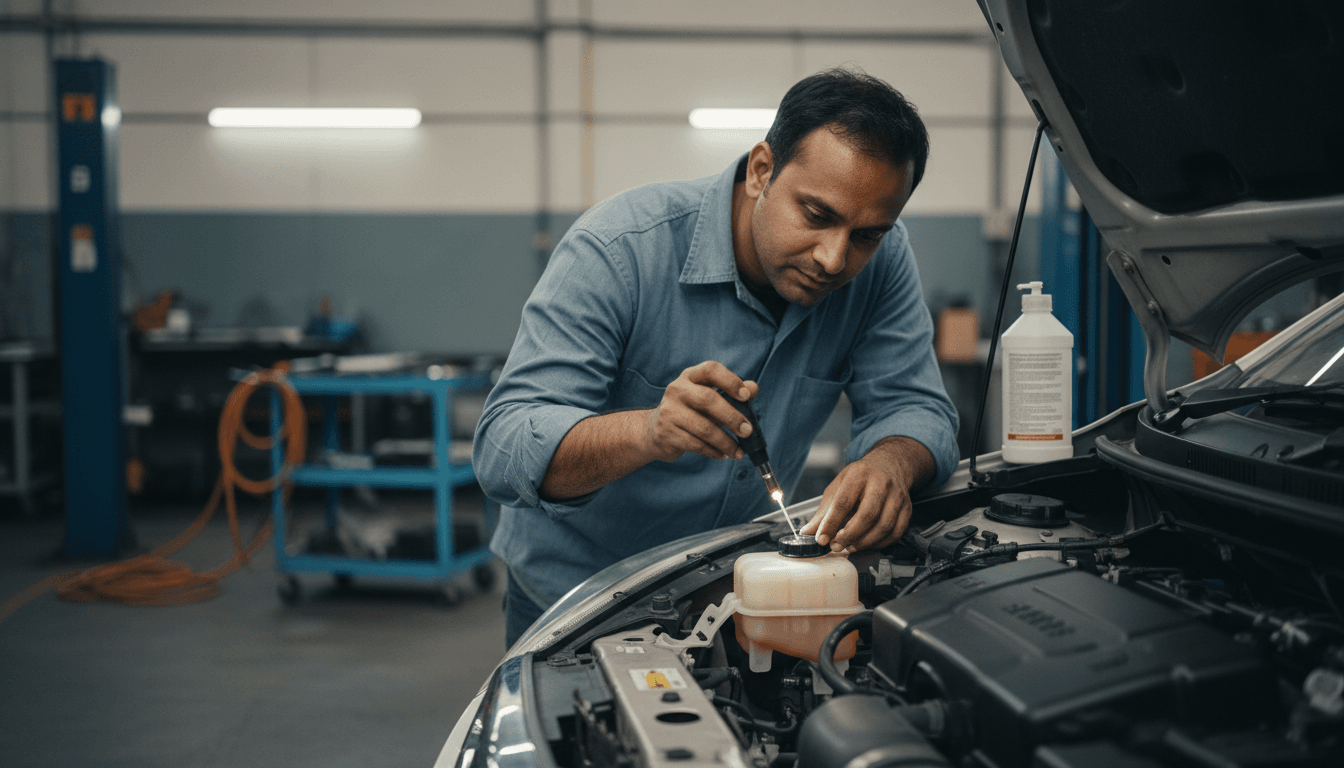
Brake fluid serves as the primary link between the force of your brake pedal and the mechanisms that actually stop your car, whether that's the brake callipers or the wheel cylinders. If the brake fluid is not present in sufficient amount, is contaminated, has been subject to excessive heat, or is different from the recommended type, the brake pedal may feel very soft and light, your braking may take longer, and in the most critical situations, the car's braking system might completely fail to function properly.
It is not only an issue of maintenance; a brake failure is among the most common reasons people file a claim with their car insurance, whether for damage to their own car or for liability for damage or injuries sustained by another person due to a crash.
What does brake fluid do?
Braking systems rely on a liquid to transmit hydraulic power within the vehicle. When you press the pedal, the master cylinder delivers enough pressure for the fluid to travel through the hose to the brakes, which stop the wheel.
The braking liquid in disc brake systems is used to move the brake calliper pistons and, in turn, press the brake pads on the wheel. Whereas in drum brake systems, the pressure created by the braking fluid pushes the wheel cylinder pistons, which then drive the brake shoes against the rotating drum.
From a safety point, it is very simple: you are not the one who physically presses the brake pads against the wheel. What you are doing is sending a request that is being acted on mechanically. It is brake fluid that goes the full round in the completely sealed hydraulic system.
Why can low or old fluid make braking unsafe?
Brake pedal performance can become poor with low or old brake fluid. An efficient braking system relies on clean, incompressible fluid to build pressure quickly. Introducing air, vapour, water, dirt, or using the wrong fluid may reduce pressure and cause the brake pedal to become soft.
| Brake fluid problem | What it can do | What you may notice |
|---|---|---|
| Low fluid level | May reduce hydraulic pressure and can indicate pad wear or a leak | Brake warning light, soft pedal, longer stopping distance |
| Air in the brake lines | Air compresses under pressure, so pedal force is not transferred firmly | Spongy pedal or pedal travel that feels longer than usual |
| Water contamination | Lowers boiling performance and can cause internal corrosion | Brake fade after heavy braking, dark or cloudy fluid |
| Overheated fluid | Can form vapour, which compresses and weakens brake pressure | Pedal goes soft during downhill driving or repeated braking |
| Wrong brake fluid type | Can damage seals, reduce performance, or be incompatible with the system | Unusual pedal feel, leaks, warning lights, or braking inconsistency |
Low fluid can mean a leak
A drop in brake fluid level all of a sudden is certainly unexpected. If there is a serious defect, it can pose a serious danger to the driver as well. For instance, in the case of brake pedal that is not working, one will have to stop the vehicle as soon as possible and it is a matter of life and death, literally.In case you get into an accident due to the brake failure, the cost of repairs that will be incurred on your vehicle will fall within the purview of your own damage insurance, while the damages incurred by others will fall within your third party car insurance.
Why does boiling point matter in brake fluid?
Heat is a major factor in brake fluid quality; in fact, it might be the number one reason. A vehicle's brakes generate heat at the wheel during braking. This heat causes the brake fluid to boil at the wheel, leading to brake fade and eventual failure. The major causes of wheel heat are: hill driving, repeated stop-and-go traffic, towing heavy loads, or hard emergency braking.
The U. S. Federal Motor Vehicle Safety Standard No. 116 sets minimum boiling performance levels for DOT brake fluid grades. There are two types of boiling points specified by the standard: the dry equilibrium reflux boiling point and the wet equilibrium reflux boiling point; both of these values are expressed in degrees Celsius.
| Brake fluid grade | Minimum dry boiling point | Minimum wet boiling point | Basic meaning for safety |
|---|---|---|---|
| DOT 3 | 205°C | 140°C | Common glycol-based fluid with lower boiling performance than DOT 4 and DOT 5.1 |
| DOT 4 | 230°C | 155°C | Higher minimum boiling performance than DOT 3 |
| DOT 5 | 260°C | 180°C | Silicone-based fluid, not the same as DOT 5.1 |
| DOT 5.1 | 260°C | 180°C | Higher minimum boiling performance and usually used where the manufacturer specifies it |
Worked example: DOT 4 brake fluid standard boiling points are 230°C (dry), and 155°C (wet). This is a drop of 75°C, and the percentage reduction from dry boiling point is 32.6%. So, brake fluid contaminated with moisture will lose its ability to resist heat, even if the system looks normal.
Which brake fluid type should you use?
You will be using the grade of brake fluid stated in the vehicle’s owner’s manual or on the brake fluid reservoir cap. DOT 3, DOT 4, DOT 5, and DOT 5.1 do not constitute upgrade levels.
The safe practice is to follow the manufacturer’s specification exactly. For instance, if the cap is labeled DOT 4, use DOT 4 brake fluid which meets the specification. Avoid adding DOT 5 silicone brake fluid to the glycol DOT 3, DOT 4, and DOT 5.1 unless specifically specified by the vehicle manufacturer.
| Fluid grade | Use it when | Avoid it when |
|---|---|---|
| DOT 3 | The owner’s manual or reservoir cap specifies DOT 3 | The vehicle requires DOT 4, DOT 5, or DOT 5.1 |
| DOT 4 | The owner’s manual or reservoir cap specifies DOT 4 | You are trying to replace DOT 5 silicone fluid |
| DOT 5 | The owner’s manual specifically calls for DOT 5 | The system is designed for DOT 3, DOT 4, or DOT 5.1 glycol-based fluid |
| DOT 5.1 | The owner’s manual or reservoir cap specifies DOT 5.1 | You are using it as a substitute without checking the manual |
How can you tell brake fluid needs attention?
The brake fluid requires inspection when there is a change in the pedal feel, the warning light comes on, the colour of the fluid turns dirty, or when there is a low fluid level below the minimum indicator. However, none of these signs always indicate the exact same issue.
| Sign | Possible meaning | What to do |
|---|---|---|
| Brake warning light | Low fluid, parking brake engaged, or another brake system fault | Stop safely, check the parking brake, and get the brake system inspected if the light remains on |
| Soft or spongy pedal | Air, old fluid, overheating, or hydraulic pressure loss | Avoid high-speed driving and get the system checked |
| Pedal sinks lower than usual | Possible hydraulic leak or master cylinder problem | Do not ignore it, because braking pressure may be compromised |
| Fluid below the minimum mark | Brake pad wear or a leak | Top-up only with the correct grade, then inspect the cause |
| Dark, cloudy, or dirty fluid | Contamination or ageing | Ask a technician whether the fluid needs replacement and bleeding |
| Burning smell after heavy braking | Possible overheated brakes or brake fade | Let the vehicle cool safely and get the brakes checked before continuing hard use |
How should you check brake fluid safely?
Safe stop
Park the vehicle on flat surface, turn off the engine, allow hot parts to cool down, secure the vehicle and open the bonnet or access door.
Find the reservoir
Find the brake fluid reservoir near the master cylinder. It is usually a small and transparent container marked with minimum and maximum levels.
Check the levels
The brake fluid level should be between the minimum and maximum marks. The fluid should not be overfilled.
Confirm the grade
Check the cap or the manual for the grade of the brake fluid. The brake fluid should only be added according to the grade.
Prevent contamination
Dust should be wiped off the brake fluid reservoir before opening the cap. The brake fluid should not be contaminated by any means.
Inspect the reason
If the brake fluid level is low, the pedal behaviour is unusual, or the warning light is still on, have your brake system checked.
How often should brake fluid be replaced?
There is no general replacement interval for brake fluid in all vehicles. There should be a specific interval for your car, listed in your owner’s manual.
When performing servicing or preparing for trips, including those on hills or under heavy loads, you should monitor your brake fluid levels. If the fluid becomes dirty, the levels drop, the brake light stays on, or there is a change in pedal feel, you need to replace it.
Key takeaways
The brake fluid helps transfer the brake pedal forces to the brakes through the hydraulic system.
The lack of sufficient brake fluid reduces braking effectiveness and can also imply the need for new brake pads.
Contaminated brake fluid is more prone to boiling when heated and can cause brake fade.
DOT 4 fluid requires a minimum dry boiling point of 230°C and a minimum wet boiling point of 155°C according to FMVSS No. 116.
It is important to use the right grade of brake fluid according to the owner’s manual or the brake fluid cap.
The brake warning light or any other signs, such as soft pedals, low fluid level, or dirty fluid, require attention.
Frequently asked questions
Yes. Brake fluid plays a very important role in braking, because it transmits pressure through hydraulic pressure from the brake pedal to the brakes at the wheels. If a fluid cannot build or maintain pressure properly, the brakes may feel light, soft, or inconsistent.
Having insufficient brake fluid while driving poses safety risks, as the system may lack enough fluid to generate adequate pressure in the hydraulic system. There is also a possibility that a leak or brake pads wearing out have occurred.
Refer to the DOT grade indicated in your manual or stamped on the cover of your brake fluid reservoir. Avoid choosing DOT 5, DOT 5.1, DOT 4, or DOT 3 as the superior alternative.
This is normally caused by the brake fluid ageing or becoming contaminated. Having dark fluid doesn’t necessarily indicate what is wrong with your braking system; however, it's an indication that it should be checked for faults.
A soft or spongy feeling in the brake pedal could be due to any of the following: air trapped in the brake lines, overheated brake fluid, old brake fluid, and/or a malfunction in the hydraulic system.
No. The topping up process only adds more fluid to the system, but does not get rid of any fluid inside, nor does it clear water, dirt, or air out of the brake lines.
About the authors

Nikhila PS
Written by · Senior Content EditorNikhila is a content creator with 6+ years in EdTech and motor insurance, turning complex policies into clear, engaging content. She enjoys exploring digital trends, social media, and art while planning her next short escape.

Rekhit Singh Kaushal
Reviewed by · Senior Director - Motor UnderwritingRekhit Singh Kaushal is Senior Director at ACKO, a leading digital motor insurance provider in India. With deep expertise in insurance strategy and innovation, he brings trusted insights on car and bike insurance to help drivers stay protected.