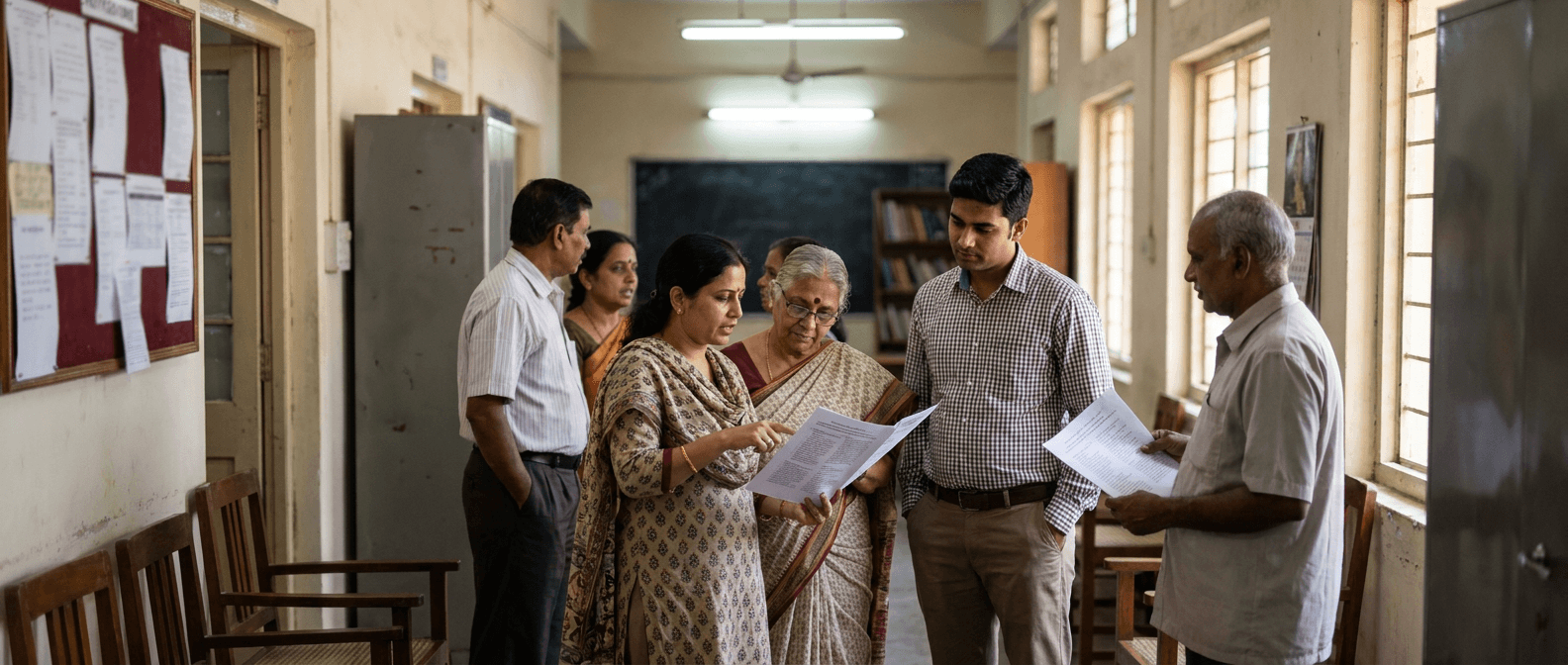
For educational systems group health insurance is cover bought by a school, institutes, universities or colleges to cover a defined group, usually students and professors, teachers and their non-teaching staff under one policy cover. Support for eligible medical expenses such as medical treatment, waiting-periods, hospitalisation and claim process are controlled by the policy document and insurer documents.
In India, health insurance products and customer documents are regulated by the Insurance Regulatory and Development Authority of India, or IRDAI. For an educational institution, the main decision is not only whether to buy a group policy, but who to include, what sum insured to choose, whether outpatient or accident benefits are needed, and how the premium will be funded.
What Does Group Health Policy for Education Institutions Mean?
A group health insurance for educational systems means that a set of people under one organisation are covered under one master policy.
The policy can be designed for one academic year or another policy period agreed with the insurer. The institution can collect member details, pay the premium to the insurer, share policy certificates or e-cards with members, and coordinate claims through the insurer or third-party administrator, known as a TPA.
Term | Meaning for an educational institution | Why it matters |
|---|---|---|
Master policy | The main policy issued to the school, college, university or education group. | It contains the binding cover terms, exclusions, limits and claim conditions. |
Insured member | A student, teacher, staff member or other accepted person listed under the policy. | Only listed members can claim benefits under the policy. |
Sum insured | The maximum eligible claim amount available per member or under the group structure, as stated in the policy. | A Rs 1 lakh sum insured cannot pay more than Rs 1 lakh for covered claims of that member, unless the policy has an additional feature that increases it. |
Policy schedule | The document that states the selected plan, covered persons, limits, premium and special conditions. | If a benefit is not listed or endorsed in the schedule, you should not assume it is covered. |
Who Can Be Covered under Group Mediclaim Policy for Educational Institutes?
Members covered in a group health policy depend on insurance company underwriting approval and the plan chosen by the employer. Most of the institutions use this kind of cover for employees, students, non-teaching staff or all. Many health cover also allow employees to cover their dependents if it is allowed by the insurer.
Member class | Can it be covered? | Common use case | Main check before buying |
|---|---|---|---|
Students | Yes, if included in the proposal and policy schedule. | Medical support for enrolled students during the policy period. | Check whether the cover applies only during campus activities or more broadly across India. |
Teaching staff | Yes, if the institution chooses employee coverage. | Health benefits for teachers, professors and lecturers. | Check age bands, pre-existing disease terms and whether family cover is included. |
Non-teaching staff | Yes, if listed as an eligible employee class. | Cover for administrative, hostel, transport, library and support staff. | Check whether contractual staff are included or excluded. |
Parents or dependants | Only if the insurer accepts them and the policy schedule includes them. | Optional family cover for staff, or in limited cases student dependants. | Check whether dependant premium is institution-paid, member-paid or optional. |
Visitors, event participants or alumni | Only if specifically accepted by the insurer. | Short-term cover for events, camps or special programmes. | Do not assume they are covered under a regular student policy. |
What Does Group Health Policy for Education Institutions Usually Cover?
A group health insurance policy for an educational institution usually focuses on hospitalisation. The institution can also ask for additional benefits such as day care procedures, ambulance cover, outpatient benefits or personal accident cover, but each benefit must be written into the policy.
Benefit | What it means | How the limit is usually applied |
|---|---|---|
Hospitalisation | Eligible in-patient treatment when a covered member is admitted to a hospital. | Up to the member's sum insured and subject to policy terms. |
Day care procedures | Specified treatments that do not need 24-hour hospitalisation because of modern medical methods. | Covered only if the procedure is included under the policy wording. |
Pre and post-hospitalisation expenses | Eligible medical expenses before and after a covered hospitalisation. | Covered for the number of days and expense heads stated in the policy. |
Ambulance cover | Cost of transporting the insured member to a hospital in an emergency. | Often capped per claim or per policy period if selected. |
Cashless treatment | The insurer or TPA settles eligible bills directly with a network hospital after approval. | Available only at network hospitals and only for approved eligible expenses. |
Reimbursement claim | The member pays the hospital first and later submits documents to the insurer or TPA. | Paid after claim assessment, subject to admissibility and policy limits. |
Personal accident benefit | A separate or add-on benefit for accidental death or disability. | Available only if the institution buys accident cover or a combined plan. |
Check the policy schedule, not the brochure alone
A brochure may describe all kinds of available benefits, but the policy document confirms what your institution has actually purchased. The schedule should state the covered member classes, sum insured, room rent limit if any, co-payment if any, exclusions, waiting periods, premium and claim process.
What Is Usually Not Covered under Group Mediclaim for Educational Institutes?
Usually, exclusions are important as a benefit because these exclusions decide when a claim should be accepted or rejected. List of all these exclusions are provided by the insurers and every insurer has different exclusions lists.
Item to check | What it can mean in practice | Question to ask the insurer |
|---|---|---|
Pre-existing diseases | Existing illnesses may be covered from day one, covered after a waiting period, or excluded depending on the group policy terms. | Are pre-existing diseases covered for students and staff from policy start date? |
Maternity expenses | Maternity may be excluded or covered only for staff with a separate sub-limit. | Is maternity included, and what is the normal delivery or caesarean sub-limit? |
OPD and medicines | Routine doctor visits, diagnostic tests and pharmacy bills are not automatically covered in a hospitalisation policy. | Is outpatient care included, and is there a per-member annual OPD limit? |
Dental and vision care | Dental treatment and spectacles may be excluded unless linked to an accident or bought as an add-on. | Are dental, vision and physiotherapy expenses covered? |
Sports injuries | Routine sports injuries may be covered under hospitalisation, but professional or hazardous sports may be restricted. | Are inter-school, inter-college and official sports events covered? |
Substance-related claims | Claims linked to alcohol, drug abuse or unlawful activity may be excluded. | What exclusions apply to intoxication or disciplinary incidents? |
Non-medical items | Items such as registration charges, consumables or administrative charges may be deducted if not covered. | Which non-medical items are payable and which are deducted? |
Which Group Health Policy Structure Should An Institution Choose?
An institution should choose a policy structure which gives them a good coverage according to their requirements. It depends on the educational institutions that they want to cover and what they want to include in this health policy structure. For eg a student-only plan is simpler, while a combined student and non - teaching or teaching staff plan needs more accurate pricing and benefit design.
Structure | Who it covers | When it is useful | Main limitation |
|---|---|---|---|
Student-only group health policy | Enrolled students listed under the policy. | Useful for schools, colleges, universities, hostels and residential programmes that want basic medical support for students. | It does not protect teachers or staff unless they are added. |
Staff-only group health policy | Teaching and non-teaching employees. | Useful when the institution wants employee health benefits similar to a corporate group medi claim policy. | Students remain outside the cover. |
Combined student and staff policy | Students, teaching staff and non-teaching staff, if accepted by the insurer. | Useful for institutions that want one administrative arrangement for all covered people. | Different age groups and benefits may need separate pricing and sub-limits. |
Health plus personal accident structure | Members covered for hospitalisation and selected accident benefits. | Useful where travel, sports, laboratories, workshops or field visits are part of the institution's risk profile. | Accident benefits do not replace full health insurance unless both covers are included. |
Define The Covered Group
Decide whether the policy will cover students, teaching staff, non-teaching staff, dependants or a combination. Keep the group definition clear and auditable.
Choose The Benefit Design
Select the sum insured, hospitalisation cover, day care cover, ambulance limit, OPD if needed, personal accident benefit if needed, and any co-payment or sub-limit.
Collect Member Data
Prepare a member list with names, dates of birth or ages, gender, identification details and any other information requested by the insurer.
Ask For Comparable Quotes
Request quotes with the same sum insured, benefits, exclusions and member count so that premium comparisons are meaningful.
Check Exclusions And Claim Process
Review the policy wording, network hospital process, reimbursement documents, TPA details, timelines and escalation contacts before finalising.
Communicate The Cover
Share member certificates or e-cards, claim steps, helpline numbers, key exclusions and the policy period with students, parents and staff.
Review At Renewal
At renewal, compare claim experience, member feedback, hospital network access, premium change and any proposed restriction in benefits.
How Do Claims Work for Group Health Policies for Education Institutions?
Claims generally work in two ways: cashless and reimbursement. If an employee visits any network hospital then the claim will be cashless. If an employee went to any non-network hospital then the treatment claim would be reimbursed. IRDAI's health insurance framework requires insurance companies to give clear customer information and policy documents, so the institution should make these available to covered members.1
Claim route | What the member does | What the insurer or TPA does | Best suited for |
|---|---|---|---|
Cashless claim | Visits a network hospital, shows the health card or policy details, and asks the hospital to send pre-authorisation. | Checks eligibility and approves admissible expenses as per policy terms. | Planned treatment and emergencies at network hospitals. |
Reimbursement claim | Pays the hospital bill, collects original documents and submits the claim form, discharge summary, bills, prescriptions and reports. | Assesses documents and pays the admissible amount after deductions, if any. | Treatment at non-network hospitals or situations where cashless approval is not available. |
Accident benefit claim | Submits accident-related documents such as medical records, disability certificate or death certificate, depending on the benefit claimed. | Checks whether the accident event and benefit are covered under the policy. | Policies that include personal accident cover. |
What Should The Institution Check Before Buying Group Mediclaim?
An educational institution should check the policy from both an insurance and administration point of view. The cover has to work for students or staff at the time of treatment, not only during admission or onboarding.
Confirm the exact covered group, including whether new admissions and mid-year joiners can be added.
Check whether the policy covers members across India or only in a defined geography.
Ask for the network hospital list near the campus, hostel locations and major student hometown clusters.
Check whether sports, laboratory, workshop, transport and field visit risks need separate accident cover.
Confirm whether pre-existing diseases are covered from day one or only after a waiting period.
Review room rent limits, disease-wise sub-limits, co-payment, non-medical item deductions and claim document requirements.
Decide whether the premium is paid fully by the institution, fully by members, or shared.
Give members a short cover note explaining the sum insured, policy period, exclusions, claim helpline and documents needed.
Is Group Health Policy for Education Institutions Different From Student Accident Insurance?
Group health insurance and student accident insurance are not the same. A health policy is meant for eligible medical treatment, usually hospitalisation, while an accident policy pays only for defined accidental events such as accidental death, disability or accident-related medical expenses if selected.
Feature | Group health insurance | Student accident insurance |
|---|---|---|
Main purpose | Pays eligible hospitalisation and selected medical expenses. | Pays defined benefits linked to accidents. |
Illness cover | Can cover illness-related hospitalisation, subject to terms. | Usually does not cover illness unless a separate health benefit is included. |
Accidental injury | Can cover hospitalisation due to accident if not excluded. | Designed specifically for accidental death, disability or injury benefits. |
Typical buyer question | How will students or staff pay hospital bills? | What financial benefit is payable after an accident? |
Can both be bought? | Yes. | Yes, institutions often evaluate both depending on risk profile. |
Key Takeaways
Group health insurance for educational institutions covers a defined group such as students, teachers and staff under one master policy.
The policyholder is usually the institution, while students or staff are listed as insured members.
The sum insured, covered benefits, exclusions, waiting periods, claim process and premium are determined by the policy schedule.
Common benefits include hospitalisation, day care procedures, pre and post-hospitalisation expenses, ambulance cover, cashless treatment and reimbursement claims, if selected.
Premium is not fixed by one statutory table. It depends on member count, age profile, sum insured, benefits, claims history and cost-sharing features.
Student accident insurance is different from group health insurance because accident insurance pays only for defined accident-linked benefits.
Institutions should check member eligibility, network hospitals, exclusions, sub-limits, co-payment and communication documents before buying.
Frequently asked questions
No, there are no such rules applied to educational institutions that they have to purchase group health policy. However, a specific state rule, university requirements, contract or employer obligation may apply to a particular institution, so the institution should check its own legal and regulatory obligations separately.
Yes, this kind of policy is applicable that an institution can request a student only insurance policy if the insurance company accepts. Employees or Staff will not be covered under this policy unless they are mentioned as eligible members by the insurer or employer in the policy schedule.
Yes, staff families can also be added to the policy only if it is allowed by the insurance company. The health cover should clearly mention whether spouse, child, parents are covered or not and whether their premium is paid by the institution or not.
Health policy covers pre-existing diseases but it depends on policy coverage. Some insurers cover them, some may not, it also depends on the employer requirement. The institution should get this point clearly mentioned in the policy document before making any payments.
Students can claim treatments or for hospitalisation outside the campus location only if it is allowed but the insurer's and they have a wider hospital network. That is why before finalising policy institutions should check network hospitals and both services cashless and reimbursement across India.
The admissible claim amount is generally paid to the insured member or the authorized person after the submitted documents are approved by the insurer. The exact payee process should be confirmed in the insurer's claim procedure.
Sources and references
- 1.IRDAI Master Circular on Health Insurance Business, 2024Insurance Regulatory and Development Authority of India, master circular dated 29 May 2024, used for health insurance regulatory context and customer document principles.
- 2.GST rates for servicesCentral Board of Indirect Taxes and Customs, GST rate reference used for the illustrative 18 percent GST calculation on insurance premium.
About the authors

Nikita Joshi
Written by · Marketing Specialist - ACKO for BusinessNikita Joshi works on Group Mediclaim at Acko General Insurance, spanning client advisory, growth analytics, and marketing for the SME segment. She combines data-driven insight with content and campaign strategy to build credible, useful health insurance experiences for employers and employees alike.

Nitesh Kapur
Reviewed by · Senior Director – Underwriting & Claims, Group Health Insurance at ACKOWith over 15 years of experience in health insurance underwriting, he has led group health insurance strategy, risk assessment, and policy design. He has held leadership roles at leading insurers, building risk frameworks, evaluating complex health risks, and strengthening underwriting standards.