Home / Group Health Insurance / Articles / What Does a Group Health Insurance Policy Cover?
What Does a Group Health Insurance Policy Cover?
Neviya LaishramJul 20, 2026
Share Post
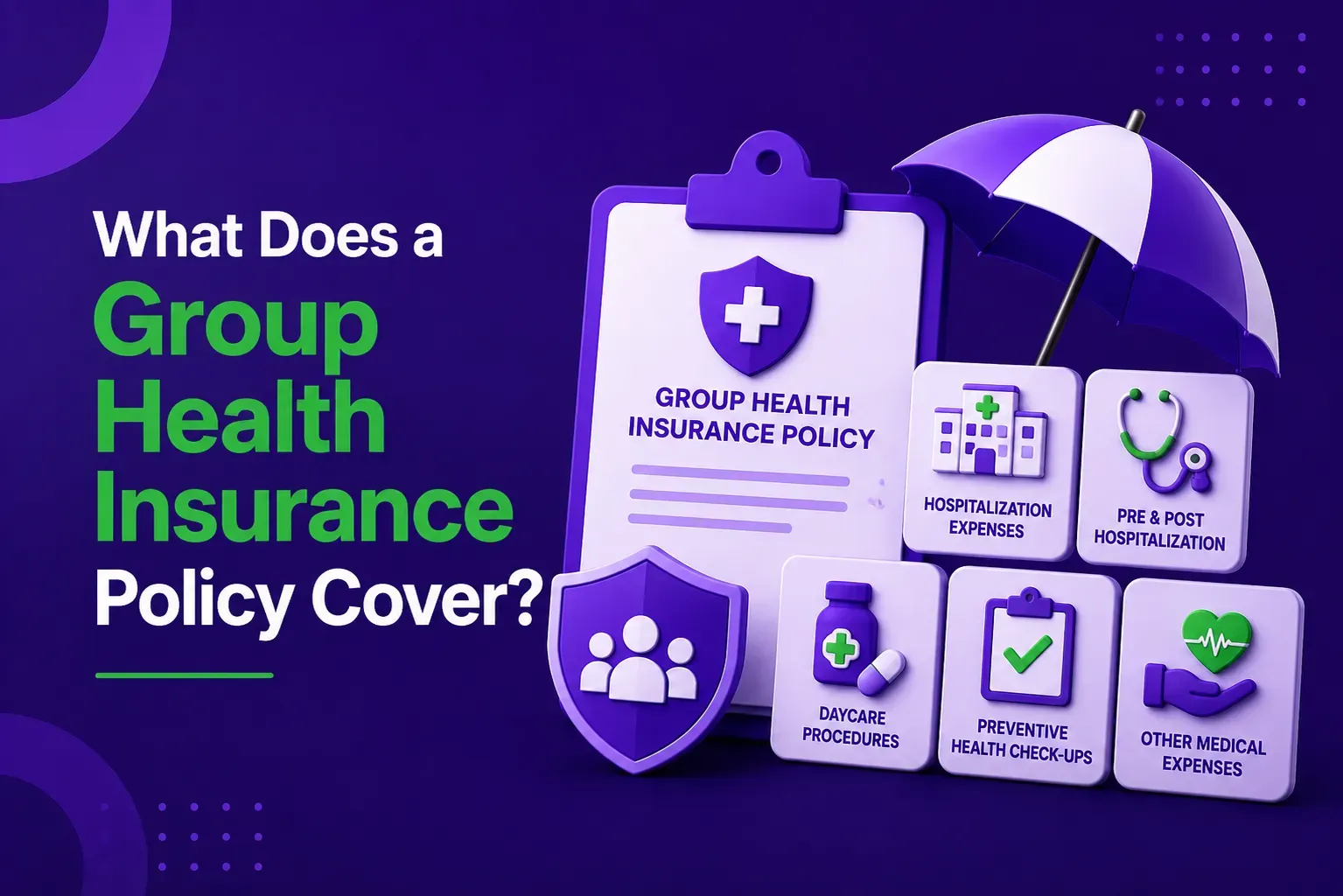
A group health insurance policy typically covers hospitalisation expenses, pre- and post-hospitalisation costs, daycare treatments, ambulance charges, maternity benefits, and other medical expenses, depending on the policy terms.
Group health insurance, as the name suggests, is a health insurance plan for a group of employees. It is purchased by the employers for their employees. In this article, you’ll explore the key inclusions and exclusions of a group health insurance policy to help employers and employees better understand their coverage.
Contents

- What are the Inclusions of a Group Health Insurance Policy?
- Ambulance Charges
- In-patient Hospitalisation
- Pre-existing Diseases Coverage Since Day 1
- Maternity Coverage
- Pre- and Post-Hospitalisation Expenses
- Domiciliary Expenses
- Daycare Treatment
- Cashless Hospitalisation
- Covers AYUSH Treatment
- Organ Donor Expenses
- Mental Health Treatment
- Preventive Health Check-ups
- OPD (Outpatient Department) Charges
- What are the Exclusions of a Group Health Insurance Policy?
- Conclusion
- FAQs
What are the Inclusions of a Group Health Insurance Policy?
A group health insurance policy generally covers the following expenses and treatments:
Ambulance Charges
Covers the cost of ambulance services used to transport insured employees to a hospital during a medical emergency. Coverage is usually available up to the policy limit.
In-patient Hospitalisation
Group health insurance covers the expenses incurred when the insured is hospitalised. This includes surgery, medication, doctor fees, diagnostic charges, etc.
Pre-existing Diseases Coverage Since Day 1
Some group health insurance policies may offer coverage for pre-existing diseases from Day 1. This allows employees to obtain coverage for pre-existing medical conditions without waiting.
Maternity Coverage
Many group health insurance plans may cover maternity-related expenses, including normal delivery, C-section delivery, and newborn care, subject to the policy terms and conditions.
Pre- and Post-Hospitalisation Expenses
Group health insurance covers the expenses incurred before and after hospitalisation. This may include diagnostic charges, consultation fees, follow-up visits, medication, and other costs.
Domiciliary Expenses
Domiciliary treatment refers to medical treatment provided at home when hospitalisation is not possible due to the patient's condition or the unavailability of hospital beds. Some group health insurance policies may cover such expenses.
Daycare Treatment
Treatment that requires hospitalisation for less than 24 hours is referred to as daycare treatment. Many group health insurance policies cover the expenses of eligible daycare treatments.
Cashless Hospitalisation
Group health insurance policies may offer cashless treatment at network hospitals. Under this facility, eligible medical expenses are settled directly between the insurer and the hospital, subject to policy terms, conditions, and claim approval.
Covers AYUSH Treatment
AYUSH refers to traditional systems of medicine, including Ayurveda, Yoga and Naturopathy, Unani, Siddha, and Homoeopathy. Many corporate health insurance policies cover AYUSH treatments. To avail of this coverage, treatment may need to be taken at recognised AYUSH healthcare facilities.
Organ Donor Expenses
Many group health insurance policies cover expenses related to organ donation when the insured employee undergoes an organ transplant.
Mental Health Treatment
Many group health insurance policies cover hospitalisation expenses related to mental health conditions, subject to the policy terms and conditions. Coverage may vary depending on the treatment and insurer.
Preventive Health Check-ups
Some group health insurance policies may include preventive health check-ups to help employees monitor their health and identify potential medical conditions early.
OPD (Outpatient Department) Charges
OPD coverage in group health insurance may include minor procedures that don't require hospitalisation, medications, diagnostic testing, and doctor consultations.
What are the Exclusions of a Group Health Insurance Policy?
The following are the exclusions or limitations of group health insurance coverage:
Treatments performed for cosmetic or aesthetic purposes, such as Botox, dermal fillers, or elective plastic surgery, are generally not covered unless medically necessary.
Medical expenses arising from alcohol or drug abuse may not be covered under some group health insurance policies.
Treatment expenses arising from self-inflicted injuries or suicide attempts are generally not covered under group health insurance policies.
Read our detailed guide on group health insurance coverage for pre-existing diseases.
Conclusion
Group health insurance inclusions offer comprehensive coverage for the insured employees and eligible family members. However, there are multiple exclusions or limitations of group health insurance. Employers should carefully review inclusions and exclusions when selecting a plan to ensure coverage meets their workforce's needs.
FAQs
Below are some of the most commonly asked questions about what does a group health insurance policy cover?

1. Can a group health insurance coverage cover an employee's family?
Yes, many group health insurance policies allow employees to add dependent family members, including parents, children, and spouses.
2. What does group health insurance cover?
Hospitalisation, hospitalisation fees, pre- and post-hospitalisation expenses, day care procedures, ambulance charges, and maternity benefits are covered by employee health insurance.
3. What is not covered under a group health insurance policy?
Group health insurance policies may exclude cosmetic treatments, expenses arising from alcohol or drug abuse, and treatment expenses related to self-inflicted injuries. Exclusions vary by insurer and policy, so it is important to review the policy document carefully.
4. Does group health insurance cover maternity expenses?
Some group health insurance plans may cover maternity-related expenses, including normal delivery, C-section delivery, and newborn care. However, coverage limits, waiting periods, and eligibility conditions vary by policy.
5. Does group health insurance cover pre-existing diseases?
Some group health insurance policies may cover pre-existing diseases from Day 1, while others may apply a waiting period. The coverage available depends on the insurer and the policy terms.

Was this article helpful?

Recent
Articles
No Insurance, No Fuel: What the Supreme Court's Pilot Means
Nikhila PS Aug 6, 2026
Supreme Court Extends Third-Party Insurance for New Cars to Four Years
Nikhila PS Aug 6, 2026
Do ADAS Features Reduce Car Insurance Premiums in India?
Nikhila PS Jun 25, 2026
How Do BS6 Bikes Affect Bike Insurance Premiums and Coverage?
Nikhila PS Jun 25, 2026
Top 15 Car Companies in India in 2026
Nikhila PS Jun 25, 2026
All Articles


Want to post any comments?

A group health insurance policy that offers holistic healthcare benefits that your team needs.

Get Quote


#36/5, Hustlehub One East, Somasandrapalya 27th Main Rd, Sector 2, HSR Layout, Bengaluru, Karnataka 560102