Home / Group Health Insurance / Articles / Why Every Workforce Needs Employee Benefits Insurance?
Why Every Workforce Needs Employee Benefits Insurance?
Neviya LaishramJul 1, 2026
Share Post
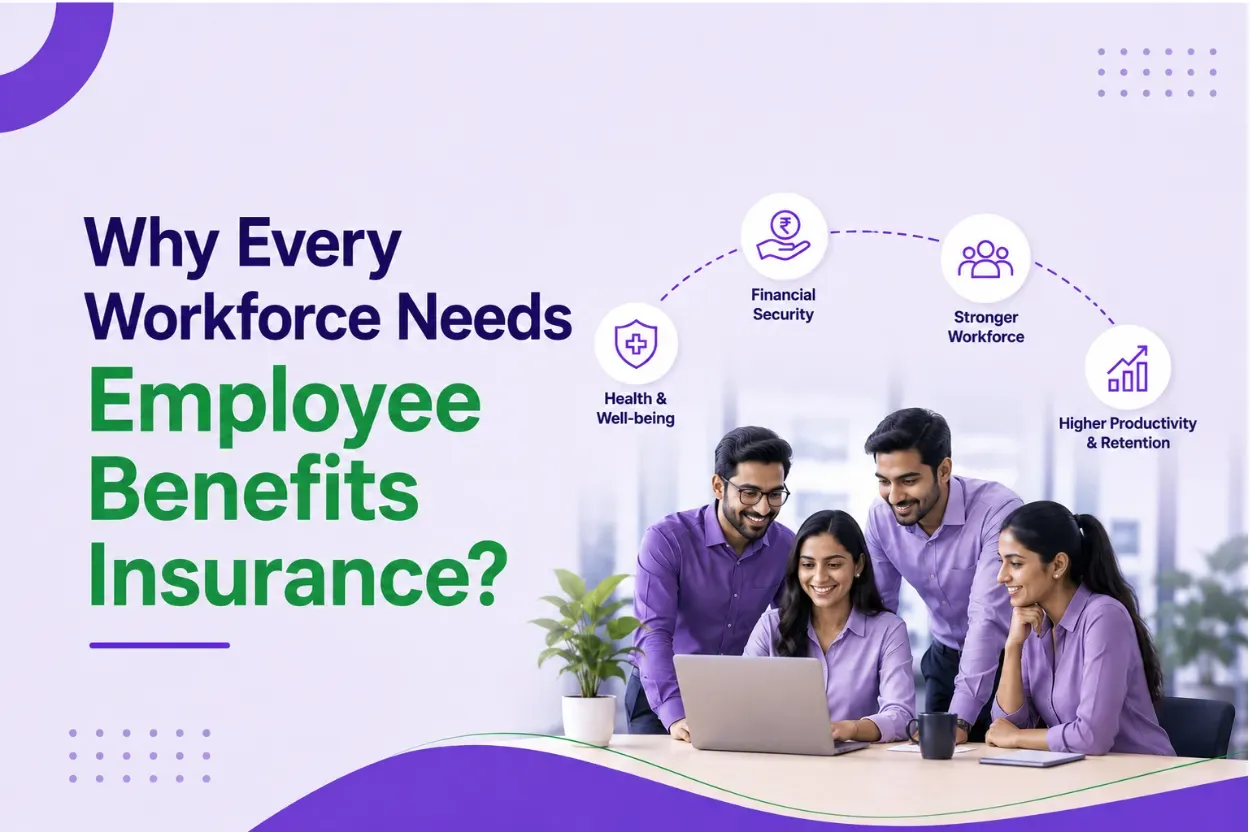
Every successful business depends on a healthy, motivated, and productive workforce. As employee expectations continue to evolve, organisations are increasingly expected to offer more than just competitive salaries. Benefits such as health insurance, life insurance, and financial protection have become important factors in attracting, supporting, and retaining talent.
Employee benefits insurance helps organisations provide this additional layer of support while improving employee well-being and workplace satisfaction. Read on to learn why employee benefits insurance is an essential investment for every workforce.
Contents

What is Employee Benefits Insurance?
Employee benefits insurance refers to insurance plans that employers offer to support the health, financial security, and overall well-being of their employees. These benefits go beyond salary and are designed to help employees manage unexpected life events, medical expenses, and financial risks.
Depending on the organisation's needs, employee benefits insurance may include group health insurance, group personal accident insurance, group life insurance, and wellness-related coverage.
What Does Employee Benefits Insurance Cover?
The coverage offered under employee benefits insurance depends on the type of plan chosen by the employer. 3 common benefits include:
Group Health Insurance: Covers hospitalisation expenses, pre- and post-hospitalisation costs, daycare procedures, and other medical expenses, subject to policy terms.
Group Personal Accident Insurance: Provides financial protection against accidental death, permanent disability, or partial disability.
Group Term Life Insurance: Offers a lump-sum payout to the employee's nominee in the event of the employee's demise during the policy period.
How Employee Benefits Insurance Supports Employees
Employee benefits insurance provides employees with financial protection and promotes overall well-being by providing access to healthcare services, preventive care, and wellness benefits. Employees who feel supported by their organisation are often more engaged, satisfied, and confident in managing their personal and professional responsibilities.
Why Employee Benefit Insurance is Essential for Employers
The work environment has changed, and employees are seeking not only monetary compensation but also other benefits from their workplaces. So, here's why employee benefit insurance has become a must-have:
Talent attraction: Comprehensive employee benefits can make an organisation more attractive to job seekers and improve employee retention in a competitive job market.
Improved Employee Retention: Employees are more likely to stay with organisations that invest in their well-being through comprehensive benefits. This can help reduce employee turnover and associated hiring costs.
Less absenteeism: Access to healthcare benefits encourages employees to seek timely medical care. This helps minimise prolonged absences and disruptions to work.
Stronger Employer Brand: Offering employee benefit insurance can strengthen an organisation's reputation as an employer of choice, helping it stand out in a competitive job market.
Financial Protection for Employees: Employee benefit insurance helps reduce the financial burden of unexpected medical expenses, allowing employees to focus on their recovery rather than treatment costs.
Tax benefits: Employer-paid premiums may qualify as a tax-deductible business expense.
Without employee benefits insurance, businesses may struggle to retain top talent and stay competitive.
Factors to Consider Before Choosing Employee Benefits Insurance
Employers should carefully assess the needs of their workforce and the level of coverage they wish to provide. Key factors to consider when choosing an employee benefits insurance plan include:
Coverage Scope: Review the benefits included under the policy and whether they meet employee needs.
Workforce Demographics: Consider factors such as employee age, family status, and healthcare requirements.
Network Hospitals: Check the insurer's network of hospitals and healthcare providers.
Waiting Periods and Exclusions: Understand any waiting periods, exclusions, or coverage limitations.
Claim Process: Evaluate the ease of filing and settling claims.
Cost and Affordability: Balance premium costs with the benefits offered under the policy.
Conclusion
Employee benefits insurance plays an important role in supporting both employers and employees. It can provide financial protection, improve employee well-being, strengthen talent retention, and enhance workplace satisfaction. Today, leading organisations are doing more than just competing for talent; they are investing in their employees. Offering the right employee benefits insurance can help businesses support their workforce while building long-term organisational success.
FAQs
Below are some of the most commonly asked questions about why every workforce needs employee benefits insurance?

1. Which benefits are the most important for employees?
The most important benefits to employees consistently revolve around health security, financial stability, and work-life balance.
2. What are the different types of employee benefits insurance?
Employee benefits insurance may include group health insurance, group personal accident insurance, and group term life insurance. Employers can choose one or more of these benefits based on their workforce's needs and the level of coverage they wish to provide.
3. Are employee benefits more important than salary?
Salary remains an important factor when choosing a job. However, many employees also consider benefits such as health insurance, life insurance, and wellness support.
4. Can employees add their family members to a group health insurance policy?
Many group health insurance plans allow employees to include their spouse, children, and, in some cases, parents, subject to the insurer's terms and conditions.

Was this article helpful?

Recent
Articles
No Insurance, No Fuel: What the Supreme Court's Pilot Means
Nikhila PS Aug 6, 2026
Supreme Court Extends Third-Party Insurance for New Cars to Four Years
Nikhila PS Aug 6, 2026
Do ADAS Features Reduce Car Insurance Premiums in India?
Nikhila PS Jun 25, 2026
How Do BS6 Bikes Affect Bike Insurance Premiums and Coverage?
Nikhila PS Jun 25, 2026
Top 15 Car Companies in India in 2026
Nikhila PS Jun 25, 2026
All Articles


Want to post any comments?

A group health insurance policy that offers holistic healthcare benefits that your team needs.

Get Quote


#36/5, Hustlehub One East, Somasandrapalya 27th Main Rd, Sector 2, HSR Layout, Bengaluru, Karnataka 560102