Home / Health Insurance / Articles / What is the Difference Between Super Top-up and Top-up Health Insurance?
What is the Difference Between Super Top-up and Top-up Health Insurance?
Neviya LaishramMay 29, 2026
Share Post
With the rising medical inflation rate in India, basic health insurance may not provide sufficient coverage for many families and organisations. This is where family top-up health insurance and super top-up insurance become essential. Both plans offer increased coverage at a lower cost, but they differ in the claim process.
A clear understanding of the differences between top-up and super top-up plans will help companies and individuals make better financial decisions. This guide explains the key differences to help you choose the right plan.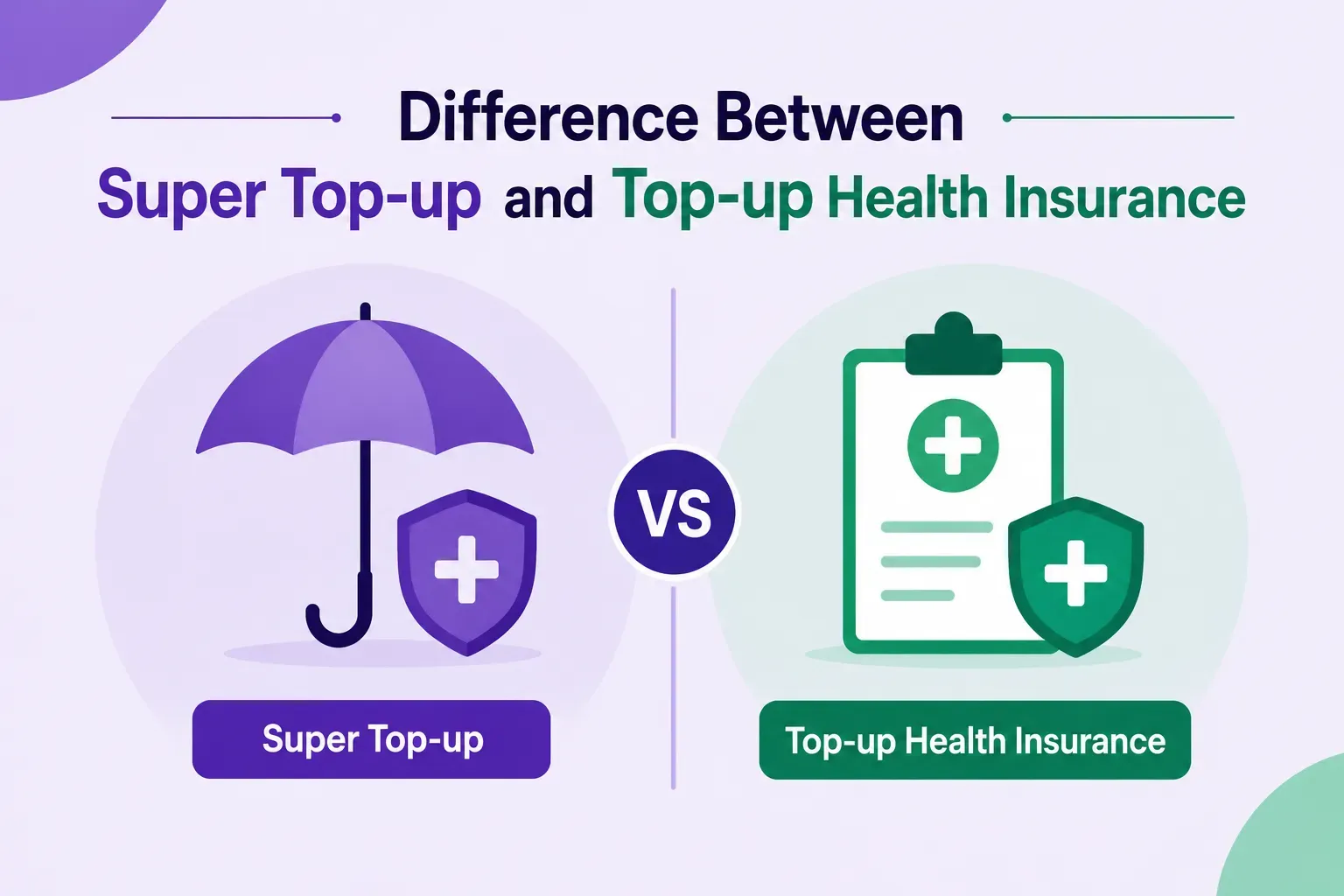
Contents

What is Top-up Health Insurance?
A top-up health insurance plan provides additional coverage once a predefined threshold, known as the deductible, is crossed in a single hospitalisation claim. It helps increase your overall health coverage at a lower premium than increasing the base sum insured.
For example:
Deductible: ₹5 lakh
Hospital bill: ₹8 lakh
In this case, the top-up insurer may pay ₹3 lakh after the deductible amount is covered through your base health insurance or out-of-pocket expenses.
Advantages of Buying Top-up Health Insurance
The advantages of top-up health insurance are as follows:
Saves Money: It is much cheaper than buying a new high-value policy. You receive additional coverage for a fraction of the cost.
Additional Financial Protection: Provides backup in the event of major emergencies. If you get a big hospital bill and your primary insurance runs out, the top-up plan pays the rest.
Smart Planning: You can keep your basic policy for regular needs and use the top-up plan for large, unexpected medical expenses.
Easy to Use: The top-up plan automatically kicks in once your primary insurance limit is exhausted and helps cover eligible medical expenses.
What is Super Top-up Insurance?
Super top-up insurance is similar to top-up insurance, but there is one important difference. A regular top-up plan considers each hospitalisation claim separately, while a super top-up plan considers the total of all hospitalisation expenses during a policy year.
Example:
Deductible: ₹5 lakh
First claim: ₹3 lakh
Second claim: ₹3 lakh
Even though the individual claims are under ₹5 lakh, the annual cost reaches ₹6 lakh. Here, the super top-up insurance company will pay for the ₹1 lakh, which exceeds the deductible.
Advantages of Buying Super Top-up Health Insurance
The advantages of super top-up health insurance are as follows:
Covers Multiple Hospitalisations: If you are hospitalised more than once in a policy year, a super top-up plan considers the combined medical expenses.
Better Financial Protection: Since it considers cumulative medical expenses during the year, a super top-up plan can be more useful for individuals or families who may require multiple treatments or regular medical care.
Affordable High Cover: It allows you to get a higher sum insured at a comparatively lower premium than buying a separate standalone health insurance policy.
Additional Coverage Support: A super top-up plan can act as an extra layer of financial protection once your base health insurance coverage and deductible limit are exhausted.
Key Differences between Top-up vs Super Top-up
What is Deductible in Health Insurance?
A deductible in health insurance is the amount an individual must pay before the insurance company begins paying the remaining eligible medical expenses. In both top-up and super top-up plans, the deductible serves as a threshold.
Deductible: ₹5 lakh
Medical bill: ₹7 lakh
The insurer will cover ₹2 lakh after the deductible amount is crossed. Choosing the right deductible for your health insurance is important because it directly affects your premium and coverage structure.
You can read more about What is Copay in Health Insurance?
Which One Should You Choose?
Whether to go for a top-up or a super top-up depends on your healthcare needs and finances.
A top-up policy may work well if:
You want affordable protection against a single large medical emergency
You already have sufficient employer-provided or base health insurance coverage
A super top-up plan is better if:
Your family may face multiple hospitalisations in a year
You want broader financial protection against cumulative medical expenses
You are covering senior citizens or dependents
In cities like Mumbai, Bengaluru, and Delhi, even one hospitalisation can cost several lakhs. An affordable super top-up plan can therefore strengthen your overall health coverage without significantly increasing premium costs.
Conclusion
Both top-up and super top-up health insurance plans can help enhance your existing health coverage without significantly increasing your premiums. The key difference lies in how the deductible is applied. For individuals or families looking for broader financial protection against rising healthcare costs, a super top-up plan may offer greater flexibility and long-term value.
FAQs
Below are some of the most commonly asked questions about the Difference Between Super Top-up and Top-up Health Insurance in India

Is super top-up better than top-up insurance?
Yes, super top-up insurance is often better because it covers cumulative medical expenses during a policy year instead of a single claim.
Can I buy super top-up insurance without base insurance?
Yes, some insurers allow you to buy super top-up insurance without a base policy, but having existing health coverage is recommended.
Can I have both a base health insurance policy and a super top-up plan?
Yes, many people combine a base health insurance policy with a super top-up plan to increase their overall coverage at a lower premium.
What is the ideal deductible amount in health insurance?
The ideal deductible should align with your existing health insurance coverage and your ability to pay out-of-pocket expenses.
Is there a waiting period for top-up and super top-up health insurance?
Yes, top-up and super top-up plans may include waiting periods for pre-existing diseases, specific treatments, and certain medical conditions, depending on the insurer and policy terms.
Are top-up and super top-up plans available for family floater policies?
Yes, many insurers offer top-up and super top-up plans for both individual and family floater health insurance policies.

Was this article helpful?

Recent
Articles
No Insurance, No Fuel: What the Supreme Court's Pilot Means
Nikhila PS Aug 6, 2026
Supreme Court Extends Third-Party Insurance for New Cars to Four Years
Nikhila PS Aug 6, 2026
Do ADAS Features Reduce Car Insurance Premiums in India?
Nikhila PS Jun 25, 2026
How Do BS6 Bikes Affect Bike Insurance Premiums and Coverage?
Nikhila PS Jun 25, 2026
Top 15 Car Companies in India in 2026
Nikhila PS Jun 25, 2026
All Articles


Want to post any comments?

Discover our diverse range of Health Insurance Plans tailored to meet your specific requirements🏥
✅ 100% Room Rent Covered* ✅ Zero deductions at claims ✅ 7100+ Cashless Hospitals

Check health insurance


#36/5, Hustlehub One East, Somasandrapalya 27th Main Rd, Sector 2, HSR Layout, Bengaluru, Karnataka 560102