Home / Health Insurance / Articles / How to Compare Health Insurance Plans
How to Compare Health Insurance Plans
Neviya LaishramMay 26, 2026
Share Post
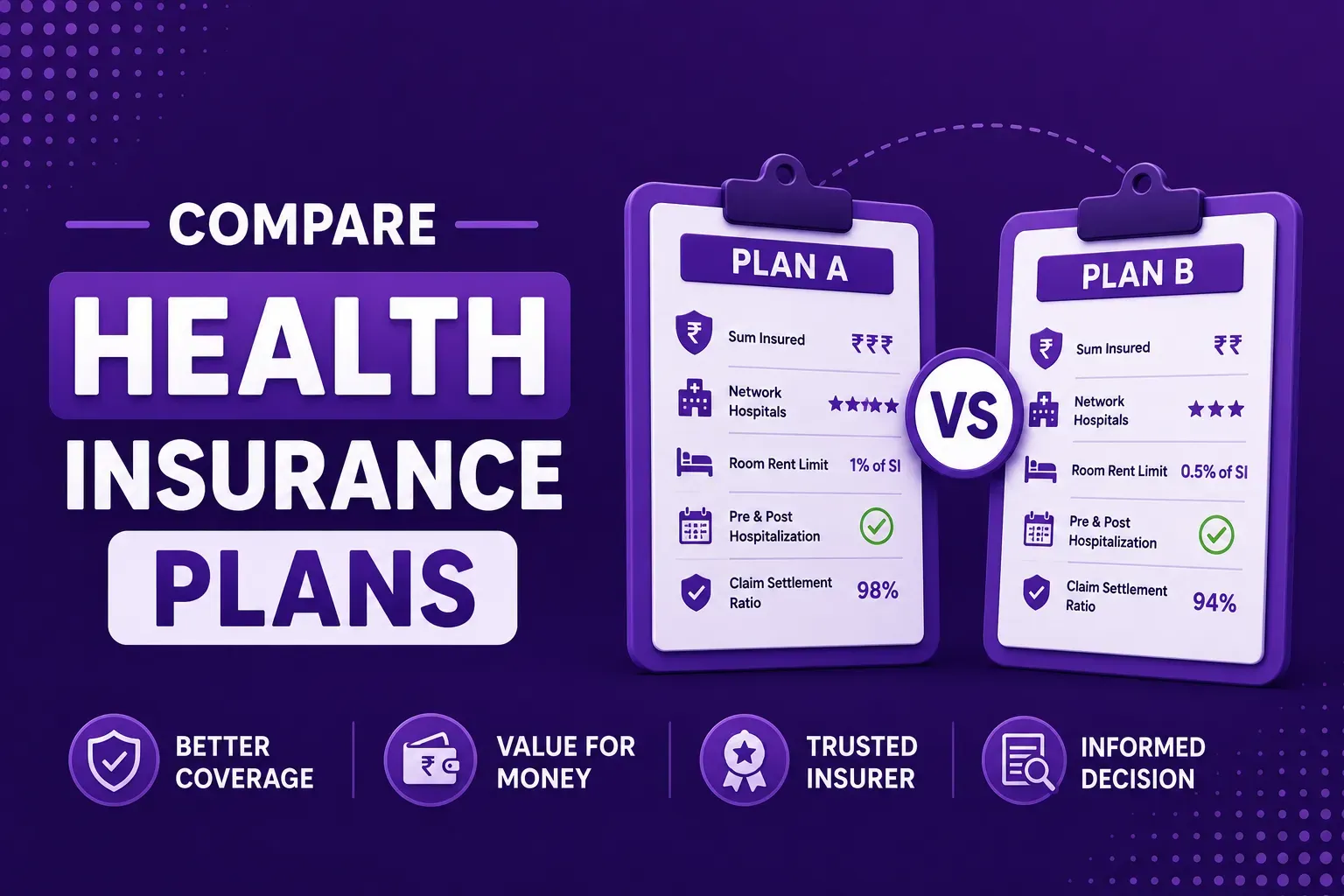
To compare health insurance plans effectively, you need to evaluate premiums, coverage, exclusions, hospital networks, the claim settlement process, and affordability. Comparing health insurance plans using the right factors will help you choose a policy that provides financial security and comprehensive coverage in case of medical emergencies.
Whether you are looking for individual insurance or the top family health insurance plans in India, here are some valuable tips to help you make the right choice.
Contents

Factors to Consider When Comparing Health Insurance Plans
When comparing health insurance policies, focus on the overall benefits and long-term financial protection rather than just the monthly or annual premium.
Compare Coverage and Sum Insured
The sum insured is the most crucial part of the insurance plan. In addition to comparing the policy cost, ensure the sum insured is sufficient to cover your medical expenses during emergencies and major treatments.
In addition to the sum insured, several other factors help you understand the coverage offered by an insurance plan. These include:
Hospitalisation expenses
ICU and room rents
Daycare treatment
Pre and post-hospitalisation expenses
Ambulance expenses
Critical illnesses
Reimbursement facilities
No claim bonus
A policy with broader coverage can provide better financial protection even if the premium is slightly higher. You can also explore ACKO’s guide on premium versus coverage here: Premium Cost vs Coverage Amount in Health Insurance.
Evaluate Premiums and Overall Policy Value
A low premium may seem appealing initially. However, it should not be the sole factor in your decision. The low-cost plan might include limitations such as rent caps, co-payments, or limited treatment coverage. While comparing the premiums of a health insurance plan, consider the following aspects:
Coverage advantages
Limits of claim
Deductible
Additional services
Increased premium every year
Renewable lifetime plans
You can also use the health insurance premium calculator to calculate the annual premium depending on age, city, family size, and coverage amount. Compare how different policies offer you coverage at your selected premium.
Check Waiting Periods
A majority of health insurance policies come with waiting periods on:
Pre-existing diseases
Specific illnesses or procedures
Maternity coverage
Shorter waiting periods may be advantageous, especially if you have pre-existing health issues.
Exclusions
Review the exclusion list to determine which treatments, sicknesses, or diseases are excluded from the plan.
Co-payments and Deductibles
The co-payments clause implies that you are required to pay some percentage of the claim, whereas the deductible requires you to pay a set amount before the insurance company pays.
Policies with lower co-payments and manageable deductibles generally provide better financial support during treatment.
Review the Cashless Hospital Network
A wide network of cashless hospitals enables you to receive medical treatment without making substantial upfront payments during emergencies. Before choosing the insurance policy, consider the following:
Your preferred hospitals are included
Nearby hospitals offer cashless treatment
The insurer has a strong network across your city and state
The claim settlement process is simple and efficient
Check Claim Support
Good claim support and access to quality network hospitals can make the treatment process smoother and less stressful.
You can read more about cashless claims here: How to File an Individual Health Insurance Claim.
Choose Between Family Floater and Individual Plans
When choosing the best health insurance plan for yourself, you should also decide whether you need a family floater plan or an individual plan.
Family Floater Health Insurance Plans: In family floater health insurance plans, you get a single sum insured that covers the whole family. This can be a suitable option for families looking for coverage for all members under one policy.
Individual Health Insurance Plan: Individual health insurance covers each insured separately. It can be a better choice for families where each member may have different healthcare needs.
Before deciding, compare factors such as total coverage, premium affordability, renewal age limits, and long-term healthcare needs. For a detailed breakdown, refer to Family Health Insurance vs Individual Health Insurance.
Tips to Choose the Right Health Insurance Plan
Below are some tips that will help you in choosing the correct health insurance plan:
Select an adequate amount based on the cost of healthcare in your city
Purchase health insurance as soon as possible to minimise waiting periods
Choose policies with lifelong renewability
Compare claim settlement support and cashless hospital benefits
Review policy exclusions and sub-limits carefully
Check how premiums increase with age
Ensure nearby hospitals are included in the insurer’s network
Conclusion
Choosing the right policy starts with a smart comparison. By evaluating coverage, premiums, exclusions, and hospital networks carefully, you can find a plan that offers better financial security for you and your family. Explore ACKO’s health insurance options today and choose a plan that fits your healthcare needs with confidence.
FAQs
Here are some common questions people ask when comparing health insurance plans in India.

How to compare health insurance plans effectively?
Start by comparing premiums, coverage limits, waiting periods, exclusions, hospital network, and claim settlement ratios instead of focusing only on price.
How do I compare mediclaim policies online?
To compare mediclaim policy online, use insurer websites or comparison platforms to evaluate benefits, exclusions, and premium costs side by side.
Which is better: family floater or individual health insurance?
Family floater plans are usually cost-effective for young families, while individual policies may suit older members or people with separate medical needs.
What should I check before buying comprehensive health insurance?
Check room rent limits, co-payments, waiting periods, restoration benefits, exclusions, and cashless hospital availability.
Is low cost health insurance worth buying?
Yes, if it provides adequate hospitalisation coverage and a reliable claim settlement process. However, compare benefits carefully before purchasing.

Was this article helpful?

Recent
Articles
No Insurance, No Fuel: What the Supreme Court's Pilot Means
Nikhila PS Aug 6, 2026
Supreme Court Extends Third-Party Insurance for New Cars to Four Years
Nikhila PS Aug 6, 2026
Do ADAS Features Reduce Car Insurance Premiums in India?
Nikhila PS Jun 25, 2026
How Do BS6 Bikes Affect Bike Insurance Premiums and Coverage?
Nikhila PS Jun 25, 2026
Top 15 Car Companies in India in 2026
Nikhila PS Jun 25, 2026
All Articles


Want to post any comments?

Discover our diverse range of Health Insurance Plans tailored to meet your specific requirements🏥
✅ 100% Room Rent Covered* ✅ Zero deductions at claims ✅ 7100+ Cashless Hospitals

Check health insurance


#36/5, Hustlehub One East, Somasandrapalya 27th Main Rd, Sector 2, HSR Layout, Bengaluru, Karnataka 560102