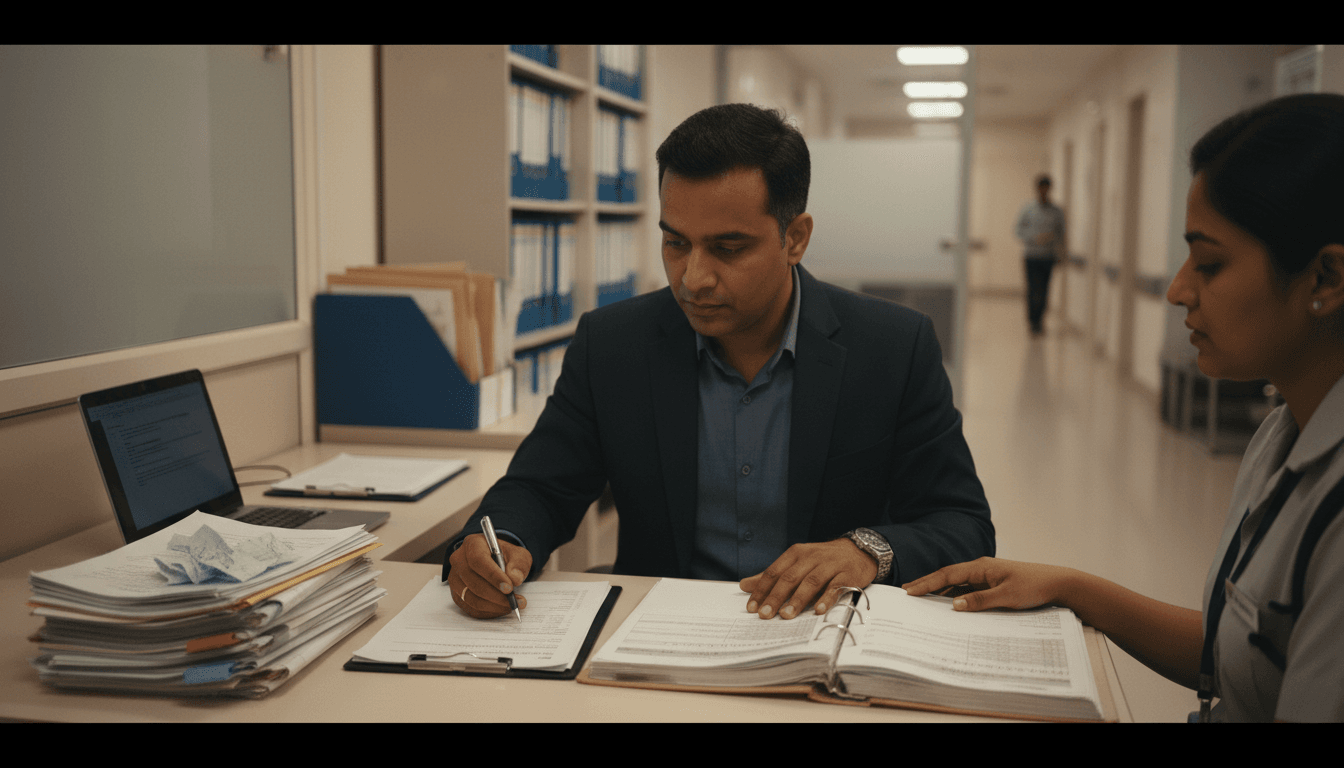
A health insurance claim may be investigated when the insurer needs to verify whether the condition, treatment, documentation, policy, and disclosures are consistent before accepting or declining the claim. This investigation usually occurs due to inconsistencies in the document, non-disclosure of a pre-existing medical condition, premature filing of the claim shortly after purchasing the policy, costly hospital charges, or unwarranted treatment under the policy.
When does a health insurance claim get investigated?
A health insurance claim may be investigated when the insurer requires further verification before reaching a decision on the claim. The following table presents some common reasons and investigation items.
| When investigation may happen | Why the insurer investigates | What the insurer usually checks |
|---|---|---|
| Claim soon after policy purchase | The insurer checks whether the illness existed before the policy started. | Past prescriptions, diagnostic reports, doctor notes, and proposal form disclosures. |
| High-value hospital bill | The insurer checks whether the claimed amount matches the treatment and policy terms. | Itemised bill, room category, procedure charges, consumables, package limits, and discharge summary. |
| Pre-existing disease concern | The insurer checks whether a medical condition should have been disclosed at purchase or renewal. | Medical history, previous consultations, pharmacy records, diagnostic reports, and policy waiting periods. |
| Mismatch in documents | The insurer checks whether the claim file contains conflicting facts. | Admission date, diagnosis, procedure name, hospital registration details, signatures, and bill serial numbers. |
| Accident, injury, or medico-legal case | The insurer checks the cause of injury and whether any exclusion applies. | FIR if available, medico-legal case papers, emergency notes, treating doctor statement, and discharge summary. |
| Unusual treatment pattern | The insurer checks medical necessity and whether the treatment falls within policy coverage. | Clinical notes, investigation reports, line of treatment, length of stay, and doctor justification. |
| Repeated similar claims | The insurer checks whether the pattern indicates ongoing illness, billing error, or fraud risk. | Previous claim history, diagnosis history, hospital records, and policy limits. |
Why does an insurer investigate a health insurance claim?
There are four broad reasons why an insurer may investigate a health insurance claim:
Eligibility Verification: The insurer verifies whether the policy was active on the day of admission to the hospital and eligibility under the policy.
Medical verification: The insurer checks the diagnosis, treatment, hospitalisation requirements, and medical records of the insured person.
Verification of policy conditions: The insurer verifies waiting periods, pre-existing disease conditions, exceptions, sub-limits, and room rent policies mentioned in the policy.
Verification of fraud and documents: The insurer checks whether the bills, prescriptions, reports, and hospital documents are genuine.
IRDAI requires insurance companies to have board-approved claim settlement policies and to process claims within regulatory timelines.
What documents are checked during a health insurance claim investigation?
An insurer can ask for the documentation necessary for deciding on the claim. This must be done in connection with the claim itself and the terms of the policy.
| Document or information | Why it may be asked | Example |
|---|---|---|
| Discharge summary | To verify diagnosis, procedure, treatment dates, and final outcome. | Hospital discharge summary showing admission on 10 July and discharge on 14 July. |
| Itemised hospital bill | To check payable and non-payable items. | Break-up of room charges, doctor fees, medicines, implants, and consumables. |
| Investigation reports | To support the diagnosis and treatment decision. | Blood tests, CT scan, MRI, X-ray, biopsy, or ECG reports. |
| Previous medical records | To check pre-existing disease, waiting period, or non-disclosure issues. | Old diabetes prescription or earlier cardiac consultation record. |
| Doctor certificate or clarification | To clarify the medical necessity of admission or procedure. | Doctor note explaining why inpatient care was required. |
| Hospital registration details | To confirm that the hospital meets the policy definition of a hospital. | Hospital registration certificate, bed count, or hospital licence details. |
| KYC and bank details | To identify the claimant and process reimbursement. | PAN, Aadhaar, cancelled cheque, bank account proof. |
How does a health insurance claim investigation work?
The claim file is screened
The health insurance company or TPA examines the claim file and decides if further verification is necessary.
Further information is requested
The insurer asks you, the hospital, or the treating physician for information to support the claim decision.
The policy terms are examined
The insurer matches the facts with the policy language, waiting periods, exclusions, limitations, and disclosures made when buying the policy.
The decision on the claim is made
The insurer either accepts the claim, partly accepts the claim, or denies the claim. If the claim is denied, the reason for denial, policy provision, and facts must be stated.
Learn more about the complete process in our guide on how to file a health insurance claim.
How long does a health insurance claim investigation take?
For health insurance claims, the claim investigation timeline depends on whether additional verification is required. The table below shows the applicable timelines based on the claim situation.
| Claim situation | Timeline trigger | Regulatory timeline |
|---|---|---|
| No investigation required | Receipt of the last necessary document | Settle or reject within 30 days |
| Investigation required | Receipt of the last necessary document | Complete claim decision within 45 days |
| Delay beyond the applicable timeline | Expiry of the applicable claim timeline | Interest is payable at bank rate plus 2 percentage points, as per IRDAI rules |
Can an investigated health insurance claim be rejected?
Yes. After investigating a claim, the outcome can be approval, partial approval, or rejection of a claim based on the results of the investigation and the terms of the policy.
The claim will be approved in case the documentation and medical history back up the claim, and the claim is within the scope of coverage of the policy.
The claim will be partially approved in case some expenses, such as excluded or non-payable items, are deducted.
The claim will be rejected or deferred in case the treatment falls under an existing waiting period or is outside the scope of coverage of the policy.
The claim will be rejected for non-disclosure of material facts in accordance with applicable policy and law.
The claim will be rejected if fraud is established, such as fake bills, altered reports, or fabricated hospitalisation records.
If your health insurance claim dispute remains unresolved, learn how a Health Insurance Ombudsman can help you raise and resolve the complaint.
What should you do if your health insurance claim is investigated?
In case your health insurance claim is being reviewed by the insurer or TPA, you must inquire about the reason for reviewing the claim and whether the insurer or TPA needs any more documents or information from you.
Retain your claim number and keep monitoring the status of your claim.
Any document that you are supposed to provide can be submitted via email or the portal of the health insurer.
Retain copies of your medical reports, bills, prescriptions, test results, discharge report, etc.
Keep copies of all documents related to your health insurance claim until it is finalised.
Key Takeaways
Insurance companies investigate health insurance claims when they require additional proof before approving, partially approving, or rejecting the claim.
Triggers for investigation include early claims, expensive bills, pre-existing condition inquiries, conflicting documentation, unusual treatment patterns, accident claims, and fraud suspicions.
Investigation is not equivalent to rejection of the claim. The claim may yet be fully settled if the documentation, treatment, and policy provisions allow it.
Correct disclosures at the time of policy purchase and complete claim documentation prevent unnecessary disputes.
Frequently asked questions
Yes, a cashless claim can be investigated if the insurer wants to gather further information before providing or verifying the authorisation. The insurer might ask for medical records, an explanation of treatment, and the bill.
It is usually thoroughly examined because you have already paid the hospital, and the insurer will have to check whether your bills, receipts, diagnosis, treatment, and insurance policy correspond to each other.
The insurer may request prior medical records if they are material to the claim, specifically in cases of pre-existing conditions, waiting periods, or non-disclosure. The demand must be relevant to the claim process.
In case of any delay from the hospital, it is best that you find out which document exactly is pending in the claim process and request the hospital to provide it in writing.
If your health insurance claim is denied after an inquiry, you should request the written rejection letter and the applicable policy clause. You can file a complaint with the insurer and, if necessary, with IRDAI’s grievance platform or Insurance Ombudsman if the issue remains unresolved.
About the authors

Neviya Laishram
Written by · Senior Editor – Health, Life and Group Health Insurance Content at ACKOWith a journalism background, she brings 9 years of experience in strategising and editing health, life, and group health insurance content. Having written for magazines and digital publications, she combines research and editorial expertise to create credible, useful content for readers.

Dr Nitin Kumar Gupta
Reviewed by · SVP – Health Underwriting & Claims at ACKO General InsuranceWith 20+ years of experience in digital transformation and growth, he is a leader specialising in health, life, accident, and disability insurance. Backed by an MBBS degree and insurance designations (FLMI, FALU, FLHC, ACS, ARA), he combines expertise with leadership.