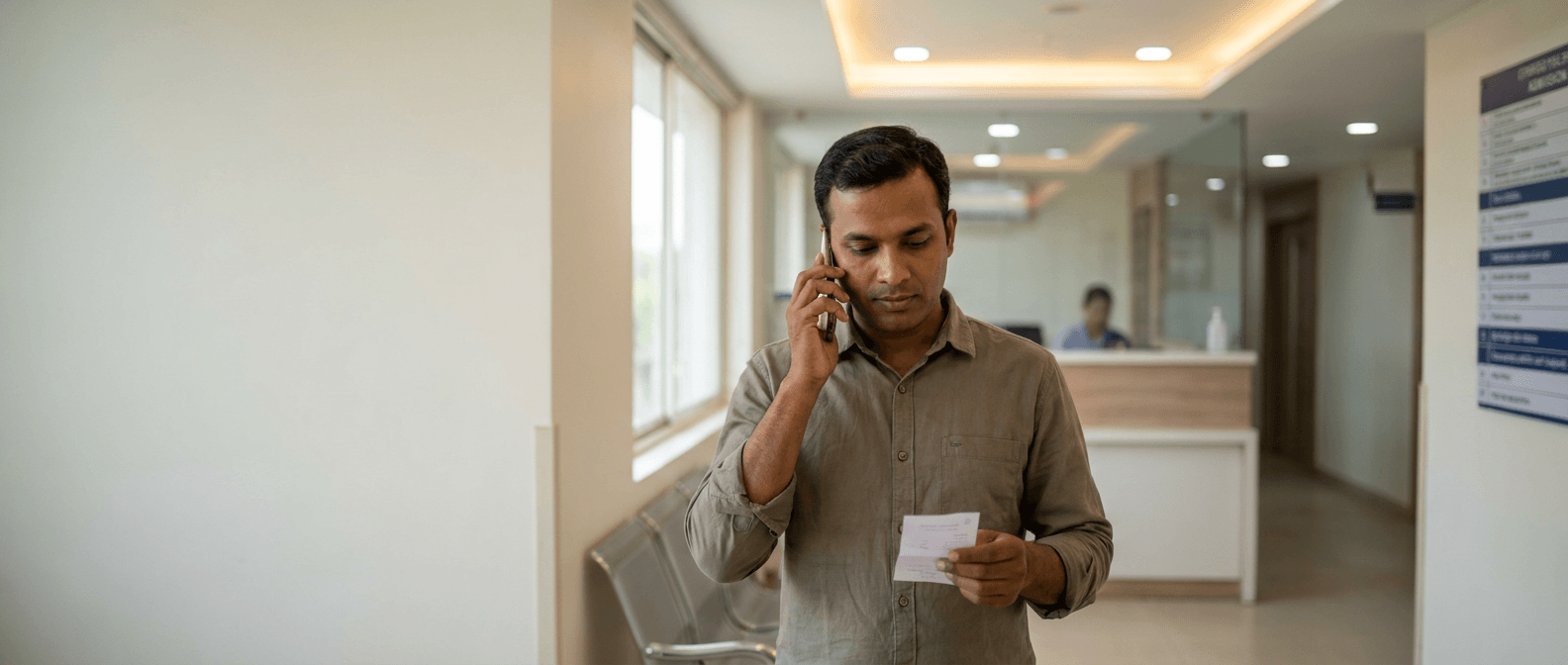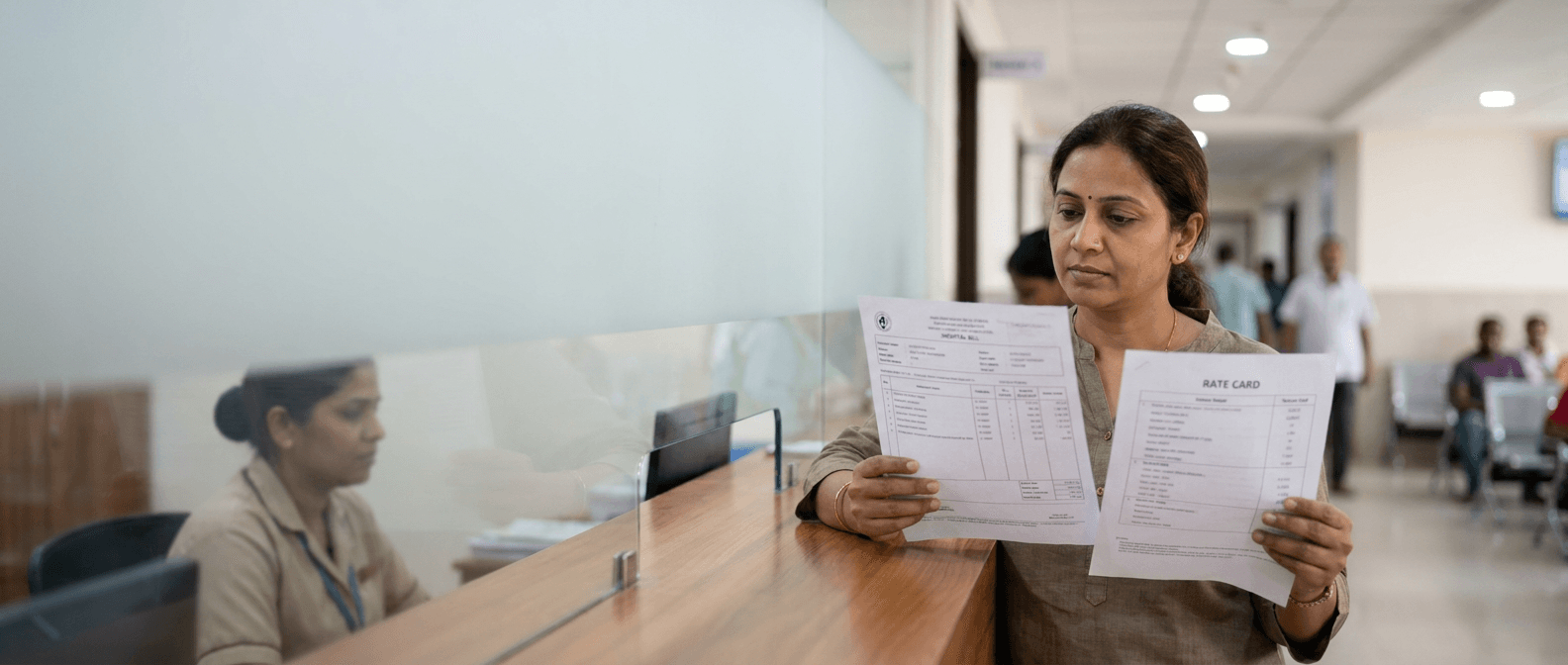
Hospitals may sometimes quote a higher amount for cashless mediclaim patients than for those who pay directly. This is could be because cashless treatment is processed according to package rates or tariffs agreed between the hospital and the insurance company. A patient paying directly may also receive a separate discount, which can make the cash price lower. Hospitals do not necessarily follow one fixed tariff for everyone. They may have a standard hospital rate, package rates negotiated separately with insurance companies and discounted prices for patients who pay directly. Cashless treatment also follows the terms agreed between the hospital and insurer instead of simply using the hospital's walk-in price. This means a cashless mediclaim patient can sometimes see a higher bill than a cash-paying patien Let us understand how these prices are decided and why they can differ.
Mediclaim vs health insurance: What is the difference?
Mediclaim and health insurance are often used interchangeably in India, particularly when you talk about hospitalisation claims. Health insurance is the broader category of insurance that covers medical expenses according to the terms of your policy. The word mediclaim is commonly used for indemnity-based health insurance that reimburses or pays for your hospitalisation expenses.
| Feature | Mediclaim | Health Insurance |
|---|---|---|
| Meaning | Commonly used to describe hospitalisation-focused indemnity health cover | The broader category of insurance policies covering medical expenses |
| Coverage | Depends on the terms of the mediclaim policy | Depends on the particular health insurance policy |
| Cashless treatment | May be available according to the policy and hospital arrangements | May be available according to the policy and hospital arrangements |
| Claim settlement | Eligible expenses may be settled cashlessly or reimbursed | Eligible expenses may be settled cashlessly or reimbursed |
| What you should check | Sum insured, exclusions, limits, room eligibility and other policy conditions | Sum insured, exclusions, limits, room eligibility and other policy conditions |
Why can hospitals charge more for cashless mediclaim patients?
There are several reasons why the amount applicable under a cashless claim might be different from, and sometimes higher than, the price quoted to a patient paying directly.
1. The hospital uses the rate agreed with your insurer or TPA
The main reason is that cashless mediclaim treatment can have its own negotiated tariff. Network hospitals enter into agreements with insurers or TPAs to provide cashless treatment. These agreements specify the rates applicable to different treatments and procedures. This means the hospital does not use its regular walk-in price when processing your cashless claim.
For example, a hospital might charge ₹90,000 if you pay directly for a surgery, while the package agreed with your insurer costs ₹1 lakh. If you use cashless mediclaim, the ₹1 lakh package applies even though the hospital quoted a lower amount to someone paying directly.
The opposite is also possible. If your insurer negotiated a package of ₹80,000, the cashless rate might actually be lower than the hospital's direct-pay price.
2. Different insurers can have different cashless package rates
There is no single cashless mediclaim rate that applies to every insured patient at a hospital. Hospitals have different commercial arrangements with different insurance companies. As a result, the package applicable to you depends on which insurer is settling your claim.
For example, the pricing for the same surgery at one hospital could look like this:
- Direct-pay price: ₹90,000
- Package with Insurer A: ₹85,000
- Package with Insurer B: ₹95,000
- Package with Insurer C: ₹1,00,000
A patient covered by Insurer C might see a higher cashless quotation than a self-paying patient, while someone covered by Insurer A receives a lower negotiated package. This is why two insured patients undergoing the same procedure at the same hospital might receive different cashless estimates.
3. Some policies use PPN or other network package rates
Package pricing becomes particularly relevant in Preferred Provider Network or PPN arrangements. A PPN consists of hospitals that have agreed to provide specified procedures at fixed package rates for an insurer's policyholders. PPN hospitals are providers that agree to cashless packaged pricing for specified planned procedures. The package rate continues to matter even when you choose reimbursement for a procedure covered by the PPN arrangement.
This means that for certain mediclaim policies, the price of a planned procedure is tied to the package negotiated under the insurer's network rather than the hospital's normal retail price. If a hospital offers a different self-pay package outside that arrangement, the two amounts might not match.
4. The cashless package may differ from the self-pay package
Even when the treatment name is the same, the package behind the quotation might be different. A hospital could have one package created for patients paying directly and another package negotiated with an insurer.
For example, both might be described as an appendectomy package, but the insurer-negotiated package could specify a particular room category, number of hospitalisation days, professional fees, and other inclusions. The direct-pay package might have different inclusions or discounts.
Suppose the hospital offers a self-pay surgery package for ₹85,000 and a cashless insurer package for ₹95,000. Before assuming the hospital simply added ₹10,000 because you have insurance, you should check whether both packages actually cover the same services. The name of the procedure might be identical while the commercial package behind it is not.
5. Cashless billing is subject to pre-authorisation
Cashless mediclaim does not work like an open hospital bill that the insurer simply agrees to pay later. The hospital submits details of the treatment and cost for authorisation. The insurer or TPA verifies your eligibility, policy coverage, and cashless arrangement before issuing an authorisation.
IRDAI currently requires insurers to decide on cashless pre-authorisation requests within one hour of receiving them and to provide final cashless authorisation within three hours of receiving the discharge authorisation request from the hospital.
The amount authorised is therefore connected to the policy and the insurer-hospital arrangement. This is also why the hospital's estimate, the cashless amount authorised by the insurer, and the final hospital bill might not always be identical.
6. Settlement is based on what is admissible under your policy
Another difference arises at the time of settlement. In a cashless mediclaim claim, the insurer does not automatically pay every expense that appears on the hospital bill. It pays expenses that are admissible according to the policy terms.
Suppose the hospital bill is ₹1.20 lakh. After checking the policy, the insurer might determine that ₹1.05 lakh is admissible. The remaining ₹15,000 could relate to a deductible, co-payment, policy limit, or expenses that are not covered.
This does not necessarily mean the hospital charged an insured patient ₹15,000 extra. It means the hospital's bill and the amount payable under the mediclaim policy are two separate numbers. This distinction is particularly relevant in a cashless claim because the insurer is directly involved in settling the hospital bill.
Does cashless mediclaim mean the entire hospital bill is covered?
Cashless mediclaim means insurer will settle eligible expenses with the hospital. It does not mean every expense on the bill is automatically payable under your policy. You may still have to pay expenses arising from a deductible, co-payment, policy sub-limit or other expenses that are not admissible under your policy. For example, suppose a hospital bill is ₹2 lakh and ₹1.85 lakh is admissible under your mediclaim policy. If your policy has a 10% co-payment on the admissible amount, you would have to pay ₹18,500 towards that amount. If another ₹15,000 is outside the admissible claim, your total contribution would be ₹33,500. The insurer would settle ₹1,66,500 directly with the hospital. The exact amount will depend on your policy conditions.
Can cashless mediclaim also be cheaper than paying directly?
Yes, it can. Insurers negotiate package rates with hospitals, and these rates are sometimes lower than the hospital's direct-pay price.
For example:
- Hospital's direct-pay price: ₹1,20,000
- Cashless package negotiated by insurer: ₹95,000
In this situation, the agreed cashless package is ₹25,000 lower.
This is why you should not assume that hospitals always charge cashless mediclaim patients more. The final price depends on the specific agreement between your insurer and the hospital. A different insurer could even have a different rate at the exact same hospital.
What drives the higher cost for health insurance claims?
Cashless mediclaim means your insurer will settle eligible expenses directly with the hospital. However, it does not mean every single expense on the bill is automatically covered. You might still have to pay out of pocket for things like deductibles, co-payments, policy sub-limits, or non-admissible expenses.
Here is an example of how this works:
- Total hospital bill: ₹2 lakh
- Admissible amount: ₹1.85 lakh (the amount your policy covers)
- Non-admissible amount: ₹15,000 (expenses outside your coverage)
- Co-payment: If your policy has a 10% co-payment on the admissible amount, you pay ₹18,500.
In this scenario, your total contribution would be ₹33,500 (the ₹15,000 non-admissible amount plus the ₹18,500 co-payment). Your insurer would then settle the remaining ₹1,66,500 directly with the hospital.
The exact amount you pay will always depend on your specific policy conditions.
What should you do if the cashless mediclaim price is much higher?
A significant difference between the hospital's direct pay price and the cashless mediclaim quotation is worth checking, especially for a planned procedure.
Suppose the hospital quotes ₹80,000 if you pay directly but ₹1.20 lakh under cashless mediclaim. Before assuming that the hospital is overcharging, ask for both estimates and compare what they include.
You can also ask your insurer or TPA to confirm the package rate applicable to your treatment. For cashless authorisations, IRDAI requires insurers and TPAs to provide policyholders with information about the package rate agreed with the network hospital or the extent of authorisation issued.
Key takeaways
- Cashless mediclaim is processed through your insurer or TPA and an eligible hospital, rather than as a simple direct payment.
- Network hospitals often have specific package rates or tariffs agreed upon with insurers for cashless treatments.
- Different insurers might have different package rates for the exact same procedure at the same hospital.
- Preferred Provider Network (PPN) arrangements can use predetermined cashless package pricing for specific procedures.
- If you pay the hospital directly, you might get a different package or a cash discount. This can make the cash price look lower.
- On the flip side, cashless rates can actually be lower than direct-pay prices if your insurer has negotiated a better deal.
- Your room category, longer hospital stays, and changes in treatment costs will impact your final bill. However, these factors are not the actual reasons a hospital might charge more for a cashless claim.
Frequently asked questions
The hospital might use a package rate agreed upon with your insurer or TPA, while a cash-paying patient gets the hospital's direct-pay price or a discounted package. Because of this, the two rates do not always match.
No. Cashless rates can be higher or lower than direct-pay rates. It all depends on the hospital's specific agreement with your insurer.
Yes. Hospitals and insurers often have separate agreements and negotiated package rates. The rate for a specific procedure can change depending on which insurer you use.
A Preferred Provider Network (PPN) is a group of hospitals that have agreed to package pricing for specific procedures for an insurer's policyholders. If you have an eligible planned procedure, your bill gets settled based on these predetermined rates.
Your insurer only settles expenses that are admissible under your policy and the applicable cashless arrangement. Things like deductibles, co-payments, policy limits, or non-admissible expenses can make the approved amount lower than the hospital's final bill.
Yes. For planned treatments, asking for both estimates helps you see if there is a difference. Just make sure you compare the exact same procedure, room category, and services. You should also ask if the direct-pay quote includes a discount.
Yes. If your insurer has negotiated a lower package rate with the hospital, your cashless treatment rate can actually be lower than the hospital's direct-pay price.
About the authors

Neviya Laishram
Written by · Senior Editor – Health, Life and Group Health Insurance Content at ACKOWith a journalism background, she brings 9 years of experience in strategising and editing health, life, and group health insurance content. Having written for magazines and digital publications, she combines research and editorial expertise to create credible, useful content for readers.

Dr Nitin Kumar Gupta
Reviewed by · SVP – Health Underwriting & Claims at ACKO General InsuranceWith 20+ years of experience in digital transformation and growth, he is a leader specialising in health, life, accident, and disability insurance. Backed by an MBBS degree and insurance designations (FLMI, FALU, FLHC, ACS, ARA), he combines expertise with leadership.