Home / Life Insurance / Articles / Does Working in a High-Risk Job Affect Your Term Insurance?
Does Working in a High-Risk Job Affect Your Term Insurance?
Neviya LaishramJun 2, 2026
Share Post
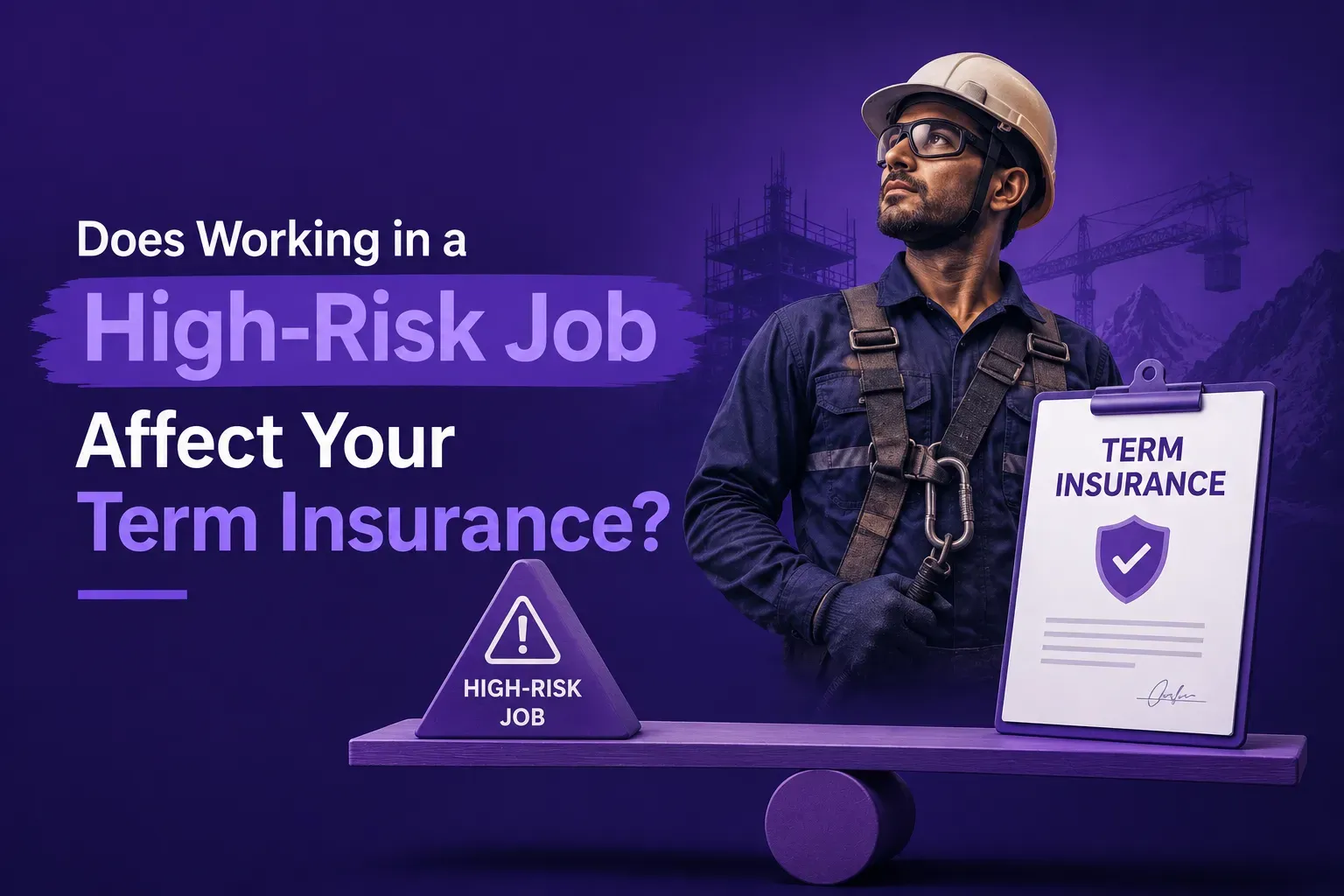
Yes, when you apply for term insurance, the insurer doesn't consider only your age and health status. They also consider your occupation as another key factor in determining whether you qualify for coverage. People working in hazardous occupations face a higher risk of accidents, injury, or death. Insurers may consider you a higher-risk individual.
In India, all insurers registered with the Insurance Regulatory and Development Authority of India use underwriting practices to assess the risk level of your job. The riskier your job, the higher your premium will be.
Contents

What is Considered a High-Risk Job in Term Insurance?
A high-risk job in term insurance refers to any profession that exposes workers to a higher risk of injury or loss of life from accidents, bodily harm, disabilities, or even death while at work. Insurance companies usually assess occupational risk based on workplace dangers, commuting risk, and bodily injury.
Some common high-risk professions in India include:
Commercial pilots and cabin crew
Merchant navy employees
Offshore oil rig workers
Miners
Firefighters
Defence personnel
Construction workers
Deep-sea divers
These professions may attract higher premiums compared to lower-risk office-based jobs. Insurers may also consider high-risk hobbies such as scuba diving, mountaineering, or skydiving while calculating premiums.
How Do Insurers Calculate Higher Term Insurance Premiums?
Insurance companies use a technique called “underwriting” to assess your risk. The factors that are examined in underwriting include:
Past medical records
Smoking and drinking habits
Nature of occupation
If your job is classified as hazardous, insurers may apply a “premium loading.” This means an extra amount is added to your standard premium to compensate for the increased risk.
For instance, you are likely to pay much higher premiums as a commercial airline pilot compared to an individual with similar characteristics in an office job. Here’s a simple example:
Note: The exact premium increase depends on the insurer’s underwriting guidelines, job-related risks, and overall health profile.
What Happens to Your Term Insurance If You Switch Jobs?
It is a common concern among policyholders that changing their occupation from low to high risk could affect their term insurance. In some cases, insurers may require the policyholder to inform them of any major changes in their occupation while the policy remains active. They may do one or more of the following:
Review your policy
Apply additional premiums
Amend some terms of your policy
This can help avoid disputes during claim settlement.
Should High-Risk Professionals Add Riders to Their Term Insurance?
Yes. While standard term insurance provides basic financial protection, high-risk professionals may benefit from adding riders for extra coverage. Some useful riders include:
Accidental Death Benefit Rider: This rider provides an extra payout to your nominee if death occurs due to an accident.
Disability Rider: If a workplace accident causes permanent disability and affects your earning capacity, this rider can offer financial support.
Critical Illness Rider: This helps cover expenses related to serious illnesses such as cancer, heart disease, or kidney failure.
Adding riders increases your protection and helps customise the policy according to your profession-related risks.
Conclusion
Working in a high-risk industry doesn’t mean you can’t protect your family. All that means is that you need to be transparent, expect slightly higher premiums, and not try to find loopholes, like a term plan without proof of income, just to bypass the system. While you’re working to build a financial safety net for your family’s future, don’t forget your health today.
FAQs
Below are some of the most frequently asked questions about how high-risk jobs affect term insurance in India.

1. Can dangerous jobs increase term insurance premiums?
Yes. High-risk occupations may attract premium loading because insurers consider them more hazardous.
2. Which jobs are considered high-risk by insurers in India?
Jobs like pilots, miners, defence personnel, offshore workers, firefighters, and deep-sea divers are commonly considered high-risk.
3. Can insurers reject claims for hazardous occupations?
Claims are usually honoured if the policyholder correctly disclosed their occupation when buying the policy.
4. Can high-risk workers apply for term life insurance without a medical test?
No. Insurers generally require medical tests and additional documentation for hazardous occupations.
5. Should people working in hazardous jobs buy accidental death riders?
Yes. Riders such as accidental death and disability benefits can provide extra financial protection.

Was this article helpful?

Recent
Articles
No Insurance, No Fuel: What the Supreme Court's Pilot Means
Nikhila PS Aug 6, 2026
Supreme Court Extends Third-Party Insurance for New Cars to Four Years
Nikhila PS Aug 6, 2026
Do ADAS Features Reduce Car Insurance Premiums in India?
Nikhila PS Jun 25, 2026
How Do BS6 Bikes Affect Bike Insurance Premiums and Coverage?
Nikhila PS Jun 25, 2026
Top 15 Car Companies in India in 2026
Nikhila PS Jun 25, 2026
All Articles


Want to post any comments?

ACKO Term Life insurance reimagined
ARN:L0072|*T&Cs Apply

Check life insurance


#36/5, Hustlehub One East, Somasandrapalya 27th Main Rd, Sector 2, HSR Layout, Bengaluru, Karnataka 560102