Home / Life Insurance / Articles / Understanding Adverse Selection
Understanding Adverse Selection
Shreya SahuMay 20, 2026
Share Post
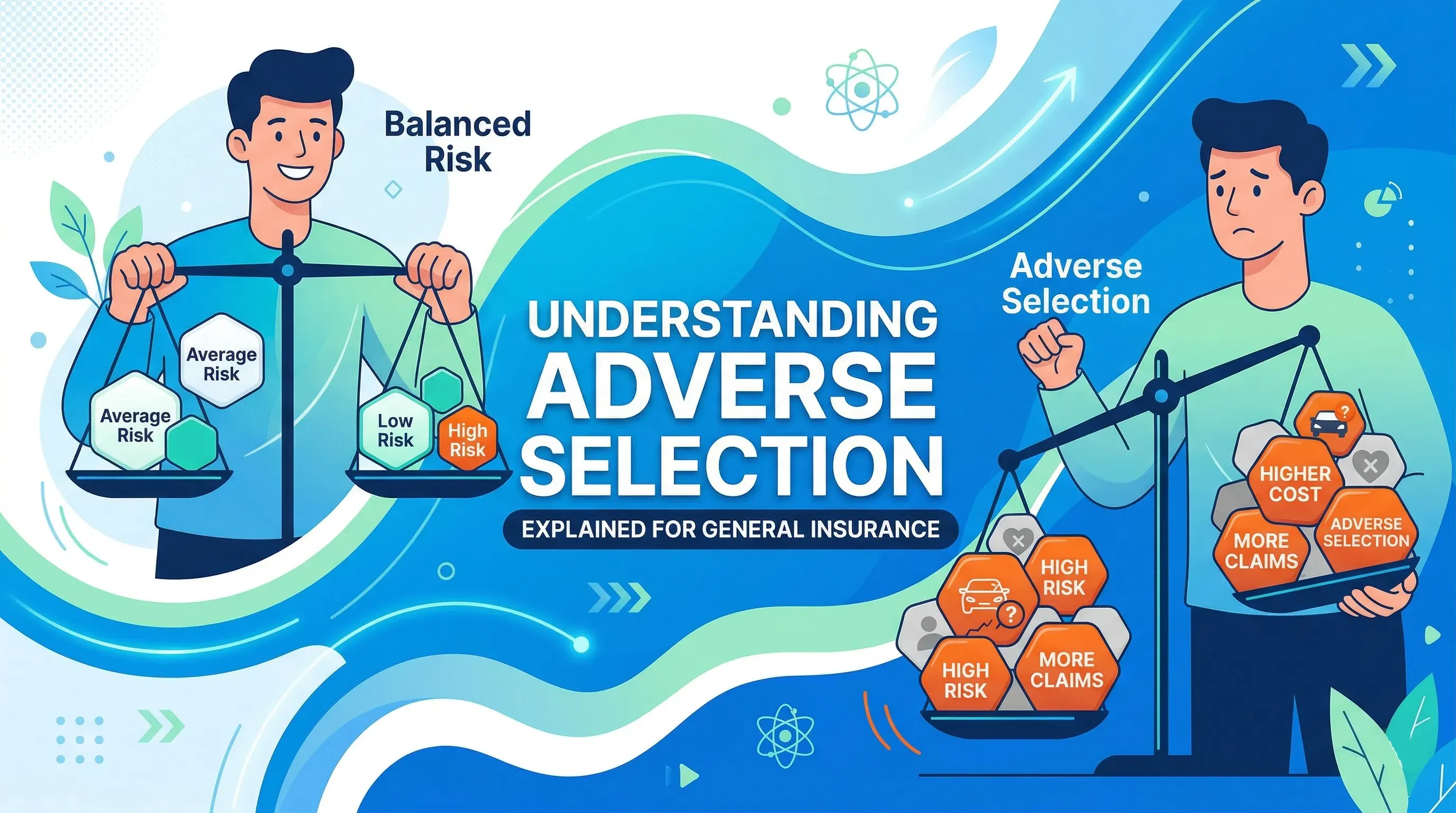
Adverse selection is a situation where individuals with higher risks are more likely to purchase insurance, potentially leading to higher costs for insurers. Since individuals know more about their own situation, the insurance company may not always know all the details. This can make it harder for insurers to balance risk and decide fair pricing for everyone. The following sections explain this concept in detail.
Contents

Understanding Adverse Selection
Adverse selection is a situation where individuals with higher risks are more likely to purchase insurance, potentially leading to higher costs for insurers. Since individuals know more about their own situation, the insurance company may not always know all the details. This can make it harder for insurers to balance risk and decide fair pricing for everyone. The following sections explain this concept in detail.
What Is Adverse Selection?
Adverse selection occurs when high-risk individuals are more likely to seek insurance than low-risk individuals. This happens because they better understand their own risk. In such cases, insurance companies might lack a complete picture of the applicant's health or risk profile, which can, in turn, lead to an imbalance in the risk pool. For example, someone may conceal their health condition when buying life insurance to benefit from the policy.
If too many high-risk clients are covered under general rates, adverse selection can actually dry out an insurance provider’s financial resources. To address this issue, insurers use medical underwriting and risk assessments. Additional costs may also be applied to reflect individual risk levels. In such cases, it becomes less likely that the insurer will be in a losing position because of risks they were not informed about or underestimated.
Key Takeaways
Adverse selection occurs when buyers or sellers have information that the other party lacks about a product’s quality.
Individuals with higher-risk occupations or lifestyles often consider life or disability insurance.
Buyers may have better insight into available products and services, creating an information imbalance.
Used car and insurance markets are common examples of adverse selection.
Read More: Term Insurance for Construction Workers in India
How Does Adverse Selection Work?
Adverse selection occurs when one party in a transaction has more information than the other. This information gap may disadvantage the less informed party.
Moreover, a lack of information may lead to pricing that does not accurately reflect risk. These situations may occur in the insurance industry, capital markets, and other marketplaces.
Practical Example: Adverse Selection in Life Insurance
When applicants for insurance do not provide full health records, insurers could be subject to adverse selection. For instance, a diabetic and inactive person may request life insurance from Company ABC, as would a healthy and active person.
Diabetes is riskier, yet the patient might cover up the illness to get a more affordable rate. Should the insurer neglect individual risks, it does not differentiate among applicants. Improper disclosure may allow insurers to accept a person with health complications at regular rates. Thus, the insurer's disadvantage and the risk of losing money indicate the presence of adverse selection in the life insurance market.
Read More: Calculate your term plan with the ACKO Life online term plan calculator.
Moral Hazard vs. Adverse Selection
Moral hazard and adverse selection are two important problems caused by asymmetric information in economics and finance, often affecting insurance, lending, and financial decision-making. The table below highlights their key differences.
Read More: Physical Hazard in Life Insurance: Definition, Impact, Types
How Adverse Selection Impacts Policyholders
Adverse selection may result in higher premiums and fewer insurance options for policyholders. If someone with a serious medical problem does not openly declare it, the insurer could unexpectedly lose money. As a result, insurance providers can raise all customers’ premiums, even healthy ones.
Disclaimer: Insurance outcomes, premiums, and coverage depend on policy terms, underwriting, and individual risk factors. Benefits are subject to policy terms and conditions.
The Bottom Line
Adverse selection affects insurance markets by increasing the participation of higher-risk individuals. In some cases, insurers may not have complete information about these risks. An imbalance in claims may lead to higher insurance premiums over time. This may increase insurance costs for some individuals. Insurers face adverse selection. Therefore, insurers generally use screening and risk management practices. This helps them avoid unexpected losses for themselves and their real policyholders.
FAQs
Below are some of the frequently asked questions on Adverse Selection in Life Insurance

What is the meaning of adverse selection?
Adverse selection describes a situation where one party has more information about risks, giving them an advantage in a transaction.
What is adverse selection in insurance?
Adverse selection in insurance occurs when individuals with higher-than-average risk are more likely to purchase insurance, while lower-risk individuals opt out due to high premiums.
What is the difference between adverse selection and anti-selection?
In adverse selection, a participant in a transaction has more knowledge about the deal than their counterpart. This includes certain details of product quality. As a result, the team at a disadvantage could be at greater risk of information problems.
How to control adverse selection?
Screening, signalling, and regulation can prevent or minimise adverse selection in markets. Screening involves collecting more details about a party by requesting a mechanic’s inspection during a used-car purchase or a medical checkup during the insurance process.
Explore Life Insurance Product

Was this article helpful?

Recent
Articles
No Insurance, No Fuel: What the Supreme Court's Pilot Means
Nikhila PS Aug 6, 2026
Supreme Court Extends Third-Party Insurance for New Cars to Four Years
Nikhila PS Aug 6, 2026
Do ADAS Features Reduce Car Insurance Premiums in India?
Nikhila PS Jun 25, 2026
How Do BS6 Bikes Affect Bike Insurance Premiums and Coverage?
Nikhila PS Jun 25, 2026
Top 15 Car Companies in India in 2026
Nikhila PS Jun 25, 2026
All Articles


Want to post any comments?

ACKO Term Life insurance reimagined
ARN:L0072|*T&Cs Apply

Check life insurance


#36/5, Hustlehub One East, Somasandrapalya 27th Main Rd, Sector 2, HSR Layout, Bengaluru, Karnataka 560102