Safety on a bike in winter primarily depends on visibility, tyre grip, and staying warm while still in control. You can achieve this by wearing reflective, layered riding clothes, regularly checking tyre tread and pressure, using fog lights or extra reflectors, riding a bit more slowly on damp or foggy roads, and regularly checking your bike's brakes and headlights.
In winter, when riding a bike, one is usually exposed to additional risks, such as fog reducing visibility, roads becoming slippery from dew or frost, and reduced reaction time in cold conditions, so taking some simple precautions can make a huge difference to your safety on the road.
Why does winter bike riding lead to more claims?
The fact is that winter conditions add more risks to riding. Fog or mist, very short day length, dark very early in the evening, wet areas or ice, cold tyres, and slower reflexes can all result in an otherwise trivial riding error leading to a very serious accident. The winter riding style, which helps you stay out of harm's way, will prevent you from doing things that normally lead to your filing a claim: such as hitting another car, sliding on a curve, braking too late, breaking light fixtures or panels, or hurting someone else.
| Winter risk | What can go wrong | How safe riding reduces claims |
|---|---|---|
| Fog or poor visibility | Another driver may not see your bike in time, or you may notice a vehicle late. | Using headlights, reflectors, slower speed, and more distance reduces collision risk. |
| Wet roads and cold tyres | The bike can skid during sudden braking or sharp turns. | Smooth braking, gentle cornering, and correct tyre pressure reduce own-damage claims. |
| Early morning or late evening rides | Low light can hide potholes, pedestrians, or broken road edges. | Choosing well-lit routes and keeping the visor clear reduces impact damage and injury risk. |
| Heavy jackets or gloves | Thick clothing can restrict shoulder checks, grip, or brake feel. | Using fitted riding gear keeps you warm without reducing control of the bike. |
| Condensation on visor or mirrors | Reduced visibility can cause lane-change and turn-related accidents. | Cleaning the visor and mirrors before moving improves decision time. |
Which bike riding habits reduce claim risk?
Safe winter riding practices limit abrupt movements. You should ride at a slower pace than usual, maintain a greater following distance from other vehicles, apply brakes gradually, and turn the headlights on even during daytime with poor visibility.
| Habit | What to do | Claim it can help avoid |
|---|---|---|
| Reduce speed | Ride at a speed where you can stop within the visible road distance. | Rear-end collision, side impact, pedestrian injury, front-fork damage. |
| Increase following distance | Keep more space than usual from cars, buses, and other two-wheelers. | Front-end damage and third-party property damage. |
| Use both brakes smoothly | Apply brakes gradually instead of grabbing the front brake suddenly. | Skid-related own-damage claims. |
| Keep headlights and tail-lights on | Use low beam in fog and make sure the tail-lamp and brake light work. | Low-visibility collision and rear impact. |
| Avoid sharp leaning on turns | Enter turns slowly and keep the bike more upright on damp roads. | Handlebar, mirror, panel, and leg-guard damage. |
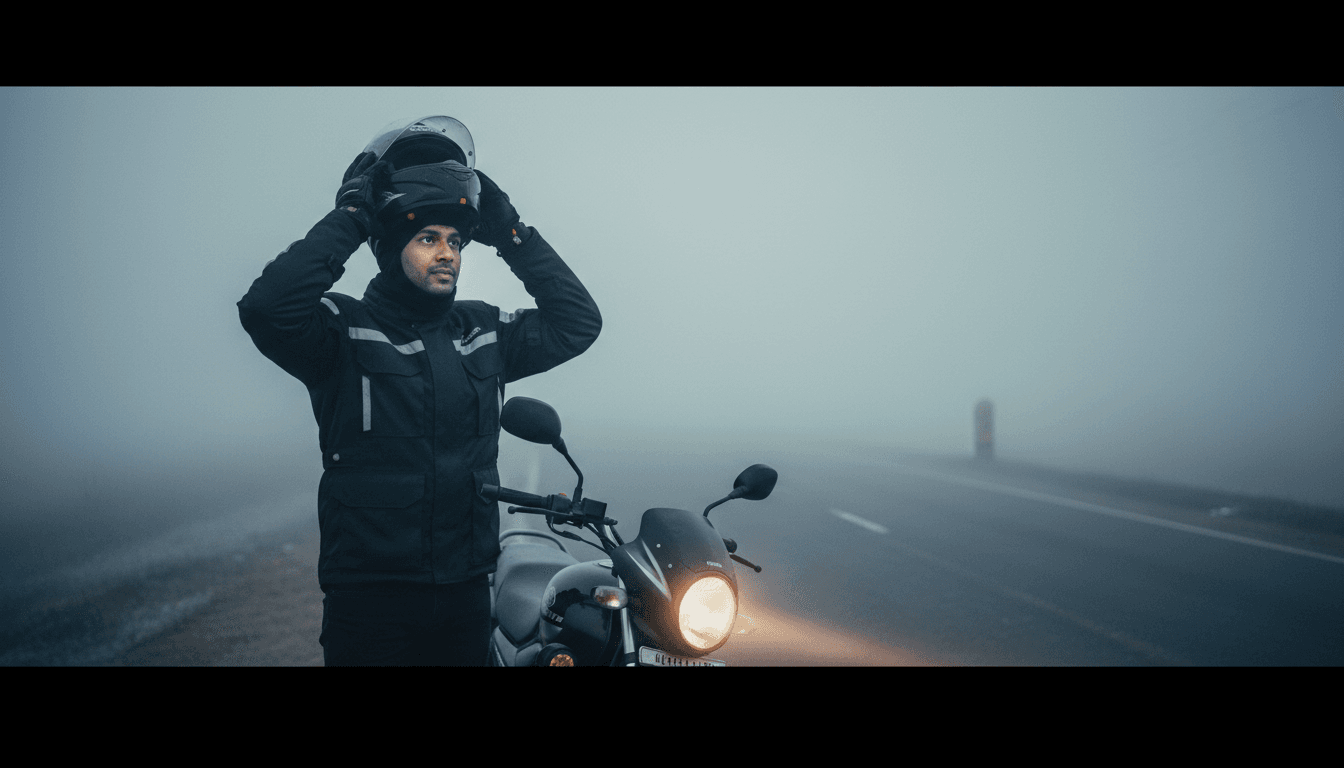
| Wear visible riding gear | Use reflective strips, a bright jacket, or reflective tape on the helmet and bike. | Side-swipe and lane-change accidents. |
| Do not ride with a fogged visor | Stop safely and clear the visor instead of lifting it while moving. | Impact damage caused by poor sight lines. |
What should you check before a bike ride in winter?
Test all lights
Ensure the headlights, tail lamps, indicators, and brake lights are functioning properly. It is as important to be seen as it is to see the road in poor weather conditions.
Inspect tyres
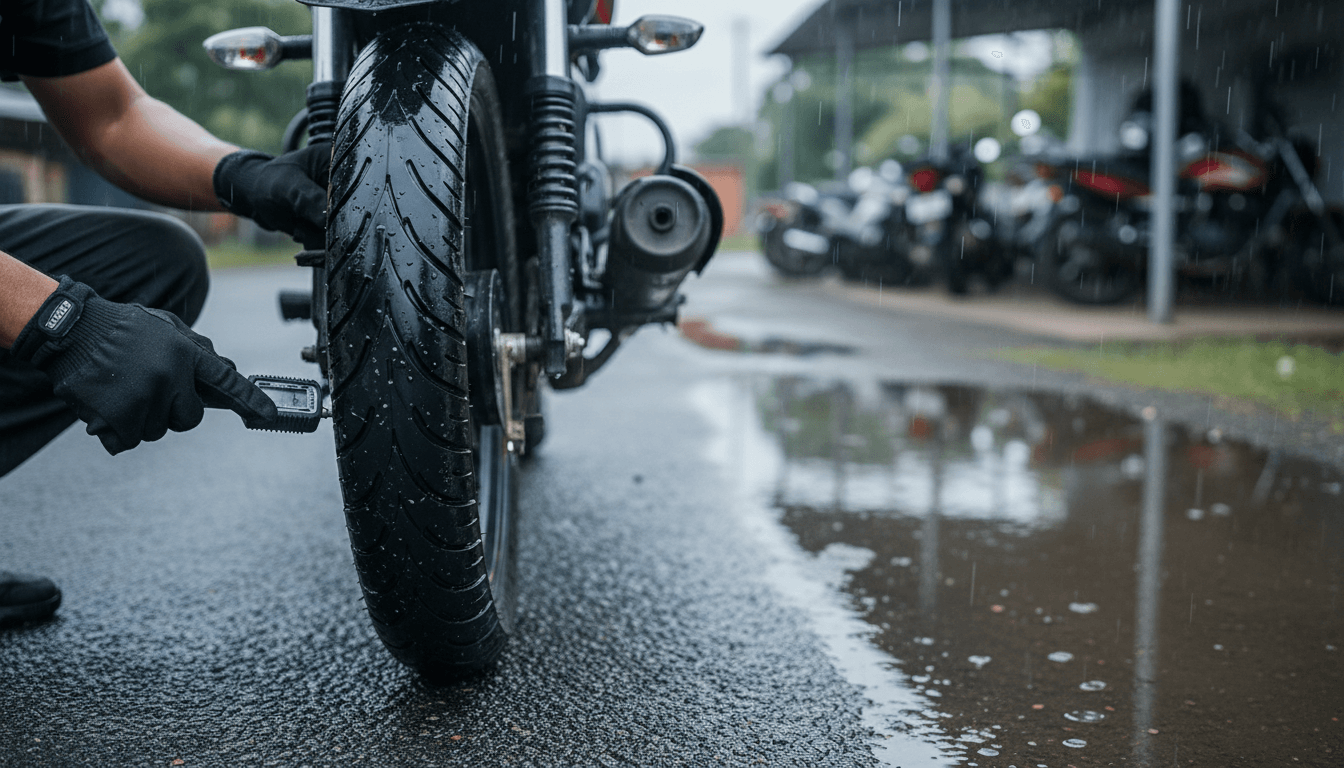
Be on the lookout for low pressure, cracks, worn out tires, or nails embedded into the tires. If your tires have poor traction, you will be more prone to skidding in winter.
Check brakes
Apply both brakes slowly when you have to join the traffic flow. Late or harsh braking could lead to accidents due to late braking.
Clear visibility surfaces
Clear the mirrors and the visor before starting. Moisture, dirt, and fog could affect your reaction time.
Choose a safer route
Try to avoid roads with waterlogging, slippery flyovers, potholes, or poor lighting.
Keep documents ready
Make sure that you have all the relevant documents, i.e., license, RC book, PUC, and insurance, handy.
How does it affect bike insurance claims?
Safe winter riding in a way minimises bike insurance claims. The following three main categories of claims are affected: the repair cost of one's own bike, own damage claim; the injury or property damage to third parties, third-party claims; and the claim-free period, which ensures bonus of claim-free no claim).
India's Motor Vehicles Act, 1988, makes only third party bike insurance mandatory for motor vehicles operating on public roads. The third-party only two-wheeler policy doesn`t pay for the owner's bike repair. For your bike damage, you have to get one of the following: own-damage cover (standalone) or, comprehensive cover.
| Policy type | What it can cover after a winter accident | What it does not cover |
|---|---|---|
| Third-party only | Legal liability for third-party injury, death, or property damage. | Repair cost of your own bike. |
| Standalone own damage | Accidental damage to your own bike, subject to policy terms and exclusions. | Third-party liability unless a separate third-party policy is active. |
| Comprehensive bike insurance | Third-party liability plus own-damage cover under one policy. | Excluded cases such as riding without a valid licence, intoxicated riding, or other policy exclusions. |
Prevention lowers risk, not policy rules
The safe way of riding during winter can only be responsible for a claim-free year to the minimum extent possible. At best, it limits only the avoidable risk. In the event of an accident, you have to follow the claim procedure and give precise information to the insurer.
Can it help protect your no-claim bonus?
The idea behind NCB is a reward for not making a claim on a policy; you receive a reduction in the own-damage premium. In India, under the Motor Tariff, the no-claim bonus is only 20% in the first year without a claim. Then, it gradually increases to a maximum of 50% in five consecutive years of no claims.
| Claim-free period at renewal | NCB on own-damage premium |
|---|---|
| After 1 claim-free year | 20% |
| After 2 consecutive claim-free years | 25% |
| After 3 consecutive claim-free years | 35% |
| After 4 consecutive claim-free years | 45% |
| After 5 consecutive claim-free years | 50% |
Worked example
Let's say the bike's own-damage renewal premium is Rs 3, 000 without NCB. If you keep your policy valid and do not make any claim, you will be eligible for 20% NCB and as a result, your annual own-damage premium will be Rs 2,400, i.e. decrease by Rs 600.
| Item | Calculation | Amount |
|---|---|---|
| Own-damage premium before NCB | Given | Rs 3,000 |
| NCB after 1 claim-free year | 20% of Rs 3,000 | Rs 600 |
| Own-damage premium after NCB | Rs 3,000 minus Rs 600 | Rs 2,400 |
In this example, avoiding a winter accident that would have resulted in an own-damage claim allows you to retain the Rs 600 NCB benefit at renewal. The actual rupee benefit you will get is also dependent on your own damage bike insurance premium and the NCB slab applicable to you.
Should you avoid every small bike insurance claim?
If there is a legitimate claim, don't ignore it only to save NCB. Suppose the repair cost is too high and a third party is injured, or the other vehicle/property is damaged and there is Police involvement, you should report it to the insurer and proceed with the usual claim.
| Situation | Practical action | Reason |
|---|---|---|
| Minor scratch with no third-party involvement | Compare the repair cost with the NCB you may lose at renewal. | A small repair may cost less than the future NCB benefit. |
| Major damage to your bike | Inform the insurer and start an own-damage claim. | Repair cost may be higher than the NCB benefit. |
| Injury to any person | Get medical help, inform police if required, and notify the insurer. | Injury cases can involve legal liability and documentation. |
| Damage to another vehicle or property | Do not make informal settlements without understanding policy and legal implications. | Third party bike insurance claims need proper reporting and insurer involvement. |
| The bike is unsafe to ride | Do not ride it to a garage if steering, brakes, wheels, or lights are damaged. | Riding a damaged bike can cause a second accident. |
What should you do if an accident still happens?
If circumstances allow, after a winter accident, you should first move yourself to a safer location without risking anyone involved. Check yourself and any companions for injuries. If you decide it is an emergency, call an ambulance. Photograph the accident and damage to the car, jot down the details of the other car, and alert your insurance company right away.
The best way to speed up the claim is to have the following ready: policy number, license plate number, the date and time of the accident, the accident site, photos of the accident site, license information, a brief statement of the incident, and police documents, where applicable. If your bike is damaged and your insurance company needs a survey, do not repair it or make it look new before the survey is completed.
Key takeaways
A safe winter ride reduces the risk of skidding, accidents, third-party injuries, and bike damage.
Wet roads, foggy weather, low light, cold tyres, and fogged visors are some of the risks associated with winter riding.
Slowly speeding down, keeping safe distances, having functional lights, good braking skills, proper tyre inflation, and wearing reflective clothing help prevent accidents.
In India, third-party cover is mandatory; however, it does not cover repairs to your own motorcycle.
An own-damage claim might affect your No Claim Bonus, which goes from 20 per cent for one claim-free year to 50 per cent after five consecutive claim-free years.
In the calculation example provided, an NCB of 20 per cent will give you a Rs 600 deduction on the Rs 3,000 premium.
One should consider filing a claim only when the damage is significant or a third party is involved in the accident.
Frequently asked questions
Yes, assuming you have a comprehensive bike insurance or own-damage cover, and the crash is one that can be claimed under the policy. A third-party policy doesn't cover damage to your own motorcycle.
Yes, making a claim for own damage can reduce the No Claim Bonus (NCB) you receive at renewal. To clarify further, the NCB is for own-damage insurance, not for third-party insurance.
Tyres, brakes, headlights, tail-lights, indicators, a full set of mirrors, and a clear visor are the first and most important elements to check. These checks relate directly to grip, stopping distance, and visibility.
You should generally use the low beam in fog except if your bike is equipped with a special fog lamp installation that is legally allowed. The reason is that the high beam can bounce off water droplets and greatly impair not only your visibility but others' as well.
No, not necessarily. In case the cost of repairing your vehicle is negligible and there is no involvement of any third party, you could simply match up the expenses involved in the repairs with the benefits that you would forgo from the NCB.
Some basic pieces of equipment needed to ride in winter include a helmet bearing the ISI mark, gloves that facilitate good brake control, a well-fitting jacket, covered footwear, and some reflective materials.
About the authors
Nikhila PS
Written by · Senior Content EditorNikhila is a content creator with 6+ years in EdTech and motor insurance, turning complex policies into clear, engaging content. She enjoys exploring digital trends, social media, and art while planning her next short escape.
Rekhit Singh Kaushal
Reviewed by · Senior Director - Motor UnderwritingRekhit Singh Kaushal is Senior Director at ACKO, a leading digital motor insurance provider in India. With deep expertise in insurance strategy and innovation, he brings trusted insights on car and bike insurance to help drivers stay protected.