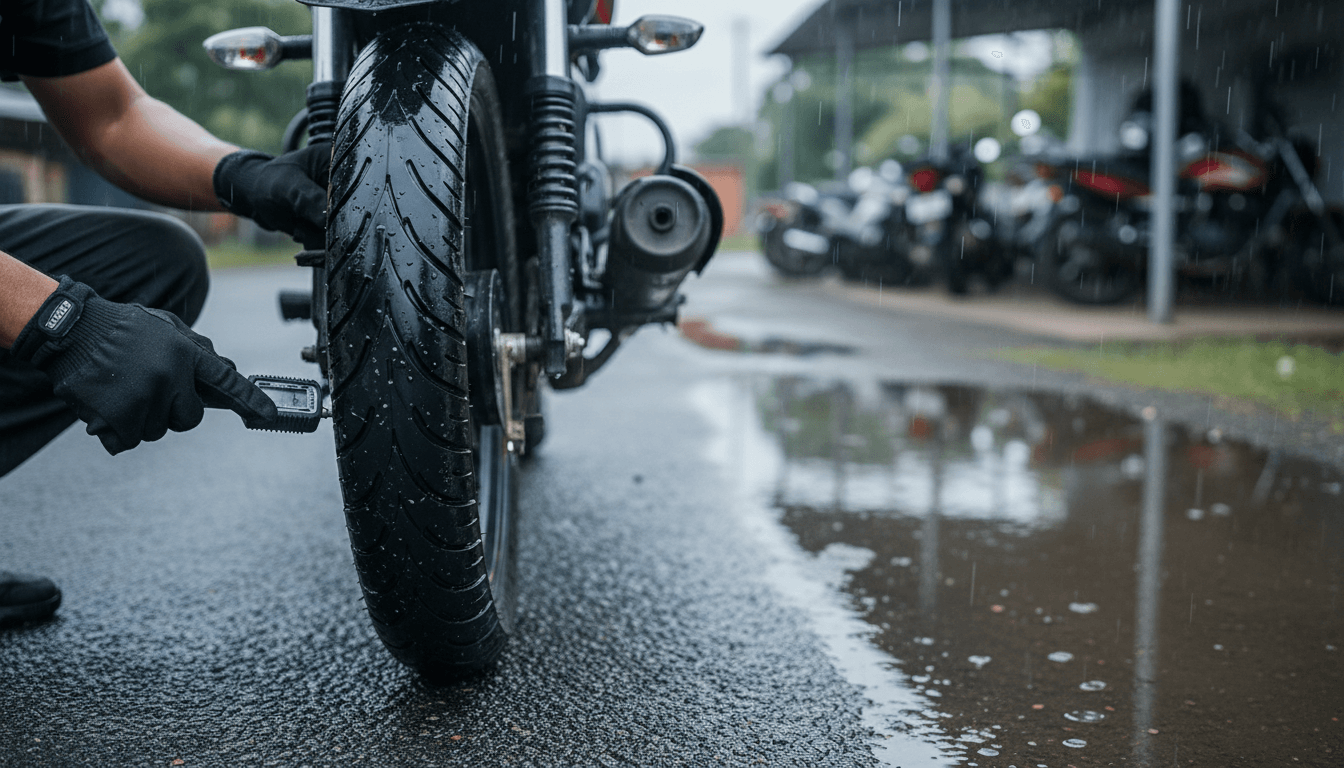
Top monsoon tyre protection tips for your two-wheeler are as follows: keeping the pressure in the tyres according to the manufacturer's recommendation, checking the tread and wear condition each time before you go on a couple of rainy rides, inspecting the tyres for possible cuts or bulges, refraining from hard braking and aggressive turning, and cleaning the tyres once you ride past waterlogged roads. These steps prevent a considerable loss of grip and help reduce the risk of punctures, uneven wear, and skidding on wet Indian roads.
What should you check on a bike tyre before the rains start?
Before the monsoon season, it is important to check the car's tyres and inspect the tyre pressure, tyre wear, the condition of the outer wall, the valve, and the wheel alignment. The very same tyre you thought was in a good state can, in a matter of hours, develop problems from being on roads covered in water if the grooves in the tyre are flat.
Not only can riding through wet roads affect your tyres but engine or electrical damage due to flooding is a fairly common claim during monsoons, which makes it important for you to understand what exactly your bike insurance will cover.
| Check | What to do | Why it matters in the monsoon |
|---|---|---|
| Tyre pressure | Use the PSI value given in your bike owner’s manual or on the bike’s tyre pressure sticker. | Wrong pressure reduces the contact patch and can make the bike unstable on wet roads. |
| Tread depth and wear | Look for visible tread grooves and check whether the tread wear indicators have become level with the tread. | Tread grooves channel water away. Worn tread increases the chance of sliding on wet surfaces. |
| Cuts, cracks, and bulges | Inspect the tread and sidewalls closely in daylight. | Cuts and bulges can worsen when the tyre hits potholes or sharp debris hidden under water. |
| Valve and valve cap | Check that the valve is not leaking and that the valve cap is fitted. | A leaking valve can slowly reduce tyre pressure during regular use. |
| Wheel alignment and balance symptoms | Watch for handlebar vibration, pulling to one side, or uneven tyre wear. | Uneven wear reduces wet grip and can make braking unpredictable. |
Important
Do not go out of your way to lower the tyre pressure of your bike to gain more grip in the rain. Stick with the pressure recommended by the bike manufacturer. Going under the pressure recommended by the manufacturer can lead to the following problems: harder steering, tyre overheating, sidewall damage, and poor stability.
How much bike tyre pressure should you maintain?
Follow the manufacturer's suggested tyre pressure printed in your service book or on the manufacturer's sticker, not the maximum pressure printed on the tyre sidewall. The recommended PSI can vary between the front and rear tyres and may also differ if you carry a pillion rider or luggage.
Read the pressure with cold tyres preferably just prior to an extended trip or when the bicycle has not been ridden for a considerable distance. A tyre that has been run for several miles might give you a slightly higher pressure reading due to heat.
Worked example: correcting tyre pressure before a rainy ride
Suppose the manual for your bike tells you to inflate your front tyre at 29 PSI and rear tyre at 33 PSI when you ride alone. If your pressure gauge shows 25 PSI in the front and 29 PSI in the rear tyre, then you should inflate both tyres by 4 PSI.
| Tyre | Recommended pressure | Gauge reading | Air to add | Final target |
|---|---|---|---|---|
| Front | 29 PSI | 25 PSI | 4 PSI | 29 PSI |
| Rear | 33 PSI | 29 PSI | 4 PSI | 33 PSI |
The above is just a method of computation. You should use the correct PSI that applies to your bicycle since commuter bicycles, scooters, motorcycles, different tire sizes, and loading conditions require varying pressure levels.
How do you check the tread for monsoon riding?
Tread is checked by observing the continuous grooves in the tyre and checking for the presence of tread wear indicator markings. If the tread wear indicator marking is level with the tread, the tyre is worn out and needs to be replaced rather than used during the monsoon season.
If one side of the tyre is smoother than the other, and the middle part of the tyre is heavily worn compared to the edges, the tyre will not grip properly on wet road surfaces. Uneven wear can be caused by either low or high tyre pressure, poor suspension, harsh braking, or improper wheel alignment.
Replace the tyre if the tread wear indicator is flush with the tread.
Replace the tyre if there are any signs of fabric, cords, or casing.
Take the bike for an inspection if the tyre is showing patchy wear, cupping, or air loss.
Do not judge the condition of the tyre by just looking at its outward appearance. The tyre may lose its wet grip before it appears bald.
Which riding habits protect bike tyres in the rain?
Smooth control is the best way to ride in the monsoons in order to preserve tyre life. Tyres in the rain require a softer touch when braking, accelerating, and turning.
| Situation | Better riding habit | Tyre benefit |
|---|---|---|
| Wet traffic signals and painted road markings | Brake earlier and keep the bike upright while crossing slippery paint or metal covers. | Reduces sudden loss of grip. |
| Waterlogged patches | Slow down before entering water and avoid sharp steering inside it. | Reduces impact damage from hidden potholes and debris. |
| Cornering in rain | Lean less than you would on dry roads and avoid accelerating hard mid-corner. | Keeps more tyre contact on the road. |
| Potholes and broken roads | Avoid them where possible. If you cannot, roll over slowly without braking hard at the impact point. | Reduces sidewall cuts, rim bends, and pinch damage. |
| Emergency braking | Apply progressive braking instead of grabbing the brake suddenly. | Reduces wheel lock and skidding, especially on bikes without ABS. |
What should you do after riding a bike through waterlogged roads?
Inspect the tyre surface
Park in a safe place and, if it is daytime or if the light is sufficient, you can also inspect the tyres. Look out for foreign bodies such as nails, pieces of glass, stones, and so on or cuts that look fresh. Check the tread for anything that might have become embedded in it.
Clean mud from the tyre and rim
Clean off mud from the tyre sidewall, rim edge, and valve. Sometimes the presence of mud may conceal damage such as cracks, cuts, and valve leaks.
Check the pressure again if the ride felt harsh
Before the next ride, check the air pressure if the tyre appears low or the bike feels unstable. Pothole hits and punctures can start slow leaks.
Watch for vibration or wobble
Ride at a very slow speed for a few feet and pay attention to any strange rubbing sounds, thuds, or wobbles. Such sensations often mean that the rim or the tyre is damaged.
Do not ignore visible damage
Whenever you discover bulges, cuts that go pretty deep, sidewall damage, or persistent air-loss issues, it would be a good idea to have those tyres inspected before riding the bike again.
When should you repair or replace a bike tyre?
Repair can be a viable option only when the damage is minor and the location of it is in a repairable area. It is better to go for a replacement if the tyre is damaged in the sidewall area, has a bulge, has exposed cords, has severe cracking, or is losing pressure even after repairs.
| Tyre condition | Repair or replace? | Reason |
|---|---|---|
| Small puncture in the tread area of a tubeless tyre | May be repairable | The tread area is usually the repairable zone if the puncture is clean and not too large. |
| Puncture or cut on the sidewall | Replace | The sidewall flexes continuously and is not a safe place for a routine puncture repair. |
| Visible bulge on tyre sidewall or tread | Replace | A bulge can indicate internal structural damage. |
| Repeated loss of air after repair | Inspect, then usually replace if the leak continues | Repeated pressure loss can mean hidden tyre, valve, rim, or repair failure. |
| Tread wear indicator level with tread | Replace | The tyre has reached its wear limit and wet grip is reduced. |
| Cracked or hardened rubber | Replace if cracks are visible or grip feels poor | Ageing rubber loses flexibility and wet grip. |
Key takeaways
Bike tyre care during monsoons begins by ensuring the right level of inflation, visible tread, and thoroughly cleaning both tyres.
Proper PSI, i.e., the tyre pressure suggested by the bike's maker is not the number on the tyre itself!
Tread wear indicators on tyres warn you to replace the tyres once they've crossed the limit; hence, they shouldn't be left in for long, especially before the rainy season.
Bulges and cuts in the tyre's sidewalls, exposure of internal cords, and regular air leakage are reasons to replace the tyres, but not ones to be repaired on a regular basis.
In addition, riding carefully during rainy weather reduces the possibility of sliding into other people’s cars and pedestrians. This is because third party bike insurance for bicycles is a requirement in India and it covers injuries or damages that might be done to another person.
The practice of checking your bike after riding through waterlogged roads for any cuts, punctures, wobbles, or loss of pressure will help you identify damage quickly.
Frequently asked questions
No. Bike tyre pressure must be adjusted to the required PSI as per the manufacturer's recommendation. Adjusting pressure for the rain will increase the temperature inside the tyre and cause other problems like difficulty handling.
Check your tyre pressure before long trips and when the bicycle feels heavy and unstable or seems to need more air. In normal monsoon use, it is better to check the pressure frequently because punctures and valve failures might not be noticed in the rain.
A bike tyre is unsafe for monsoon use when the tread wear indicator is even with the tread, the sidewalls are damaged with cuts and bumps, cords can be seen, or it keeps deflating after repairing.
There is no need for rain tyres for regular riders. The most important thing is to have a good tyre that is in the right size with the right pressure and tread depth.
Yes. Punctures to the tread area of the tubeless tyre can sometimes be repaired; however, sidewall damage, blisters, cracked rubber and continuous air loss need careful inspection and could mean that the tyre needs to be replaced.
About the authors

Nikhila PS
Written by · Senior Content EditorNikhila is a content creator with 6+ years in EdTech and motor insurance, turning complex policies into clear, engaging content. She enjoys exploring digital trends, social media, and art while planning her next short escape.

Rekhit Singh Kaushal
Reviewed by · Senior Director - Motor UnderwritingRekhit Singh Kaushal is Senior Director at ACKO, a leading digital motor insurance provider in India. With deep expertise in insurance strategy and innovation, he brings trusted insights on car and bike insurance to help drivers stay protected.