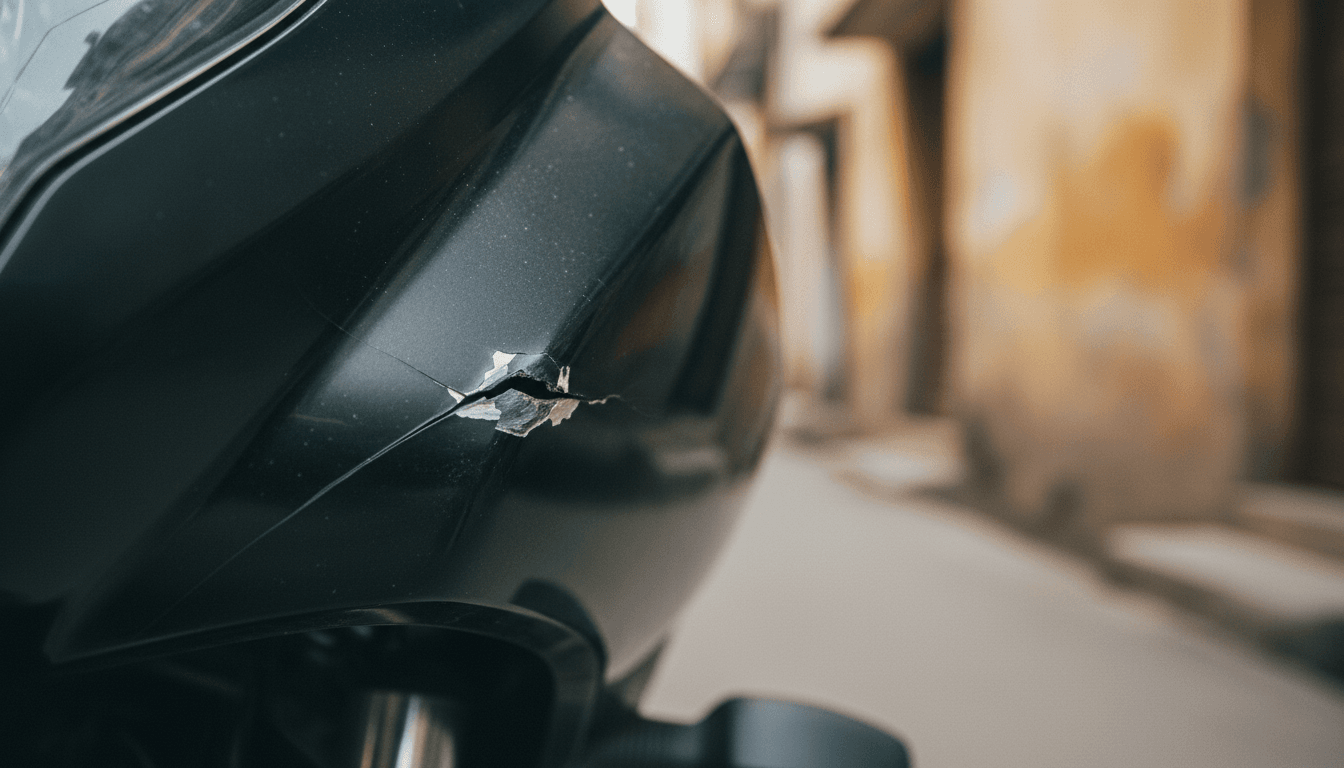
Yes, the fibre parts of a bike will be covered under bike insurance, provided you have comprehensive insurance or an own-damage standalone cover, rather than a third-party cover only. Fibre and plastic parts generally include fairings, side panels, mudguard, headlight and tail-light housings, and instrument cluster covers. Should these be damaged in a mishap, fire, or any other such event covered under the insurance contract, the insurer will bear the cost of repair and/or replacement; however, the amount will be reduced by the depreciation factor before the claim is paid.
Which Two-wheeler insurance policy covers fibre parts?
Only a policy that encompasses own-damage cover will reimburse you for damage to your own bike, including its fibre parts. Third party bike insurance policy, which is the legal minimum in India, covers damage or injury caused by you to other persons but does not touch your own bike.
So, the first thing you should look for in your policy is whether the word 'comprehensive' or 'own damage' has been put. If your policy merely says 'third party' or 'only liability', the damage caused to the fibre panels of your vehicle will not be paid for by the insurer.
How does depreciation reduce the bike insurance premium for fibre parts?
Depreciation is the decline in a component's value as it ages and gets used; the insurer deducts it in full from the claim amount. Under the standard motor policy, depreciation of different materials happens at different set rates; the fibre, plastic, and rubber parts will suffer the single deduction.
| Part material | Depreciation applied on claim |
|---|---|
| Fibre, plastic, rubber parts, nylon parts | 50% (fixed, from day one) |
| Metal parts | Rises with vehicle age: 0% up to 6 months, 5% (6 months to 1 year), up to 40% for 5 years and older |
| Glass parts | 0% (no depreciation) |
| Painting (for the material component) | 50% on the material cost |
The half-price discount on the repair of bike parts that contain fibre applies regardless of the bike's age. It is active from the very first day of the insurance policy. So even if the bike is brand new, you can only be claimed back 50% of the fibre part's cost.
What does a fibre-part bike insurance claim actually pay?
Suppose you have a bike which has suffered the front fairing and one of the side panels due to a fall. Imagine that the entire cost of the repairs is Rs 8,000 which is broken down to Rs 6,000 for replacement of fibre panels and Rs 2,000 for labour. Moreover, suppose the insurance policy includes a compulsory deductible of Rs 100.
| Item | Amount |
|---|---|
| Fibre parts cost | Rs 6,000 |
| Less 50% depreciation on fibre | - Rs 3,000 |
| Labour charges (no depreciation) | Rs 2,000 |
| Subtotal | Rs 5,000 |
| Less compulsory deductible | - Rs 100 |
| Amount insurer pays | Rs 4,900 |
| Amount you pay out of pocket | Rs 3,100 |
So if your bill is Rs 8000, then your insurer will cover Rs 4,900 and you will pay the remaining balance of Rs 3,100. The large portion of your contribution, Rs 3,000, will be to account for the depreciation of the fibre parts.
How does zero-depreciation bike insurance cover work?
A zero-depreciation add-on (or nil-depreciation/ bumper-to-bumper cover) ensures no deduction of depreciation for fibre, plastic and rubber parts. In effect, you get full reimbursement of the part cost instead of only half from the insurer.
With the zero depreciation bike insurance cover it can be expected that the insurer would not deduct the Rs 3,000. Therefore, your claim of Rs 6,000 (parts) and Rs 2 000 (labour) less the Rs 100 deductible, totalizing Rs 7,900, will eventually settle. The amount of money out of your pocket is now reduced from Rs 3,100 to Rs 100.
Zero-depreciation cover is an add-on you can buy with your bike insurance.
Mostly, this is only for new vehicles, normally not more than five-year-old bikes, depending on the insurance provider.
In most cases, insurance companies limit the number of zero-depreciation claims you can actually file within the annual policy period.
Aftermarket fibre parts are treated differently
Your two wheeler insurance policy only covers replacements of factory panels with custom or fibre bodywork after market if such are declared and are part of an endorsement on the policy. Non-standard modifications and additions that do not get recorded at the time of insuring the motorcycle can be reason for a claim being reduced or outrightly refused. You are thus strongly urged to contact your insurer and ask for parts of this nature to be added to your policy document.
When are fibre parts in bike insurance not paid at all?
Coverage on fibre parts ceases in the same scenarios when the own-damage claim gets void. The primary exceptions are given below:
It is a third-party policy, so own damage is not covered.
Fading or normal wear-and-tear, or ageing, rather than an unexpected accidental damage of the panels.
If the rider is caught riding under the influence of drugs or alcohol, or without a driver's licence.
If a claim is made because a bike is used for a purpose that is contrary to the policy, such as racing or commercial use under a private policy.
Damage to property that is a consequence rather than a result of the insured event.
Any modification or installation on the original bicycle fibre parts that have not been declared to the insurance company.
How do you claim bike insurance for damaged fibre parts?
Inform the insurer
Notify the insurer about the damage or use the app or helpline to do so immediately after the incident.
Register the claim
Please provide the policy number, details of the incident, together with photographs of the affected fibre panels.
Get the bike inspected
A technician will evaluate the extent of the damage at a garage or through your self-assessment process.
Repair at a garage
If you have a network garage, use it for cashless settlement.
Receive settlement
Unless you have zero-depreciation cover, the insurer pays the agreed sum after deducting depreciation on fibre parts and deductible.
Key Takeaways
A comprehensive or standalone own-damage policy for a bike would be necessary for covering your fibreglass or other plastic parts, it wouldn't be covered under a third-party only policy.
It is the insurer that has set a fixed depreciation rate of 50% for parts such as glass, plastic, rubber, and nylon. The depreciation is done in these percentages irrespective of the bike's age.
Hence, the 50% value is less effective at day one, which means, even a fresh buy bike will fetch you half the money for the fibre part at claim time for a normal comprehensive cover.'
Depreciation for glass components is zero, while depreciation for metallic parts ranges from 0% to 40% based on the bike's age.
A zero depreciation add-on will save you the deduction of depreciation, so the insurer will pay full cost of fibre parts; of course, the deductible and claim limits may also be applied.''
The insurer must be informed and obtain an endorsement on your policy for aftermarket or modified fibre parts so they are covered.
Frequently asked questions
Yes. Fibre, plastic, rubber, and nylon parts are grouped together and attract the same fixed 50% depreciation on repair or replacement cost under a standard comprehensive claim.
No. Unlike metal parts, the 50% depreciation on fibre and plastic parts is fixed and applies from the first day of the policy regardless of the bike's age.
Bikes that are equipped with large fairings and plastic bodywork have higher depreciation deductions for claims, which means that removing the depreciation through a zero-depreciation cover would save you a lot more on those two kinds of bikes.
No. Fading, ageing, and ordinary wear and tear are excluded. Coverage applies to sudden accidental damage from an insured event, not gradual deterioration.
No. Depreciation is applied to the cost of the parts, not to labour charges. Labour for fitting the replacement fibre panel is generally paid in full, subject to the policy terms and deductible.
About the authors

Nikhila PS
Written by · Senior Content EditorNikhila is a content creator with 6+ years in EdTech and motor insurance, turning complex policies into clear, engaging content. She enjoys exploring digital trends, social media, and art while planning her next short escape.

Rekhit Singh Kaushal
Reviewed by · Senior Director - Motor UnderwritingRekhit Singh Kaushal is Senior Director at ACKO, a leading digital motor insurance provider in India. With deep expertise in insurance strategy and innovation, he brings trusted insights on car and bike insurance to help drivers stay protected.