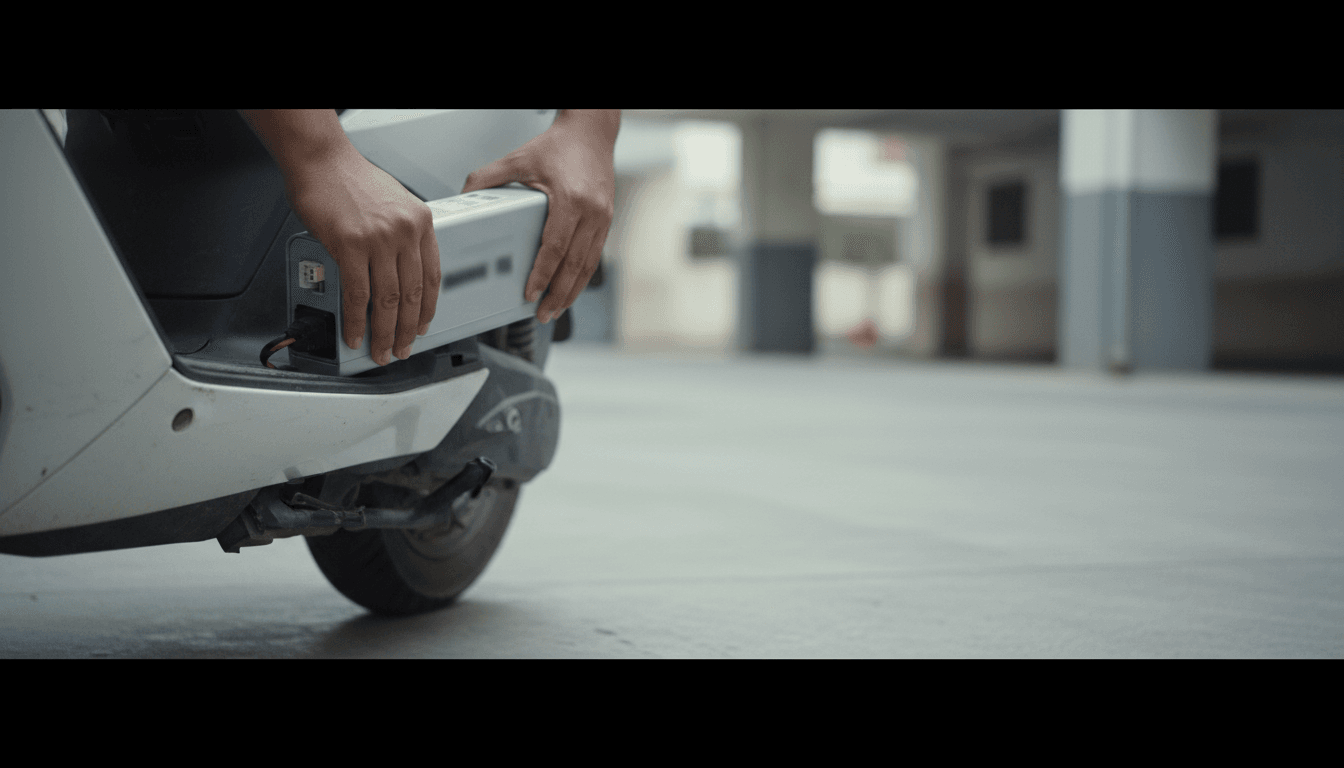
The battery of an e-bike plays a major role in determining your premium and coverage level. The battery is usually the most expensive part of the bike, valued at 30%-50% of the market price of the bicycle. The insurers examine thoroughly the battery's type (lithium, lead, nickel, etc. ), its capacity and whether it has proper certification. The rate you receive from the insurance company and the circumstances of the claim depend on all of these factors.
A larger battery means you'll be paying for a higher insured value and premium, whereas fire or thermal-runaway damage is usually only covered if the policy includes coverage for that and for how the battery was charged or operated.
Why does the battery matter in e-bike insurance?
The battery is an important part of an e-bike as it is essentially one main component that holds both the value and the risk. The three factors that an insurance company takes into account when setting the premium and form of coverage for an e-bike are all determined to a large extent by the battery.
Value at Risk: A battery is most likely the costliest part to change. If the battery accounts for a large share of the car's on-road, insured, or Insured Declared Value (IDV) value, then the amount will be considerable, resulting in a higher own damage premium.
Claim Probability: Lithium-ion batteries are capable of going through a process called thermal runaway a self-heating that can result in a fire hazard.
Cost per Claim: Since a damaged battery pack needs to be entirely replaced, the cost can be close to the entire cost of the battery.
Since the battery is in the centre of the three, the technological part of the battery, more than a brand of the bike or a speed limit of it, will be a major element in setting the price.
How does battery impact electric bike insurance costs?
In the Indian electric bike segment, two technologies dominate: NMC and LFP. They differ in energy density, heat resistance, and cycle life, which directly influence the insurer's perception of the bike's risk.
| Attribute | Lithium-ion NMC | Lithium-iron-phosphate (LFP) |
|---|---|---|
| Energy density | Higher, so more range for the same weight | Lower, so heavier for the same range |
| Thermal stability | Lower, higher thermal-runaway risk | Higher, more resistant to overheating and fire |
| Typical cycle life | Around 1,000 to 2,000 charge cycles | Around 2,000 to 4,000 charge cycles |
| Cost per kWh | Higher | Lower |
| Insurer risk view | Higher fire loading possible | Generally seen as lower fire risk |
It's actually a two-way: longer-range NMC bikes could end up with higher IDV and hence a higher premium, even without considering risk loading, whereas the same-range LFP bikes, being heavier, are perceived as safer.
Does your bike insurance policy cover battery fire, theft, and degradation?
We categorise battery-related incidents into three categories and respond to each differently. The following chart displays how these incidents fall under a standard all-inclusive two wheeler insurance policy vs. the main additional covers commonly offered.
| Battery event | Standard comprehensive cover | Needs add-on or specific wording |
|---|---|---|
| Accidental fire and thermal runaway (unmodified battery) | ||
| Theft of a fixed battery with the whole bike | ||
| Theft of a removable battery on its own | ||
| Water damage to the battery from flooding | ||
| Gradual capacity loss and normal degradation | ||
| Fire from a modified battery or unapproved charger |
Two things are most important to note here:
- Battery degradation caused by usage of the vehicle, which results in a gradual reduction in the battery capacity over the battery life span, is considered as a natural wear and tear and therefore cannot be insured or claimed in any case under the motor insurance policies; and
- The insurers depreciate the battery's value when paying out the claim for loss or damage to the battery, so an old battery may fetch a lower price than its replacement cost if a person has no zero depreciation bike insurance add-on.
Key takeaways
Battery costs generally range from 30% to 50% of the e-bike's total cost. Besides determining the price, the technology is another factor that the insurer takes into account when it comes to covering a bike or deciding on a premium.
A big battery adds the Insured Declared Value (IDV) up and the own-damage premium as a result.
LFP (lithium-iron-phosphate) cell chemistry is generally considered as more thermally stable and less likely to result in fires, compared to the high-energy NMC.
With battery certification (AIS-156, BIS cell standards), batteries can get insurance more easily and also are less likely to have fire loading.
Accidental fire on an unmodified, correctly charged battery is usually covered; fire from modification or an unapproved charger is usually excluded.
Removal-battery theft and flood damage often require an additive; degradation ( gradual loss of capacity) as a result of normal use is not insurable since it is classified as wear and tear.
In case of standard policies, the battery will undergo depreciation calculation at the time of the claim unless you are entitled to a zero-depreciation add-on.
Frequently asked questions
Usually yes, a heavier battery leads to an increased Insured Declared Value of the car, whereas the own-damage premium is the percentage of that value.
It depends on the cause. In the event of an accidental fire from an unmodified battery with the approved charger, a comprehensive policy usually covers the incident. On the other hand, fires coming from a modified battery
No. Diminished range resulting from the ageing of a battery is considered to be wear and tear and therefore, no bike insurance can cover this loss. Insurance covers incidents and accidents.
Zero Depreciation Cover means the insurer cannot deduct depreciation when calculating the settlement of the claim. As the battery is the costliest component and it also depreciates, zero depreciation cover will aid in getting more money in case of damaged battery.
Generally yes. A basic insurance plan usually protects against theft of a non-removable battery in case the entire bicycle is stolen; however, theft of a removable battery by itself, such as during charging at home, may require additional coverage for removable battery or accessories.
Sources and references
- 1.Automotive Industry Standard AIS-156: Specific requirements for L category electric power train vehiclesMinistry of Road Transport and Highways, battery safety standard
- 2.IS 18590 / BIS standards for lithium-ion traction battery packs and systemsBureau of Indian Standards, cell and pack certification
About the authors

Nikhila PS
Written by · Senior Content EditorNikhila is a content creator with 6+ years in EdTech and motor insurance, turning complex policies into clear, engaging content. She enjoys exploring digital trends, social media, and art while planning her next short escape.

Rekhit Singh Kaushal
Reviewed by · Senior Director - Motor UnderwritingRekhit Singh Kaushal is Senior Director at ACKO, a leading digital motor insurance provider in India. With deep expertise in insurance strategy and innovation, he brings trusted insights on car and bike insurance to help drivers stay protected.