


speak for ACKO
speak for ACKO
speak for ACKO
Home / Life Insurance / Articles / Life Insurance General / Is ULIP Really Worth It?
Is ULIP Really Worth It?
Neviya LaishramJan 14, 2026
Share Post
The honest answer: it depends on what you expect from the plan.
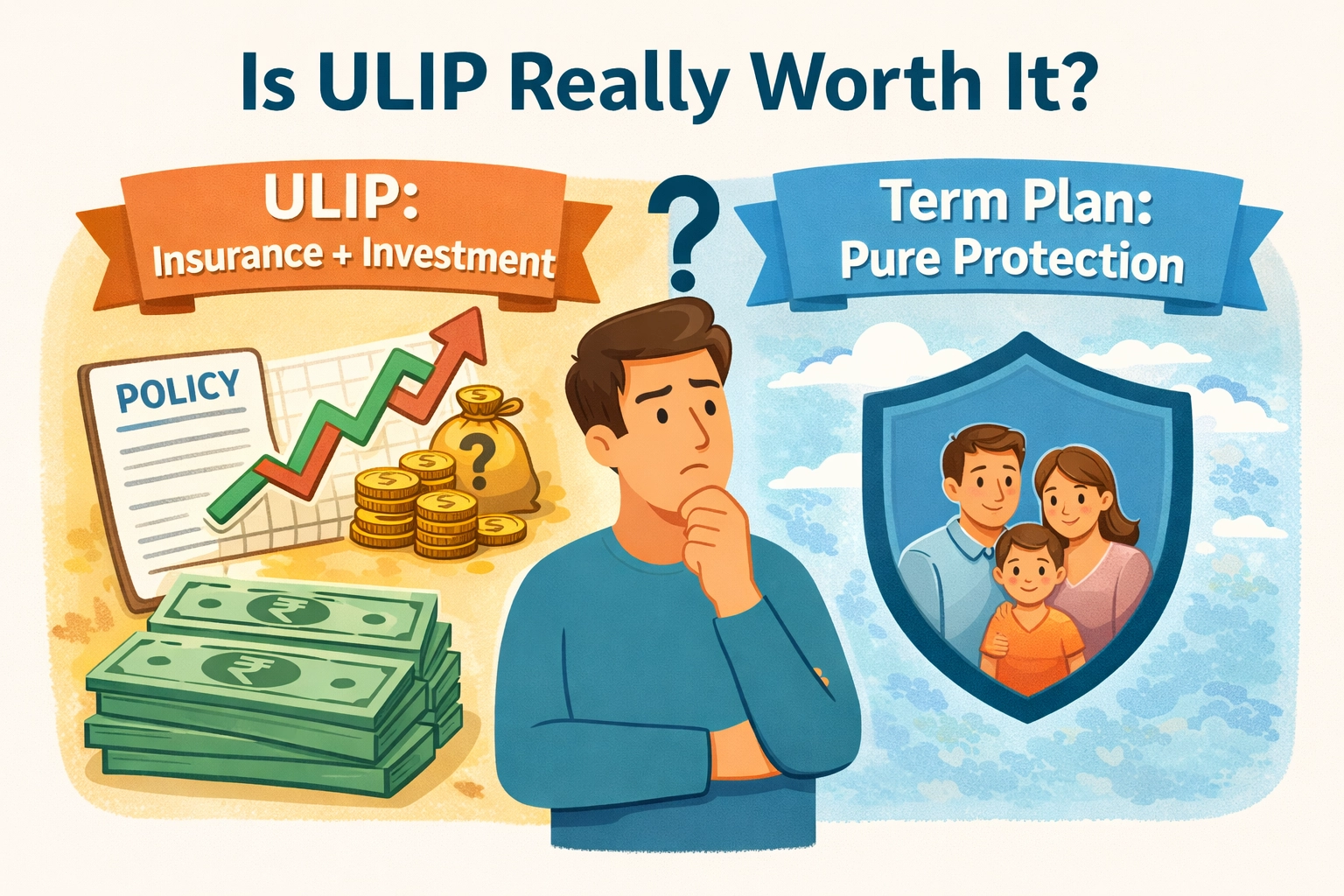
A ULIP, or Unit Linked Insurance Plan, is often spoken about as an investment product; however, focusing too much on this aspect is what causes most of the confusion. At its core, a ULIP is simply a life insurance policy. The investment part exists along with the life cover, not instead of it.
Contents

What People Usually Expect from a ULIP
Many people view a ULIP as a single plan that can serve multiple functions. That is actually the way ULIPs are structurally set up to combine different components.
Generally, people expect:
Insurance + investment together: One product that gives you life cover and, at the same time, allows your money to grow.
A long-term commitment: A product you stay invested in for years, where it is generally believed that continuing the investment leads to better returns.
Tax benefits: Offers tax deductions on premiums and tax treatment on payouts as per applicable rules.
Market-linked value: The value of the fund is market-driven, resulting in a sense of "growth" or "performance" over time.
Why ULIPs Can Be Confusing as a Life Insurance Product
ULIPs can be confusing because they bring together two different goals in one plan. This doesn’t make them unsuitable, but it does make them easy to misunderstand, especially if someone expects the insurance part to work like a pure protection plan.
Several reasons for the misunderstanding:
Two goals in one product: Since ULIPs combine protection and investment in a single plan, people may look at them from different angles. Some approach them mainly as investments, while others see them primarily as life insurance, which can lead to differing expectations.
Protection amount vs fund value: The life cover (sum assured) and the fund value serve different purposes, but they are often viewed together. Many people naturally track the fund value more closely, which can sometimes blur the distinction between coverage and investment value.
Market movement affects perception: Because the fund value is linked to market performance, it can rise and fall over time. These movements may influence how the plan feels to the policyholder, even though the life cover continues as defined.
Expectation vs experience: A person choosing a ULIP mainly for protection may feel the investment features are less relevant, while someone focused on long-term wealth creation may view the insurance element differently. In most cases, the confusion comes from how the product is positioned or understood, rather than from the product itself.
ULIP vs Term Insurance: What’s the Difference for Life Cover?
If the comparison is limited to life cover, the difference becomes clearer. Both provide a payout on the insured person’s death, but the way each product is structured and experienced differs.
| Aspect | Term Insurance | ULIP |
|---|---|---|
Purpose of the product | A pure life insurance policy designed to provide the nominee with a predetermined sum if the insured person passes away during the policy term. | A product that combines life cover with market-linked fund participation, aiming to address both protection and long-term investment needs. |
How the premium is used | Most of the premium is used to provide life cover and manage the risk of payout. There is no savings or investment component. | The premium is divided between insurance charges, fund allocation, and other applicable costs, so only a portion goes directly toward life cover. |
Impact of market movement | Not affected by market movements, as it has no market-linked component. Coverage and payout remain the same throughout the policy term. | Fund value can rise or fall based on market conditions, which may influence how the policy is perceived, even though the life cover remains defined. |
Clarity of life cover | The life cover amount is fixed and known from the start, making the protection aspect straightforward to understand. | While life cover is defined, attention often shifts to the fund value over time, which can reduce focus on the protection component. |
Simplicity for family or nominee | Claims are relatively straightforward if the policy is active and the insured event occurs, with payout made as per policy terms. | Additional elements such as fund value and policy structure may make the product appear less single-purpose from a family or nominee’s perspective. |
Why Term Insurance is Better for Pure Life Protection
If the main purpose is solely to provide life protection, term insurance generally becomes the more straightforward option. This is because it is designed primarily to serve one function: to financially support the nominee in the event of the insured person’s death during the policy term.
Why term insurance is the first choice for pure protection:
The premium is paid for cover, not for fund building: The policy focuses mainly on risk coverage, which helps maintain clarity of purpose without mixing expectations.
Predictable payout structure: The sum assured is fixed at the start, and the payout does not depend on market conditions or fund performance.
Not linked to market movements: The value of protection does not change due to market ups and downs. The insurance cover remains consistent throughout the policy term.
Easier to review, update, and explain: Because it serves a single purpose, it is simpler to reassess coverage needs over time and easier for family members to understand.
Designed for income replacement: Term insurance is a straightforward way to protect the family against the financial loss of the primary breadwinner.
This doesn’t take away from the role ULIPs play. It means term insurance is usually the more direct answer when protection is the main objective.
ACKO’s Approach to Life Insurance
ACKO follows a protection-first philosophy when it comes to life insurance. This is reflected in its decision to offer term insurance as a standalone product built solely for one purpose: pure life cover. By keeping protection separate from investment or return-linked features, the intent stays clear, focused, and easy to understand.
This approach recognises the distinct role life insurance plays in financial planning. Its role is not to grow wealth or deliver returns, but to act as a dependable safety net for families during uncertain times. When products attempt to serve multiple objectives, the value of protection can become less clear.
Learn about the ACKO Life Flexi Term Plan for pure protection →
Conclusion
ULIPs are designed to serve a different purpose by combining life cover with market-linked participation and a long-term commitment. They work best when someone is looking for a structured approach that brings together protection and investment elements.
If your primary requirement from life insurance is pure protection, then term insurance is usually a more straightforward option. Life insurance works best when each product is selected for what it is designed to do, rather than expecting a single plan to meet every financial goal.
Frequently Asked Questions
Below are answers to some frequently asked questions to help you better understand the topic.

1. What is the main purpose of a ULIP?
A unit-linked insurance plan largely focuses on providing a life insurance policy that is linked to market-based investments. The mixture of premiums is split, with one portion going towards the life cover and the rest getting invested in different funds by the policyholders.
2. How does life cover work in a ULIP?
In a ULIP, life cover is provided throughout the policy term. If the insured person passes away, the nominee receives the death benefit as defined in the policy, along with the applicable fund value, as per policy terms.
3. How does term insurance differ from ULIP in structure?
Term insurance is primarily designed to provide risk coverage and does not offer any investment benefits. On the other hand, ULIPs combine both insurance and investment features under a single policy agreement.
Explore Life Insurance Product

Was this article helpful?

Recent
Articles
Pure Term Insurance vs Money Back Policy: Which Is Better in India?
Neviya Laishram Jan 14, 2026
Is ULIP Really Worth It?
Neviya Laishram Jan 14, 2026
Should I Rely Only on Employer Group Term Insurance or Buy a Pure Term Plan?
Neviya Laishram Jan 14, 2026
What Does ‘Pure Term Insurance’ Really Mean for Your Loved Ones?
Neviya Laishram Jan 14, 2026
Why Life Insurance Isn’t Meant to Be an Investment
Neviya Laishram Jan 14, 2026
All Articles


Want to post any comments?

ACKO Term Life insurance reimagined
ARN:L0072|*T&Cs Apply

Check life insurance


#36/5, Hustlehub One East, Somasandrapalya 27th Main Rd, Sector 2, HSR Layout, Bengaluru, Karnataka 560102