Home / Life Insurance / Articles / Accelerated Death Benefit (ADB Rider) in Life Insurance
Accelerated Death Benefit (ADB Rider) in Life Insurance
Shreya SahuMay 20, 2026
Share Post
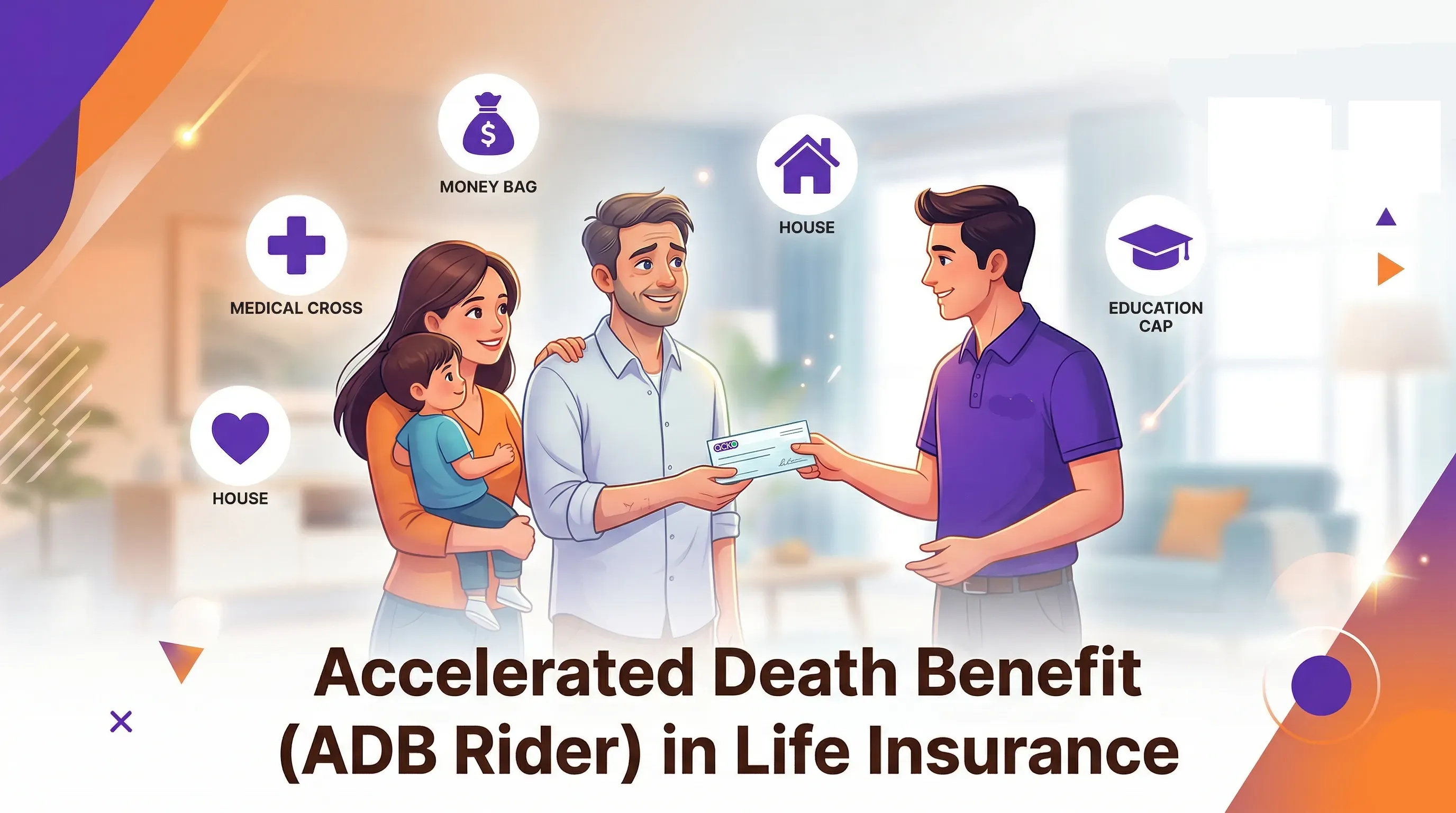
When you are planning to purchase a life insurance policy, you may often come across the term accelerated death benefit. It is also known as a terminal illness benefit and allows policyholders to receive a portion of their death benefit early for medical expenses upon diagnosis of a terminal illness. In India, this benefit is usually offered as a built-in feature or rider, subject to insurer-specific terms and medical certification. Read on to know all the details about it.
Contents

- What is an Accelerated Death Benefit (ADB)?
- Why are Accelerated Death Benefits Important?
- How Accelerated Death Benefit Works in Life Insurance?
- Example of Accelerated Death Benefits
- Accelerated Death Benefits vs Critical Illness Rider
- How to Add an Accelerated Death Benefit Rider in a Life Insurance Policy?
- Summary
- FAQs
What is an Accelerated Death Benefit (ADB)?
An accelerated death benefit in life insurance pays out a part of the life cover in advance if the policyholder is diagnosed with terminal illness, one that may lead to death within 6 months or 1 year, as per policy conditions.
So, if you are still confused about what an accelerated death benefit in life insurance is, it is simple. It provides quick access to funds for the policyholder's family members to manage medical expenses when they need it most. This payout helps cover medical expenses, hospital care, or other personal needs during a difficult time.
Key Takeaways
Policyholders covered by ADB can withdraw a portion of their death benefit if they are diagnosed with a terminal illness (a condition or a disease that cannot be cured or adequately treated).
This rider is also known as ‘Terminal Illness Benefit’.
Taking accelerated death benefits will reduce the amount beneficiaries receive.
Accelerated death benefits are usually not considered taxable income.
Why are Accelerated Death Benefits Important?
To understand the importance of accelerated death benefits, you need to read the following:
Financial Relief: Provides 25% to 100% of policy value to cover expensive treatments, hospices, or nursing homes, as per policy conditions.
Lifestyle Support: Helps manage day-to-day expenses and debt when a terminal illness prevents the policyholder from working.
Flexibility: Offers policyholders financial freedom in critical times, enhancing the quality of life.
Asset Protection: Helps prevent draining of assets or retirement funds, ensuring the family remains financially protected in the future.
Home Care Option: Provides coverage for home healthcare costs, ensuring comfort at home.
Learn More: ACKO Life Flexi Term Plan
How Accelerated Death Benefit Works in Life Insurance?
Accessing the Accelerated Death Benefit (ADB) can bring financial relief during a difficult time. Here's a step-by-step look at how it works within a life insurance policy:
Diagnosis: The insurer considers the condition to be terminal or expected to last no more than 1 year (may differ among insurers).
Application: To make a claim, you or your representative submits the necessary medical records to the insurance company.
Approval: The insurer reviews the patient’s details and confirms whether the patient is eligible under the policy.
Payout: Once your policy is approved, you receive a share of the death benefit during your lifetime. You may pay the money up front or in smaller payments.
Impact on Policy: The money received from ADB is deducted from the total claim benefit. The remaining funds go to your beneficiaries upon your demise.
Continued Coverage: Your policy will remain in effect, but it will pay a reduced benefit to your beneficiaries.
Read More: What Does ‘Pure Term Insurance’ Really Mean for Your Loved Ones?
Example of Accelerated Death Benefits
Assume that Sarah, who is age 60, has ₹250,000 of life insurance coverage. Medical tests confirm she has a terminal illness, and she is only expected to live for another year. Her policy includes an accelerated death benefit. Sarah’s claim for the benefit is granted, and she receives ₹100,000 at the outset to cover medical and care costs.
If she passes away, the beneficiaries will receive the last ₹150,000 of the policy amount. This will help Sarah as she nears the end of her life and will also help her family afterwards.
Read More: How to Claim Term Insurance After Death: Step-by-Step Guide
Accelerated Death Benefits vs Critical Illness Rider
The key differences between an accelerated death benefit and a critical illness rider are discussed in the table below:
Read More: Difference Between Terminal illness vs Critical illness Insurance
How to Add an Accelerated Death Benefit Rider in a Life Insurance Policy?
Some insurance companies may offer accelerated death benefit riders with the base life insurance policy you purchase. In case it is not present, you can contact your insurer and ask them to add this rider to your life insurance plan. In some cases, you might need to provide medical evidence of your serious or terminal illness before you can opt for this.
Summary
The Accelerated Death Benefit is a valuable feature within a life insurance policy that provides significant financial relief at one of life's most challenging times. By providing an early payout on a terminal illness, accelerated death benefits help policyholders to retain their dignity, make payments, and reduce the stress on family and friends. Though the policy's benefit will ultimately be reduced, the comfort provided in the moment can have tremendous value.
FAQs
Below are some of the frequently asked questions on Accelerated Death Benefit in Life Insurance

What is an accelerated death benefit in life insurance?
Accelerated death benefit in life insurance allows policyholders to receive a portion of the death benefit early if they are diagnosed with a terminal illness, helping cover medical and personal expenses.
How does an accelerated death benefit work?
Accelerated benefits allow you to access a portion of your life insurance funds early. They are designed to provide financial support during tough times, helping you cover urgent expenses and reduce stress when it matters most.
How is the accelerated death benefit paid out?
It is mostly paid out in a lump-sum amount of a portion of the death benefit if the insured person is diagnosed with a terminal illness. The remaining amount is generally paid to the beneficiary after the policyholder passes away.
What is the life expectancy for the accelerated death benefit?
The life expectancy for the accelerated death benefit is usually 6 months to 12 months. However, it may vary from one insurer to another.
What are the disadvantages of an accelerated death benefit?
The main disadvantages of accelerated death benefits are reduced death benefits for beneficiaries since the amount paid early is deducted from the final payout.
What triggers the payment of accelerated death benefits?
In India, the Accelerated Death Benefit Rider (ADBR) allows early access to a portion of the death benefit if the policyholder is diagnosed with a terminal illness. Eligibility is typically based on a medical prognosis indicating a life expectancy of 12 months or less.
Does accelerated death benefit reduce the final payout?
Yes, taking an accelerated death benefit may reduce the final death benefit payable to beneficiaries. The amount paid early is deducted from the total sum assured, along with any applicable charges, as per the policy terms.
Are accelerated death benefit payments taxable?
Usually, if the insured is certified as terminally ill by a doctor, the accelerated benefits are eligible for tax exemption. However, it is advisable to consult a tax advisor.
Explore Life Insurance Product

Was this article helpful?

Recent
Articles
No Insurance, No Fuel: What the Supreme Court's Pilot Means
Nikhila PS Aug 6, 2026
Supreme Court Extends Third-Party Insurance for New Cars to Four Years
Nikhila PS Aug 6, 2026
Do ADAS Features Reduce Car Insurance Premiums in India?
Nikhila PS Jun 25, 2026
How Do BS6 Bikes Affect Bike Insurance Premiums and Coverage?
Nikhila PS Jun 25, 2026
Top 15 Car Companies in India in 2026
Nikhila PS Jun 25, 2026
All Articles


Want to post any comments?

ACKO Term Life insurance reimagined
ARN:L0072|*T&Cs Apply

Check life insurance


#36/5, Hustlehub One East, Somasandrapalya 27th Main Rd, Sector 2, HSR Layout, Bengaluru, Karnataka 560102